25 Lazy Dinner Ideas for Nights You're Too Tired to Cook | Dinner Roulette Pro
August 14, 2026
25 Lazy Dinner Ideas for Nights You’re Too Tired to Cook
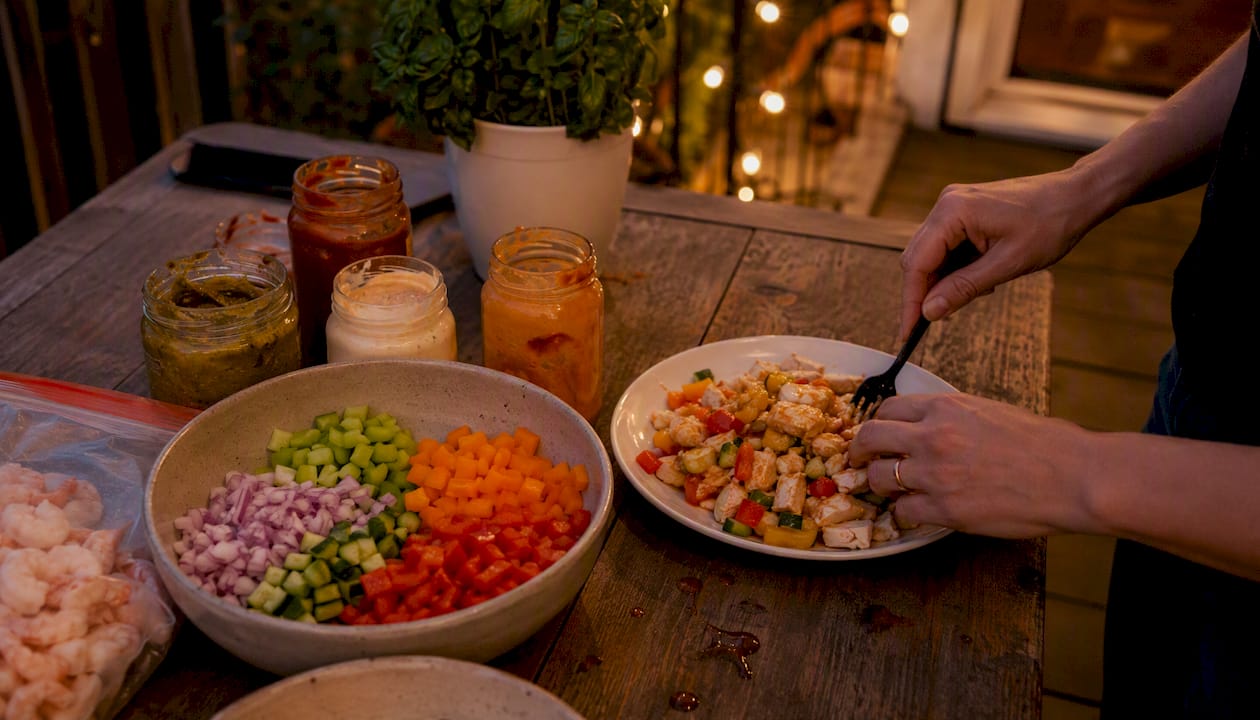
When you don’t have energy to cook, pick from this shortlist grouped by effort level. No-cook options take 5 minutes and zero stove time. Fifteen-to-thirty-minute skillets and pasta dishes need one pan and a short burst of standing. One-pot and sheet-pan meals handle themselves once you’ve combined the ingredients. Slow-cooker and Instant Pot options do the work while you rest. Here’s the fastest shortlist to get you started on choosing dinner tonight:
- Tuna salad on toast — 5 min, 2 active steps, 1 bowl to wash
- Hummus + pre-cut veg + pita — 5 min, 0 cooking, 0 dishes
- Frozen dumplings in broth — 10 min, 2 steps, 1 pot
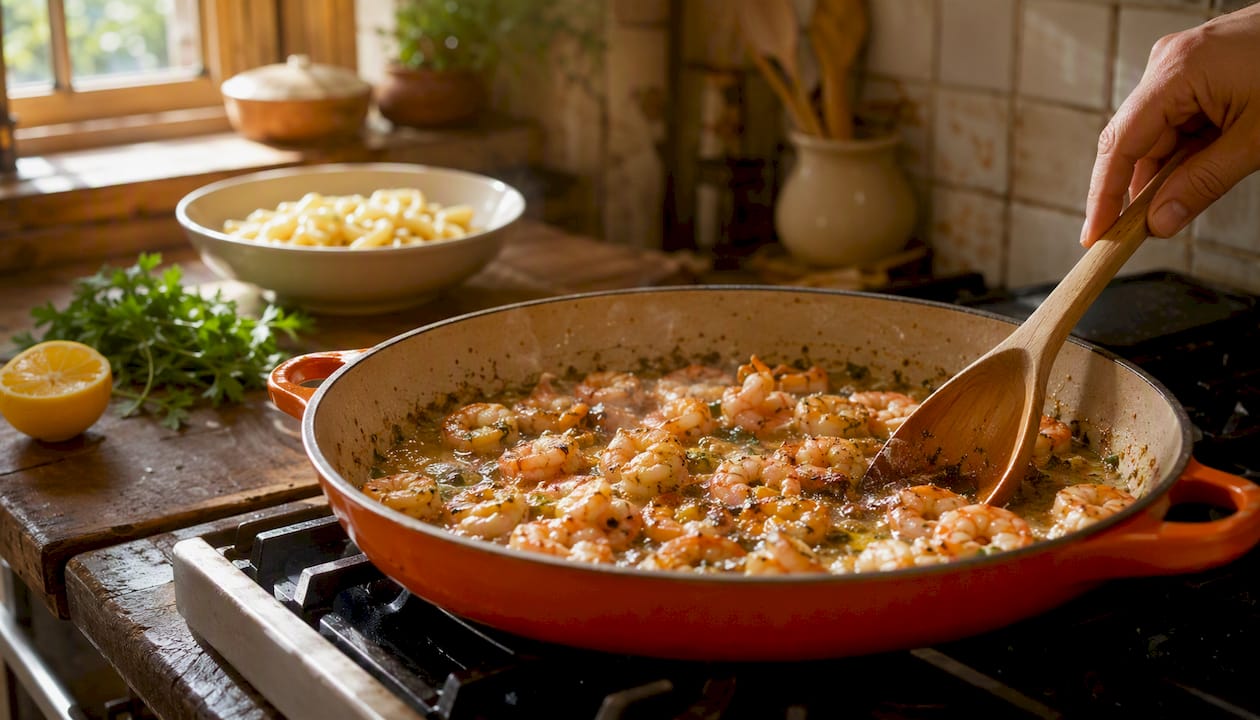
- Garlic butter shrimp pasta — 15 min, 3 steps, 1 pan + 1 pot
- One-pot taco pasta — 25 min, 3 steps, 1 pot
- Sheet-pan shrimp and veg — 25 min, 2 steps, 1 tray
- Slow-cooker white chicken chili — 10 min prep, 6–8 hrs unattended, 1 pot
Every idea in this article follows the same logic: fewer steps, fewer dishes, less time standing.
Key Takeaways
The fastest path to a lazy dinner is a stocked pantry, one appliance, and five ingredients or fewer — everything else is optional.
| Point | Details |
|---|---|
| Group by effort, not by cuisine | Match the dinner to your energy: no-cook for 5 min, skillet for 15–20 min, slow-cooker for set-and-forget. |
| Five staples cover most nights | Frozen shrimp, canned beans, pasta, jarred sauce, and frozen rice handle the majority of lazy dinners. |
| Plan laziness in the morning | A slow-cooker prepped before noon means zero evening decisions and dinner ready when you need it. |
| One appliance, one tray | Sheet-pan and air-fryer meals reduce cleanup to one item and cut active cooking time to under 5 minutes. |
| Dr-pro removes the decision | Dinner Roulette Pro’s free AI wheel generates a personalized lazy-night recipe with a shopping list in seconds. |
Table of Contents
- Lazy dinner ideas that need zero cooking
- 15–20 minute skillet and pasta dinners
- One-pot and one-pan dinners that clean up fast
- Sheet-pan dinners and air-fryer wins
- Slow-cooker and Instant Pot: true set-and-forget dinners
- Pantry, frozen, and store-bought shortcuts that make dinners lazy-but-good
- Kid-friendly and picky-eater approved lazy dinners
- Research-backed strategies to make any dinner lazier
- Quick shopping list: pantry and freezer staples for lazy nights
- Why leaning on lazy dinners is completely fine
- No more “what’s for dinner?” with Dr-pro
- Sources
Lazy dinner ideas that need zero cooking
Five minutes. No stove, no oven, no cleanup beyond a cutting board and a bowl. These are the dinners for nights when even boiling water feels like too much.
- Charcuterie-for-dinner board: Sliced deli meats, cheese, crackers, olives, and whatever fruit is in the fridge. Protein, fat, carbs, done.
- Rotisserie chicken + bagged salad: Pull the chicken, dump the salad, drizzle with bottled dressing. One bowl, two minutes.
- Canned tuna or chicken salad on greens or toast: Mix canned tuna with mayo, a squeeze of lemon, and salt. Serve on toast or a bag of pre-washed greens.
- Avocado-tomato-black bean bowl: Halve an avocado, open a can of black beans, slice a tomato. Season with salt, lime, and chili flakes.
- Hummus + pre-cut veg + pita: Buy the pre-cut veg tray from the grocery store. Done.
- Open-faced smoked salmon bagel: Cream cheese, smoked salmon, capers, red onion. No cooking, restaurant-quality plate.
The trick to making these feel like a real dinner rather than a snack is the protein-veg-carb formula. Rotisserie chicken covers protein. Pre-cut produce or bagged greens cover veg. Bread, crackers, pita, or rice cakes cover carbs. Hit all three and you won’t be hungry again in an hour.
Recipe developers consistently recommend buying pre-diced vegetables and relying on dump-and-assemble methods to reduce standing and prep time on low-energy nights.
Pro Tip: Keep a rotisserie chicken in the fridge on Monday and it covers three no-cook dinners: chicken salad Tuesday, quesadillas Wednesday, and chicken-and-bean bowls Thursday. One purchase, three nights solved.
15–20 minute skillet and pasta dinners
These are the sweet spot for nights when you can stand at the stove for a short stretch but want something that actually tastes cooked. Most need one pan or one pot, and the active work is under 10 minutes.
Serious Eats rounds up lazy dinners that come together in 30 minutes or less, including a 15-minute miso-butter ramen and a 10-minute chana masala. The techniques are consistent: freeze portioned cooked rice ahead, blister cherry tomatoes directly in the pan to build a quick sauce, and lean on canned or frozen ingredients to cut prep.
| Dish | Cook Time | Active Steps | What You Need |
|---|---|---|---|
| Garlic butter shrimp pasta | 15 min | 3 | Skillet + pot |
| Miso-butter ramen | 15 min | 2 | One pot |
| Lemon pasta (cacio e pepe style) | 20 min | 3 | One pot |
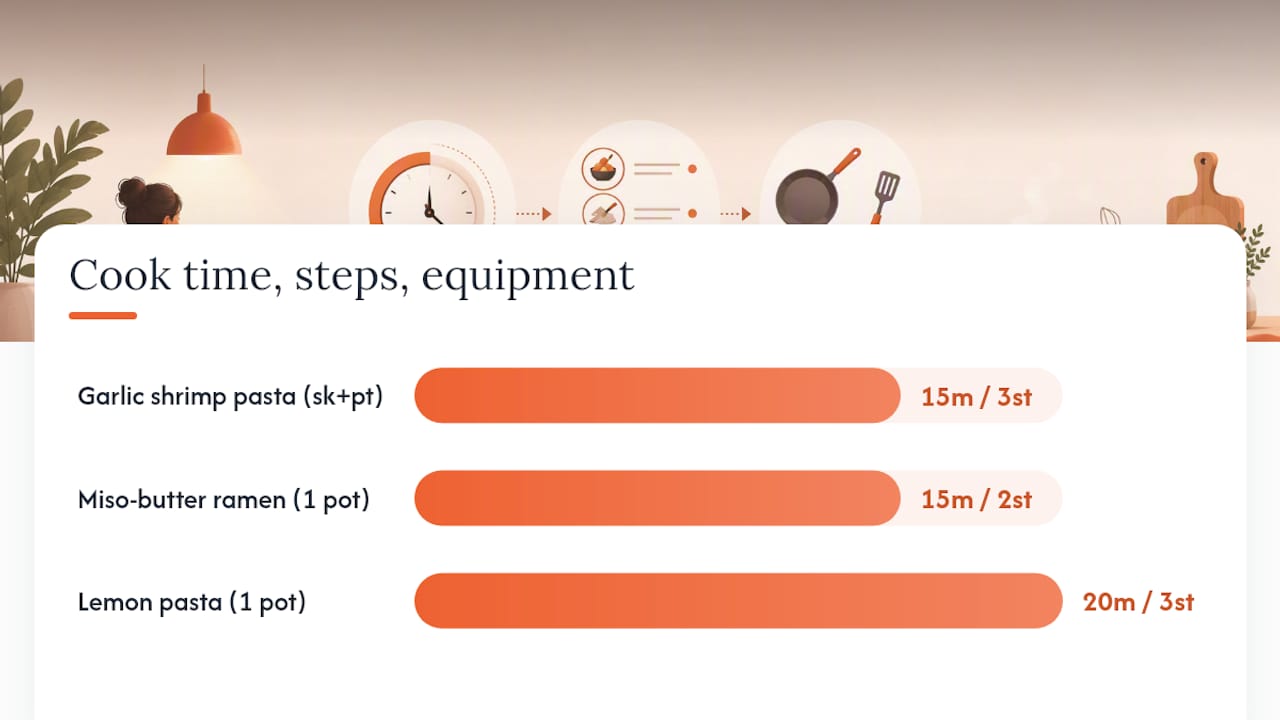
Garlic butter shrimp pasta is the most reliable of the three. Thaw frozen shrimp under cold water for five minutes, pat dry, and cook in butter and garlic for two minutes per side. Toss with cooked pasta and a splash of reserved pasta water to build a silky sauce. The whole thing takes 15 minutes and uses one skillet and one pot.
Miso-butter ramen is even faster. Dissolve a spoonful of miso paste and a pat of butter into store-bought broth, bring to a simmer, and drop in ramen noodles. Add a soft-boiled egg if you have one. Two active steps, one pot, 15 minutes.
Quick fried rice works only if you have leftover rice in the fridge. Day-old rice fries better than fresh. Scramble two eggs in a hot pan, add rice and frozen peas, splash in soy sauce, and you’re done in 10 minutes. No leftover rice? Freeze cooked rice in one-cup portions and pull one out the night before.
Frozen ravioli with blistered tomatoes is a 20-minute dinner that looks like you tried. Boil the ravioli, blister a handful of cherry tomatoes in the same pan with olive oil and garlic, and toss together. One pot, one pan, dinner.
Pantry staples that make these work: frozen shrimp, pasta, miso paste, jarred marinara, soy sauce, and a block of parmesan. Stock those five things and you can always pull off a 15-minute emergency dinner without a grocery run.
One-pot and one-pan dinners that clean up fast
The appeal here isn’t just speed. It’s that you cook everything in one vessel, which means one thing to wash. Simply Recipes recommends using orzo or other small pastas and adding enough cooking liquid so the pasta cooks directly in the pot, no separate draining required.
One-pot taco pasta is the family workhorse. Brown ground beef or turkey, add taco seasoning, canned tomatoes, broth, and dry pasta. Let it simmer until the pasta absorbs the liquid. One pot, 25 minutes, and it reheats well the next day.
One-pot caprese orzo is the vegetarian version. Sauté garlic in olive oil, add broth and orzo, simmer until the orzo is tender, then stir in cherry tomatoes, fresh basil, and mozzarella. The orzo thickens the broth into a creamy sauce on its own.
Rice carbonara sounds fancy but isn’t. Whisk eggs and parmesan, stir into hot cooked rice off the heat, and add crispy bacon or pancetta. The residual heat cooks the egg into a glossy sauce. No pasta boiling, no separate pan.
A few practices that make one-pot cooking faster:
- Use orzo or small pasta shapes so they cook in 8–10 minutes directly in the pot
- Add frozen vegetables instead of fresh to skip all chopping
- Use pre-minced jarred garlic instead of fresh cloves
- Keep the lid on while liquid absorbs to speed cook time
Sheet-pan dinners and air-fryer wins
The whole point of sheet-pan cooking is that you arrange things on a tray, slide it in the oven, and walk away. A well-composed sheet-pan dinner pairs a protein, at least one vegetable, and a simple starch so the whole tray cooks together at the same temperature.
Sheet-pan shrimp and veg takes two minutes to assemble. Toss frozen shrimp and pre-cut broccoli or zucchini with olive oil, garlic powder, and salt. Spread on a lined tray. Roast at 425°F for 12–15 minutes. Done.
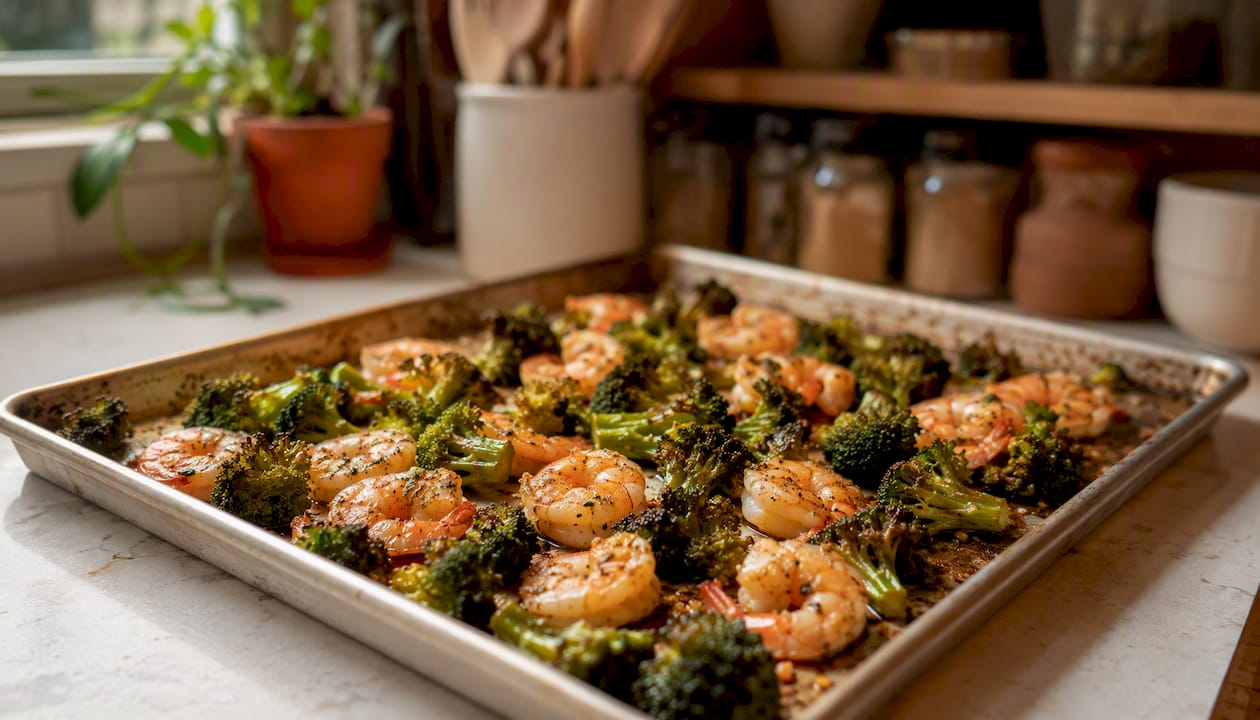
Sheet-pan gnocchi is even easier. Refrigerated gnocchi roasts directly on the tray without boiling first. Toss with olive oil, cherry tomatoes, and Italian seasoning. Roast at 425°F for 25 minutes, stirring once. The gnocchi gets crispy on the outside and pillowy inside.
Sheet-pan fajitas work for families. Slice chicken breast thin, toss with fajita seasoning and sliced peppers and onions, and roast at 400°F for 20 minutes. Serve with tortillas and whatever toppings are in the fridge.
Air-fryer salmon is the fastest protein on this list. Coat a salmon fillet with a thin layer of mayonnaise or a maple-soy glaze. The coating protects the fish from drying out under high heat and creates a lightly charred crust. Air fry at 400°F for 8–10 minutes. One basket, no splatter.
Air-fryer chicken breasts take 18 minutes at 375°F and come out juicier than pan-cooked. Season with whatever spice blend you have, and they’re done while you make a side salad.
Pro Tip: Line your sheet pan with foil or parchment before every roast. Cleanup drops to 30 seconds. On Sunday, prep three different protein-veg combos in separate zip-lock bags, seasoned and ready to dump on a tray. Roast one each night at 400–425°F and rotate through the week without thinking.
Slow-cooker and Instant Pot: true set-and-forget dinners
Ten minutes of prep in the morning means dinner is ready when you walk in the door. That’s the entire value proposition of a slow cooker. Planning laziness ahead, like morning slow-cooker prep, outsources effort and reduces evening decision paralysis when energy is lowest.
- Slow-cooker carnitas: Rub a pork shoulder with cumin, garlic powder, and salt. Add a splash of orange juice. Cook on low for 8 hours. Shred and serve in tortillas. Prep: 10 min. Unattended: 8 hrs. Serve with: tortillas, salsa, lime.
- Slow-cooker white chicken chili: Dump chicken breasts, canned white beans, green chiles, chicken broth, and cumin into the pot. Cook on low for 6–7 hours. Shred the chicken with two forks before serving. Prep: 5 min. Unattended: 6–7 hrs. Serve with: sour cream, shredded cheese, cornbread.
- Instant Pot lentil soup: Add lentils, canned tomatoes, broth, garlic, and spices. Pressure cook for 15 minutes. Prep: 5 min. Unattended: 15 min pressure + 10 min release. Serve with: crusty bread.
- Slow-cooker pulled pork: Same as carnitas but with BBQ sauce instead of citrus. Shred and serve on rolls. Prep: 5 min. Unattended: 8 hrs. Serve with: coleslaw, pickles.
The Instant Pot cuts slow-cooker times dramatically. Lentil soup that takes 6 hours on low takes 15 minutes under pressure. For nights when you forgot to prep in the morning, the Instant Pot is the backup plan.
What to buy ahead for slow-cooker success: canned beans, canned tomatoes, chicken broth, a pork shoulder or chicken breasts, taco seasoning, and cumin. Those seven items cover four different slow-cooker dinners.
Pantry, frozen, and store-bought shortcuts that make dinners lazy-but-good
The difference between a stressful dinner and an easy one is often what’s already in the house. These shortcuts are what recipe developers and lazy-dinner roundups consistently return to.
Five-ingredient combo prompts:
- Rotisserie chicken + jarred BBQ sauce + slider rolls = BBQ chicken sliders. 5 min, 0 cooking.
- Frozen dumplings + chicken broth + baby spinach = dumpling soup. 10 min, 1 pot.
- Frozen shrimp + jarred pasta sauce + pasta = shrimp marinara. 20 min, 1 pot.
- Canned chickpeas + jarred tikka masala sauce + rice = chickpea tikka masala. 15 min, 1 pan.
- Frozen gnocchi + jarred pesto + cherry tomatoes = pesto gnocchi. 10 min, 1 pan.
- Canned black beans + frozen rice + salsa + cheese = burrito bowl. 5 min, microwave only.
Smart shopping buys and time-to-plate:
- Pre-diced onion (fresh or frozen): saves 5 min of crying
- Frozen garlic and ginger cubes: 0 prep, drop straight into the pan
- Shelf-stable cooked grain pouches (farro, quinoa, brown rice): 90 seconds in the microwave
- Frozen potstickers or dumplings: 8–10 min from frozen
- Refrigerated gnocchi: 2 min to boil, or roast directly on a sheet pan
- Canned beans (black beans, chickpeas): rinse and use, no cooking
The freezer is the real lazy-dinner infrastructure. Frozen shrimp thaws in five minutes under cold water. Frozen rice reheats in 90 seconds. Frozen dumplings cook in under 10 minutes. Keep those three things stocked and you always have dinner.
Kid-friendly and picky-eater approved lazy dinners
Low-effort dinners for families have one extra constraint: the food has to actually get eaten. These options clear that bar without adding effort.
- Cheesy one-pot pasta: Cook pasta in broth, stir in cream cheese and shredded cheddar at the end. Creamy, kid-approved, one pot. Add frozen peas or broccoli florets in the last two minutes to sneak in vegetables.
- Quesadillas with rotisserie chicken or frozen shrimp: Shred chicken or thaw shrimp, add cheese, fold a tortilla, and cook in a dry skillet for two minutes per side. Serve with salsa and sour cream on the side. Family size: make four at once using two skillets.
- Sheet-pan nachos: Spread tortilla chips on a lined baking sheet, top with canned black beans, shredded cheese, and any protein on hand. Broil for 3–4 minutes. Serve with toppings on the side so picky eaters can build their own plate.
- Taco casserole: Brown ground beef, mix with taco seasoning and canned tomatoes, layer in a baking dish with crushed tortilla chips and cheese, bake at 375°F for 20 minutes. Feeds four, reheats well.
- Dumpling soup: Drop frozen potstickers into simmering chicken broth with a handful of baby spinach. Done in 10 minutes. Kids who won’t touch vegetables often eat spinach when it’s soft and hidden in broth.
For picky eaters, serve components separately whenever possible. Nachos with toppings on the side, tacos deconstructed into a bowl, quesadillas cut into strips. The food is the same; the presentation removes the resistance. Meal planning for busy families gets easier when you build a short rotation of these proven wins and stop reinventing dinner every night.
Research-backed strategies to make any dinner lazier
The core principle is simple: reduce the number of physical tasks. Standing, chopping, and washing are the three biggest energy drains in cooking. Every tactic below targets at least one of them.
Planning laziness ahead is the most effective single move. If you prep a slow-cooker meal in the morning, you’ve outsourced the entire evening decision before fatigue sets in.
Practical checklist:
- Buy pre-cut produce instead of whole vegetables
- Freeze cooked rice in one-cup portions (reheat in 90 seconds)
- Designate one slow-cooker day per week and prep it before noon
- Keep single-appliance recipes as your default (air fryer, Instant Pot, sheet pan)
- Batch-cook one protein on the weekend (roast chicken, hard-boiled eggs, ground beef)
- Use pre-portioned frozen items to skip measuring
Pro Tip: If you’re neurodivergent or managing chronic fatigue, SafeMode thinking applies directly to dinner. Pick one appliance, one protein, one vegetable, and one starch. That’s the whole decision. Dr-pro’s SafeMode feature does exactly this: it narrows the field to low-effort options when energy is low, so you’re not staring at a blank screen trying to decide. Planning dinners faster starts with reducing the number of choices, not increasing them.
The research-backed shortcut that most people skip: freeze cooked rice. A pot of rice takes 20 minutes to cook and reheats in 90 seconds. Frozen rice is the single highest-leverage pantry item for lazy nights because it turns any protein and any sauce into a complete dinner instantly.
Quick shopping list: pantry and freezer staples for lazy nights
Stock these once and you can build a lazy dinner on any night without a grocery run.
Proteins:
- Frozen shrimp (thaws in 5 min under cold water)
- Canned tuna and canned chicken (no cooking, shelf-stable for 2–3 years)
- Rotisserie chicken (use within 3–4 days or shred and freeze)
Grains and starches:
- Dry pasta (spaghetti, orzo, penne — 8–12 min cook time)
- Refrigerated gnocchi (2 min to boil or roast directly)
- Frozen rice or grain pouches (90 sec microwave)
Canned goods:
- Black beans and chickpeas (rinse and use immediately)
- Canned diced tomatoes (base for dozens of sauces)
- Chicken and vegetable broth (for soups, one-pot pasta, ramen)
Frozen vegetables:
- Frozen broccoli, peas, and corn (no chopping, cook from frozen)
- Frozen dumplings and potstickers (10 min from frozen, 1 pot)
Convenience items:
- Pre-cut produce (onion, bell pepper, stir-fry blends)
- Jarred pasta sauce, jarred salsa, jarred tikka masala
- Taco seasoning packets
Flavor boosters:
- Miso paste (refrigerator, lasts months)
- Jarred minced garlic (skip peeling and chopping)
- Chili paste or sriracha
- Soy sauce and sesame oil
Store cooked rice in one-cup portions in zip-lock bags, flat in the freezer. They stack neatly and thaw in 90 seconds. That one habit alone covers the grain component of any lazy dinner without any evening effort.
Why leaning on lazy dinners is completely fine
There’s a version of this conversation that treats lazy dinners as a compromise, a fallback for people who couldn’t manage their time better. That framing is wrong, and it’s worth saying plainly.
Cooking every meal from scratch every night is not a realistic standard for most people, and it’s not a meaningful measure of how well you’re feeding yourself or your family. A rotisserie chicken pulled apart over a bag of salad greens is nutritionally complete. Frozen dumplings in broth with baby spinach is a real dinner. The goal is food on the table that people will eat, not a performance of effort.
What I find genuinely useful about the low-effort cooking approach is that it removes the guilt spiral. When you have a short list of five-ingredient options that actually work, you stop negotiating with yourself about whether to order takeout. The decision is already made. That’s the real value of keeping frozen shrimp and jarred sauce in the house.
For people managing chronic fatigue, neurodivergence, or high-stress periods, the accessibility angle matters even more. Reducing the number of physical tasks isn’t laziness; it’s a legitimate adaptation. Sheet-pan roasting, dump-and-bake casseroles, and slow-cooker mornings aren’t shortcuts for people who don’t care about food. They’re tools for people who care about eating well but have limited energy to spend on it. Organizing your go-to family recipes into a short, reliable rotation is one of the most practical things you can do for your household.
No more “what’s for dinner?” with Dr-pro
Decision fatigue is the real reason takeout wins on tired nights. Not laziness. Not lack of skill. Just the exhaustion of choosing.
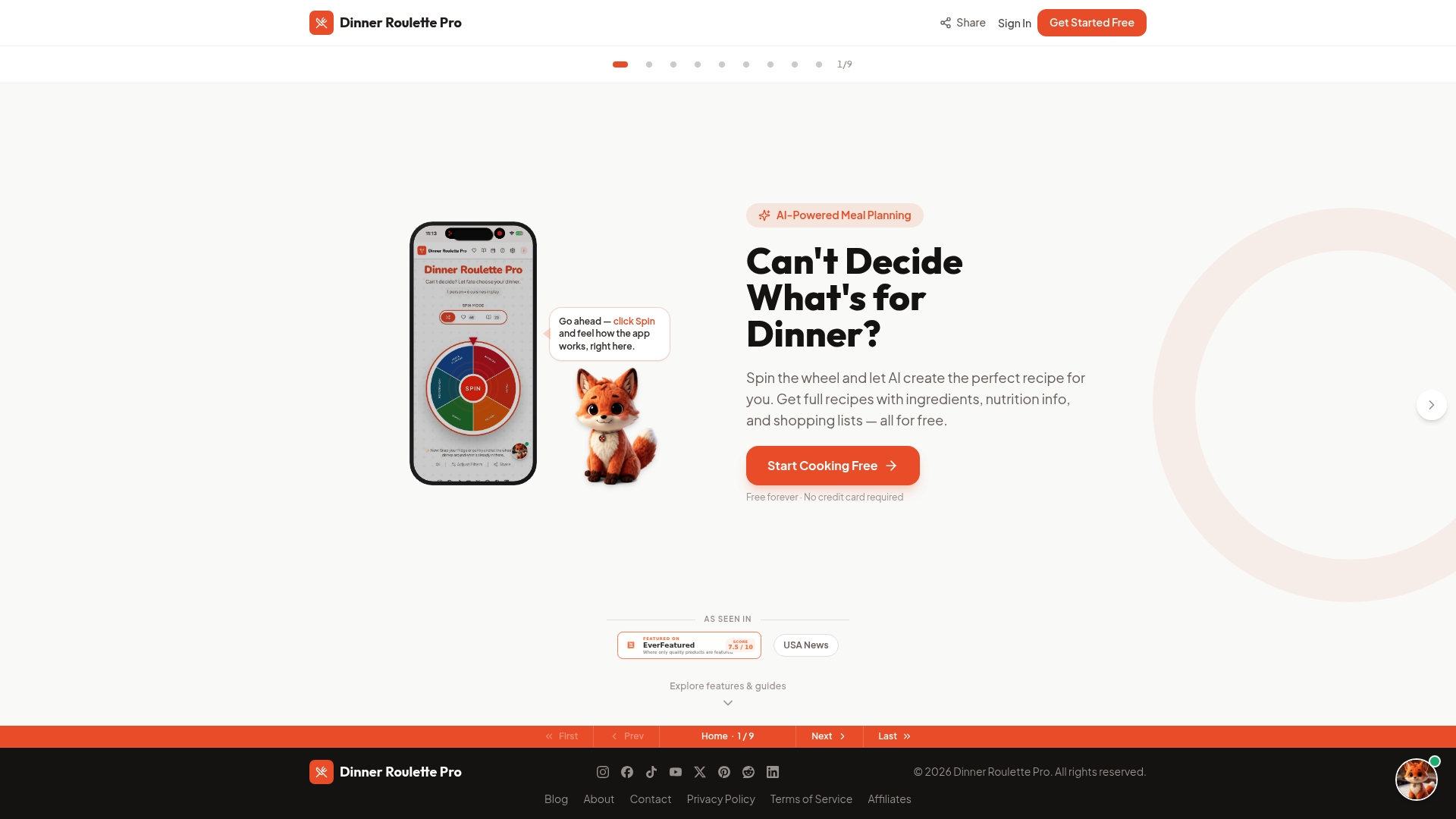
Dinner Roulette Pro eliminates that specific problem. Spin the wheel, get a personalized recipe built around your pantry, your dietary restrictions, and your energy level. The app generates the recipe, the ingredient list, and the shopping list in one step. SafeMode narrows everything down to low-effort options when you’re running on empty, which makes it genuinely useful on the nights this article is written for.
Three features that matter most for lazy nights:
- Personalized lazy-night recipes based on what you already have
- One-tap shopping lists sent directly to Walmart or Instacart
- SafeMode for neurodivergent-friendly, low-decision dinner planning
The core product is free. Premium features, including the full meal planner, dietary filters, and grocery cart integration, are available on a monthly, yearly, or lifetime plan. Build your lazy-night shopping list and have it ready before the next tired Tuesday hits.
Sources
- 10 Lazy Dinner Recipes That Come Together in 30 Minutes or Less
- 20 Lazy One-Pot Dinners for When You’re Too Tired to Cook
- 11 Lazy Dinner Ideas That Don’t Require A Single Ounce Of Motivation
- How to eat cheap, healthy and lazy, according to Reddit