You Can Build a Satisfying Dinner Under 500 Calories Tonight | Dinner Roulette Pro
August 27, 2026
You Can Build a Satisfying Dinner Under 500 Calories Tonight
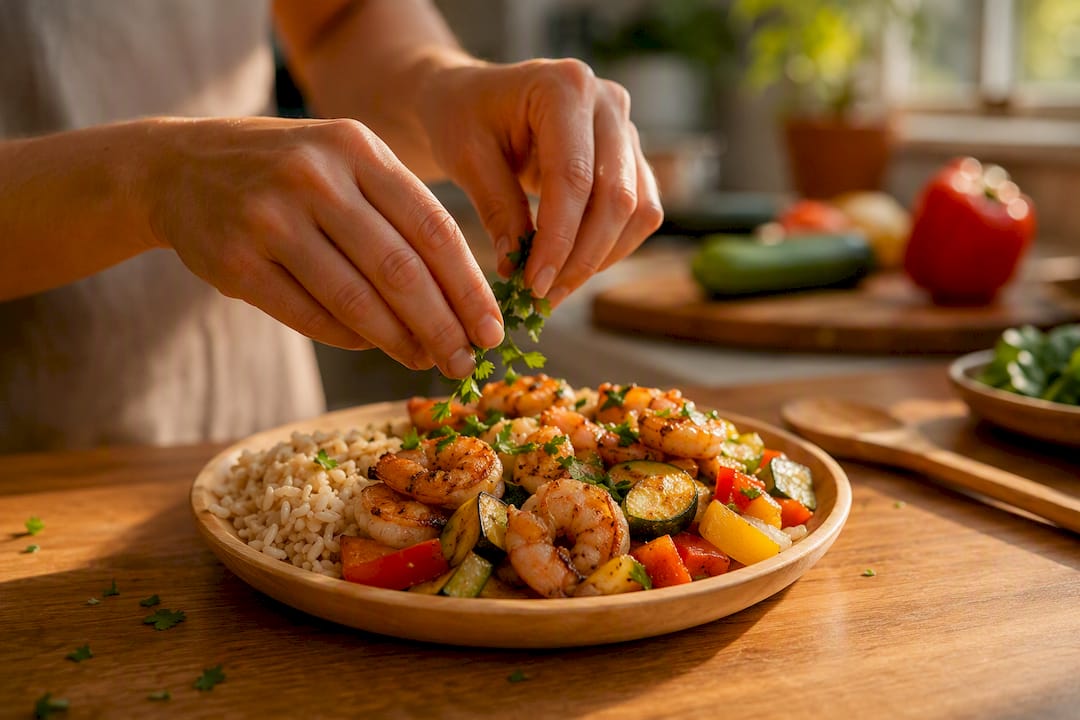
You can have a genuinely filling dinner under 500 calories, and it doesn’t require sad grilled chicken and steamed broccoli. Five reliable picks to start with tonight:
- Air-fryer salmon with roasted asparagus (protein does the heavy lifting)
- Chickpea puttanesca over zoodles (fiber and volume, minimal calories)
- Sheet-pan chicken fajitas (one pan, built-in portion control)
- Miso shrimp salad (344 calories, 29.5 grams of protein)
- White bean and kale soup (bulk without the calorie load)
Each works because it leans on protein, fiber, or sheer volume to keep you full. The full curated list below gives you a dozen more to rotate through.
TL;DR:
- Consuming at least 15 grams of protein per meal helps maintain fullness and muscle preservation while keeping calorie intake under control.
- Using vegetables, zoodles, or cauliflower rice reduces calorie load without sacrificing portion size or satiety.
- Batch-cooking staples like grains, beans, and proteins simplifies meal assembly and prevents reliance on high-calorie takeout options.
- Incorporating healthy fats like olive oil or avocado enhances satisfaction without significantly increasing calorie counts.
- Choosing lower-calorie drinks and requesting sauces on the side at restaurants prevents undoing calorie savings from meal choices.
Table of Contents
- Low Calorie Dinners Grouped by How You Want to Cook Tonight
- The Rules That Keep 500 Calorie Dinners Filling
- Portion Control Matters More Than Calorie Math
- Meal Planning and Batch Cooking for Low Calorie Dinners
- Balancing Fats and Carbs Alongside Protein
- What to Drink With a Low Calorie Dinner
- Ordering Out Without Blowing Your Calorie Target
- Key Takeaways
- What Most Low-Calorie Advice Gets Wrong
- Sources
Low Calorie Dinners Grouped by How You Want to Cook Tonight
Scrolling through fifty recipes to find one you’ll actually make is its own kind of exhausting. Grouping by cooking method cuts that friction, which is exactly what works in The Kitchn’s 30-minute healthy dinner roundup: bowls, one-pan meals, soups, and quick proteins, sorted by how much effort you have left after a long day.
Quick proteins
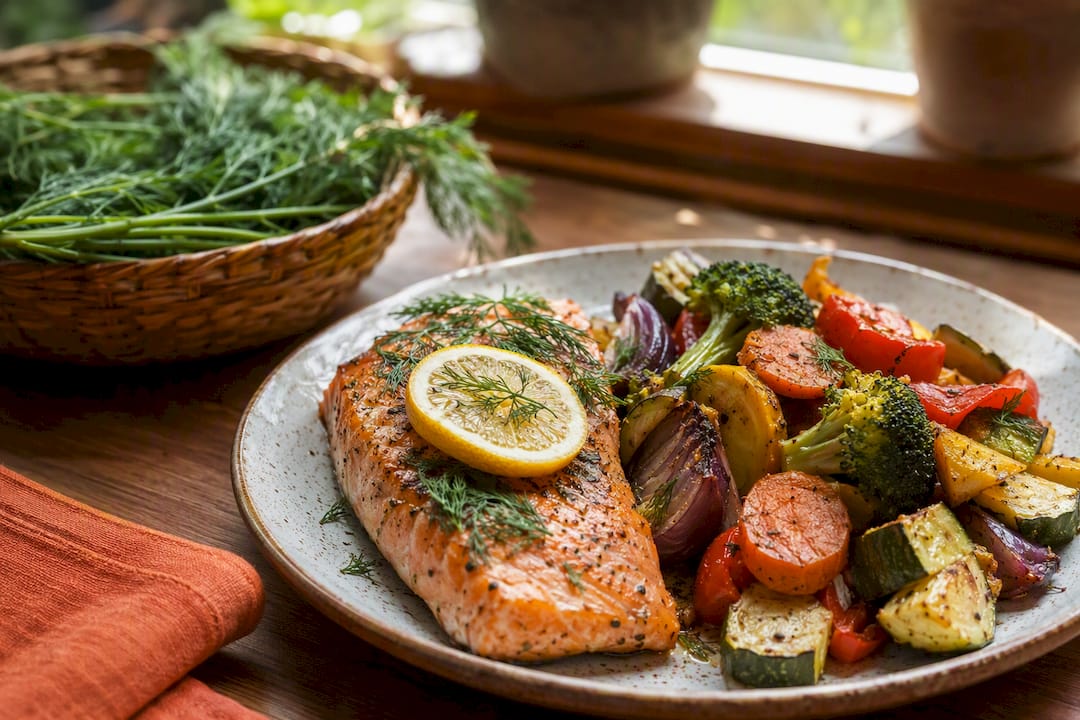
Air-fryer salmon with lemon and dill clocks in around 350 to 400 calories for a 5 to 6 ounce fillet with a side of roasted vegetables, and that portion alone delivers roughly 30 grams of protein. Twelve minutes, one basket, done.
Roasted shrimp scampi over cauliflower rice swaps traditional pasta for cauliflower rice, which cuts the caloric density by an estimated 30 to 50 percent compared to a full grain portion while still filling the plate. Expect a moderate calorie count with a good amount of protein from a generous shrimp portion.
Lemon-marinated grilled chicken with a simple slaw runs about 380 calories for a 5 ounce breast plus two cups of shredded cabbage and carrot tossed in a light vinaigrette. Marinate it in the morning and dinner takes ten minutes.
Vegetarian and plant-forward
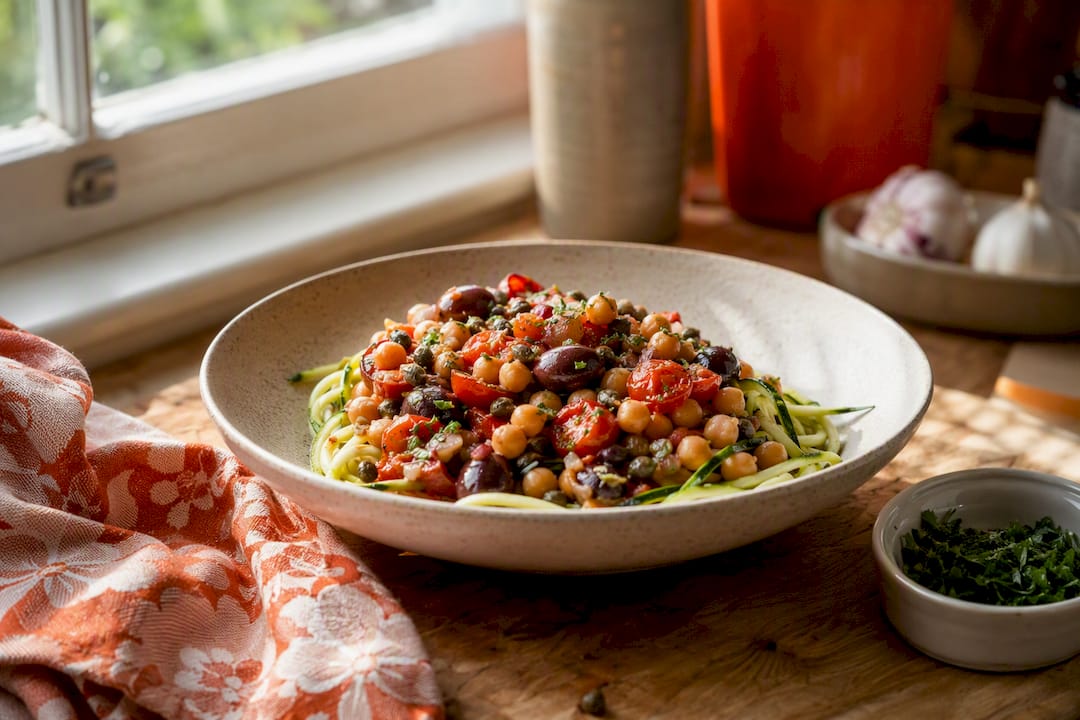
Chickpea puttanesca over zucchini noodles brings tomatoes, olives, capers, and a can of chickpeas together for a briny, salty dish that doesn’t taste like a diet meal. One and a half cups of chickpeas gets you close to 15 grams of protein on its own; add a poached egg on top if you want to push higher.
Dukkah-spiced sweet potato bake with a yogurt drizzle and toasted nuts is naturally under 400 calories per serving. It’s light on protein by itself, so stir in a scoop of cooked lentils or a dollop of Greek yogurt to close the gap.
Zucchini linguine with white beans and garlic uses spiralized zucchini instead of pasta, a swap that Good Housekeeping’s Nutrition Lab recommends specifically because it preserves the forkful of noodles you’re craving while dropping the calorie count. White beans add fiber and a notable amount of protein per cup.
One-pan and sheet-pan dinners
Cleanup matters as much as calories on a Tuesday night. Sheet-pan chicken fajitas with bell peppers and onions come in around 400 calories for three chicken-and-vegetable fajitas made with small corn tortillas, and the whole thing goes on one tray.
Okonomiyaki-style sheet-pan vegetable pancakes use shredded cabbage and a light egg batter, baked instead of pan-fried in oil. A hearty serving lands around 300 calories, and adding shredded chicken or shrimp brings the protein count up without much extra cooking time.
Lentil and vegetable stew made in one pot delivers close to 18 grams of protein per bowl from the lentils alone, plus carrots, celery, and tomato for volume. It also reheats well, which makes it a natural batch-cook candidate.
Soups and bowls
Miso shrimp salad is the standout example here: a serving of one and three-quarter cups of salad with 4 ounces of cooked shrimp runs 344 calories with 29.5 grams of protein, proof that a salad can genuinely function as the main event.
White bean and escarole soup with a parmesan rind for depth stays around 250 to 300 calories per bowl while packing 12 to 14 grams of protein and a serious amount of fiber.
Grain bowls with roasted vegetables and a soft-boiled egg let you control the calorie count by portioning the grain, usually a half cup cooked quinoa or farro, then piling on roasted broccoli, carrots, and chickpeas for bulk. Total comes in around 400 to 450 calories.
Pro Tip: If a recipe doesn’t list nutrition info, estimate it fast: log the ingredients and portions into a free tracking app, or use the USDA FoodData Central database for raw ingredient calories, then divide by servings.
The Rules That Keep 500 Calorie Dinners Filling
Filling isn’t about willpower. It’s about hitting three targets on the plate: protein, fiber, and volume.
- Protein first. Aim for at least 15 grams of protein per meal to improve satiety and help preserve muscle while you’re eating in a deficit. A 4 to 6 ounce cooked portion of chicken, fish, or tofu typically lands between 20 and 30 grams, which clears that bar without much math.
- Bulk up with vegetables, not more grain. Swapping half your usual pasta or rice portion for zoodles or cauliflower rice can cut 100 to 200 calories while the plate still looks and feels full.
- Don’t skip the fat. A tablespoon of olive oil or a few avocado slices adds roughly 100 to 120 calories but also helps you absorb fat-soluble vitamins from those vegetables and makes the whole dish taste finished instead of stripped down.
- Season like you mean it. Acid from lemon or vinegar, fresh herbs, and umami boosters like miso or soy sauce do more for satisfaction than salt alone ever will.
- Batch the boring parts. Cook a big tray of roasted vegetables and a pot of grains or beans once, then rebuild them into different bowls all week.
15+ grams of protein per meal is the number nutrition researchers point to for keeping you satisfied on fewer calories, according to EatingWell’s coverage of high-protein Mediterranean dinners.
A three-step planning workflow that removes the guesswork
You don’t need a spreadsheet to eat this way consistently. Set a rough target (500 calories, 15+ grams of protein), pick two or three recipes from the groups above, then build a shopping list and batch-cook the grains or proteins you’ll reuse. Dr-pro’s meal planner guide walks through a version of this same workflow, and its AI recipe generator can flag allergies or dietary restrictions automatically if you’re cooking for a family with different needs.
Portion Control Matters More Than Calorie Math
Most people don’t overeat because they lack discipline. They overeat because the plate itself is oversized, or because dinner gets eaten in front of a screen without much attention paid to the first few bites versus the last few.
A simple fix: plate your food in the kitchen, not at the table. Serving from the stove or counter, rather than passing dishes around, cuts the chance of an automatic second helping. It sounds almost too basic to matter, but it changes how much you actually eat without changing what’s available.
Eating slower helps too. It takes roughly 20 minutes for fullness signals to catch up with what you’ve actually consumed, so a meal eaten in five minutes standing at the counter feels less satisfying than the same meal eaten sitting down over fifteen or twenty. Put the fork down between bites if you tend to finish fast.
Measuring cups and a kitchen scale aren’t just for the obsessive. A “cup” of rice poured by eye can easily be a cup and a half, and that’s an extra 75 to 100 calories you didn’t plan for. Weigh your protein portion once or twice until you know what 5 ounces of chicken actually looks like on your plate. After that, you’ll eyeball it correctly for months.
Meal Planning and Batch Cooking for Low Calorie Dinners
The single biggest thing that derails a calorie-controlled week isn’t a bad recipe. It’s not having anything ready when you’re tired and hungry at 6 p.m.
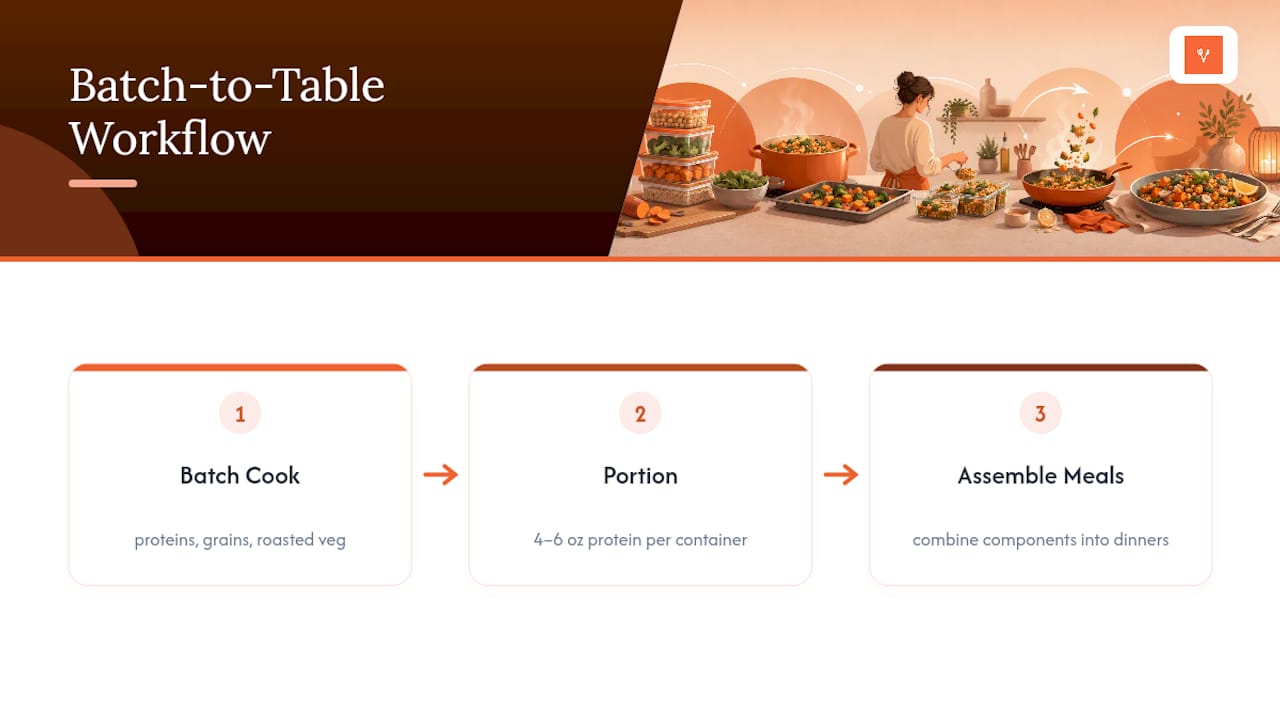
Pick one or two days to batch-cook the components that show up across multiple dinners: a tray of roasted vegetables, a pot of grains, a batch of shredded chicken or baked tofu. The Kitchn’s collection of quick healthy dinners leans on exactly this approach, building fast weeknight meals out of pre-cooked staples rather than starting from scratch every night.
Store proteins in 4 to 6 ounce portions in separate containers so building a 15+ gram protein meal takes zero thinking. Cooked grains and beans hold well in the fridge for four to five days, and most roasted vegetables reheat fine in a hot skillet even if they lose a little crispness.
A rotating four-recipe plan beats an ambitious seven-recipe plan almost every time, because it’s the one you’ll actually finish. Pick your quick protein, your vegetarian option, your one-pan dinner, and your soup or bowl for the week, then mix and match the sides. If keeping track of what you’ve planned and what’s already in the fridge feels like its own chore, Dr-pro’s meal planner tool builds the calendar and shopping list for you automatically.
Balancing Fats and Carbs Alongside Protein
Protein gets most of the attention in calorie-controlled eating, but the fat and carbohydrate side of the plate still decides whether a meal actually satisfies you.
A completely fat-free dinner often tastes flat and leaves you back in the kitchen an hour later. A tablespoon of olive oil, a quarter of an avocado, or a small handful of nuts adds roughly 100 to 120 calories, and that’s a fair trade for a meal you don’t abandon halfway through. Fat also slows digestion, which stretches out how long a meal keeps you full.
Complex carbohydrates work the same way fiber does: quinoa, farro, sweet potato, and beans digest slower than white rice or refined pasta, which means steadier energy instead of a spike and crash. You don’t need to cut carbs to hit 500 calories. You need to pick the ones with more fiber attached, since a cup of cooked lentils carries roughly 15 grams of fiber alongside its protein, doing double duty on a single plate.
The easiest rule of thumb: build the plate around protein and vegetables first, then add a modest portion of a complex carbohydrate and a small amount of fat. That order usually keeps the calorie count in check without you having to think about grams at all.
What to Drink With a Low Calorie Dinner
The dinner plate isn’t the only place calories sneak in. A 5 ounce glass of wine runs about 120 calories, and a regular soda adds another 140 to 150, both of which can undo the math you worked out on your plate.
Sparkling water with a wedge of lime or lemon is the simplest zero-calorie swap that still feels like you’re drinking something, not just water out of habit. Unsweetened iced tea, hot tea, and black coffee all work the same way if you want something with a little more character than plain water.
If wine is part of your dinner most nights, a smaller pour (3 to 4 ounces instead of a full 5) or alternating a glass of wine with a glass of sparkling water cuts the calorie hit roughly in half without cutting out the habit entirely. Skip the fancy cocktail on a weeknight. Most run 200 to 300 calories before you’ve eaten a bite of dinner.
Ordering Out Without Blowing Your Calorie Target
Restaurant portions are the real obstacle here, not the food itself. A typical entree at a sit-down restaurant can run 800 to 1,200 calories before you’ve touched the bread basket, largely because of oversized portions and oil used far more liberally than you’d use it at home.
Ask for dressings and sauces on the side. This single habit alone can save 150 to 300 calories, since a ladled-on dressing or sauce is rarely measured by the kitchen. Split an entree with a dining companion, or ask for a to-go box at the start of the meal and pack away half before you start eating. Out of sight keeps you from finishing it just because it’s there.
Grilled, roasted, steamed, and broiled beat fried nearly every time on calorie count, and most menus will let you sub a side salad or steamed vegetables for fries at no extra charge if you ask. Ordering an appetizer as your main course, particularly a protein-forward one like grilled shrimp or a lettuce wrap, often lands closer to a reasonable dinner-sized portion than the entrees do.
When a menu doesn’t list calories, a rough guess based on portion size and cooking method gets you close enough. Anything swimming in visible oil or butter is almost certainly north of 600 calories no matter what the menu copy says.
Key Takeaways
Filling low-calorie dinners come from stacking protein, fiber, and volume on the plate, not from cutting food out.
| Point | Details |
|---|---|
| Hit 15+ grams of protein | Build each dinner around a 4 to 6 ounce protein portion to improve fullness and preserve muscle. |
| Swap volume for calories | Use zoodles, cauliflower rice, or extra vegetables to cut 100 to 200 calories without shrinking the plate. |
| Don’t skip fat entirely | A tablespoon of olive oil or a few avocado slices keeps meals satisfying for around 100 calories. |
| Batch-cook the basics | Pre-cook grains, beans, and proteins once so weeknight dinners take ten minutes to assemble. |
| Watch drinks and dining out | Sparkling water over soda and dressing on the side at restaurants both protect your calorie target. |
What Most Low-Calorie Advice Gets Wrong
Most advice on this topic treats calorie counting like the whole job. It isn’t. The recipes that actually work under 500 calories succeed because they solve for satisfaction first and let the calorie count fall out of that, not the other way around.
The conventional approach, strip fat, shrink portions, skip the carbs, is exactly why so many people quit after two weeks. A meal with no fat and no complex carbs might hit the number on paper, but it won’t hold you until 9 p.m., and you’ll eat twice as much before bed to compensate.
What actually works is closer to what shows up in the miso shrimp salad or the chickpea puttanesca: real protein, real fiber, a little fat, bold seasoning. None of that is complicated. The harder part is doing it night after night without defaulting back to takeout when you’re tired. That’s less a nutrition problem and more a planning problem, which is exactly where a tool built to remove the daily decision, rather than another rulebook, earns its place in the routine.
If you want that decision made for you on the nights you have nothing left to give, Dr-pro’s nutrition guide and its free AI recipe generator can build a calorie-and-protein-targeted dinner and shopping list in under a minute, allergy checks included.
— Jack
Sources
- Low-calorie, high-protein Mediterranean diet dinner recipes | EatingWell
- 50 Easy and Filling Low-Calorie Dinners That Don’t Skimp on Flavor | Good Housekeeping
- Miso Shrimp Salad - Skinnytaste
- 50 Easy & Healthy Dinner Ideas Ready in Just 30 Minutes | The Kitchn