2–6 Week Low FODMAP Meal Planner With Grocery First Checklist | Dinner Roulette Pro
September 18, 2026
2–6 Week Low FODMAP Meal Planner With Grocery First Checklist
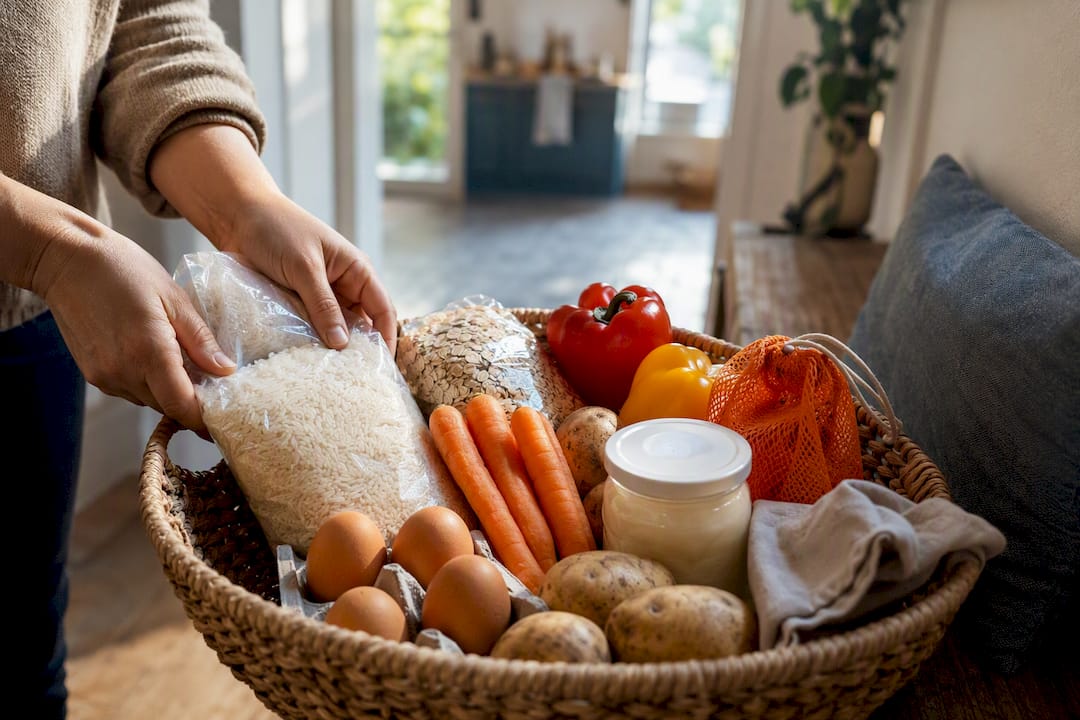
Start with a two to six week elimination phase, built around a short list of pantry staples and a repeatable meal rotation, before you touch reintroduction. Reintroduction comes next, one FODMAP group at a time, ideally with a registered dietitian reviewing your food diary. Skipping that second phase is the single most common mistake, since the goal was never permanent restriction, just clear answers about what actually triggers your symptoms.
TL;DR:
- Sticking to a strict elimination phase for two to six weeks with simple, low FODMAP staples helps reduce symptoms before reintroduction.
- Portions are crucial; half a cup of certain vegetables may be safe, while a full cup can trigger symptoms, requiring careful measurement.
- Reintroducing each FODMAP group over three days, with symptom logging and a washout period, identifies individual triggers effectively.
- Using garlic-infused oil, green leek tops, herbs, and citrus can enhance flavor without increasing FODMAP load, preventing meal monotony.
- Batch-prepping grains, proteins, and vegetables limits daily decision fatigue and prevents diet burnout during the elimination and reintroduction phases.
Table of Contents
- What Groceries Belong on a Low FODMAP Shopping List?
- A Sample Multi-Day Low FODMAP Meal Plan
- How Do You Keep Low FODMAP Meal Planning From Becoming a Chore?
- How Reintroduction Works After Elimination
- Flavor Swaps That Keep Meals From Tasting Like a Diet
- Turning the Plan Into a One-Page Shopping and Prep List
- Why This Plan Leans on Clinical Guidance, Not Guesswork
- Learning Your Triggers Without Losing the Joy of Cooking
- Let an App Handle the Low FODMAP Math for You
- Sources
- FAQ
What Groceries Belong on a Low FODMAP Shopping List?
A working low FODMAP meal planning strategy starts in the pantry, not the recipe box. Stock the right staples and most weeknight dinners write themselves.
Grains: rice, oats, quinoa, and gluten-free pasta or bread cover breakfast through dinner without a single trigger ingredient.
Proteins: plain chicken, fish, eggs, firm tofu, and canned plain legumes (in small portions, and usually reintroduced later rather than during strict elimination) round out your base.
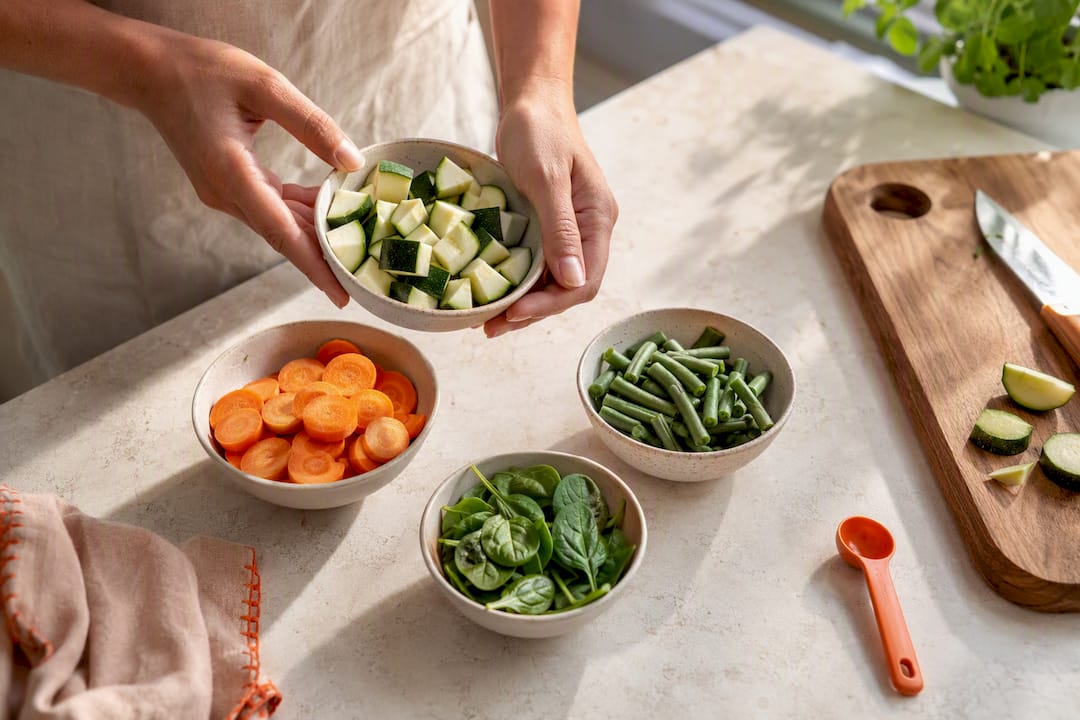
Produce: bell peppers, carrots, zucchini, spinach, green beans, and potatoes are reliable, but portion size matters more than people expect.
Dairy and alternatives: lactose-free milk and yogurt, most hard cheeses, and a handful of tolerated plant milks.
Oils and condiments: garlic-infused oil, olive oil, mustard, tamari or soy sauce, and most vinegars.
Read labels before anything else goes in the cart. According to Monash FODMAP, even foods that look safe on the surface can carry hidden triggers, and serving size determines whether a food counts as low FODMAP at all, not just its ingredient list. Watch for sugar alcohols (sorbitol, mannitol, xylitol), inulin, and garlic or onion powder buried in sauces, dressings, and “natural flavoring.”
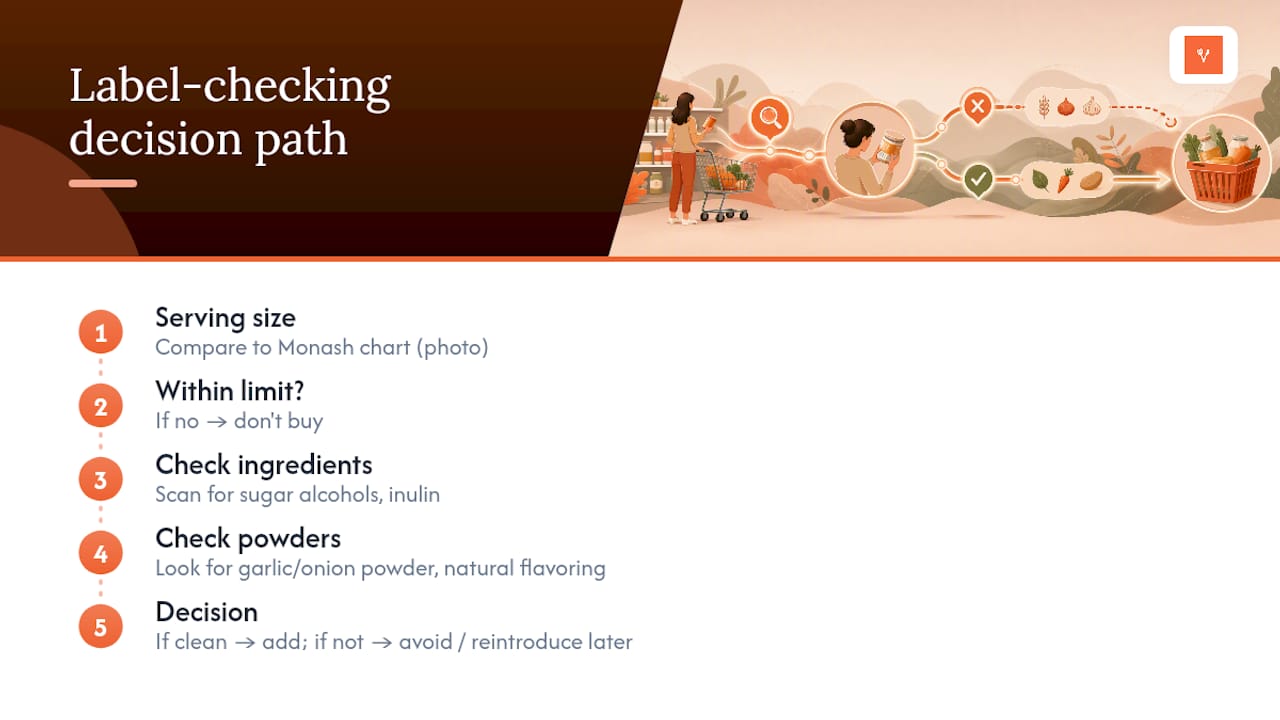
Pro Tip: Snap a photo of the Monash serving-size chart and keep it on your phone. Half a cup of a vegetable can be fine while a full cup triggers symptoms, and that distinction lives in portion, not category.
A Sample Multi-Day Low FODMAP Meal Plan
Here’s a three-day elimination-phase template you can copy directly into a planner or notes app. Portions are approximate, so adjust to your calorie needs.
- Day One: Breakfast is oats with lactose-free milk, blueberries, and a spoon of peanut butter. Lunch is a quinoa bowl with grilled chicken, roasted zucchini, and bell peppers. Dinner is baked salmon, rice, and sautéed spinach with garlic-infused oil. Snacks: lactose-free yogurt with strawberries, and a handful of walnuts.
- Day Two: Breakfast is scrambled eggs with spinach and gluten-free toast. Lunch is leftover salmon over greens with olive oil and lemon. Dinner is turkey and leek pasta (use only the green tops of leeks) with parmesan. Snacks: rice cakes with tolerated hard cheese, and orange slices.
- Day Three (vegetarian swap): Breakfast is a smoothie with lactose-free milk, banana, and spinach. Lunch is firm tofu stir-fry with carrots, green beans, and tamari over rice. Dinner is a baked potato topped with cheddar, chives, and steamed broccoli. Snacks: gluten-free crackers with peanut butter, and kiwi.
The turkey and leek pasta and the stir-fry both freeze well, so double those batches on a prep day. Swap any protein across days freely, since the vegetables and grains are the load-bearing part of each recipe.
How Do You Keep Low FODMAP Meal Planning From Becoming a Chore?
Most people don’t abandon the low FODMAP diet because it’s restrictive. They abandon it because planning every single meal from scratch is exhausting. A few decision rules fix that.
Set aside two hours on a weekend for prep: cook a big batch of rice or quinoa, roast a tray of low FODMAP vegetables, portion out proteins into containers, and mix one or two dressings using garlic-infused oil as the base.
Then limit your actual choices. Rotate three breakfasts, four lunches, and four dinners for the week instead of inventing something new every day. That single rule does more to prevent burnout than any recipe collection.
- Batch-cook grains and proteins once, reuse across three or four meals
- Roast vegetables at high heat to concentrate flavor without added sauces
- Use citrus zest, fresh herbs, and garlic-infused oil to keep meals from tasting clinical
- Log meals and symptoms in a food diary right after eating, while the details are fresh
Registered dietitians recommend logging close to the meal, not at the end of the day, because memory fades fast and the diary is only useful if it’s accurate.
How Reintroduction Works After Elimination
Elimination isn’t the finish line. After two to six weeks of symptom stability, Mayo Clinic Press frames reintroduction as the phase that actually identifies your personal triggers, since staying restricted indefinitely means cutting foods you may tolerate just fine.
- Pick one FODMAP group to test: lactose, fructose, fructans, GOS, or polyols, tested roughly in that order.
- Eat a measured portion of a test food for two to three days, logging any symptoms.
- Return to your baseline low FODMAP diet for a few days of washout before testing the next group.
- Repeat until all five groups are tested, building a personal map of what you tolerate and in what amount.
Bring in a registered dietitian if symptoms flare unpredictably, if weight loss becomes a concern, or if you’re not seeing improvement after a full elimination cycle. Clinical guidance backs this up: research reviewed on PubMed shows the diet helps many people with IBS, but only when it’s personalized rather than followed as a blanket, permanent restriction.
Flavor Swaps That Keep Meals From Tasting Like a Diet
The biggest complaint about low FODMAP cooking is flat flavor, mostly because garlic and onion carry so much of the seasoning load in typical recipes. The fix isn’t fewer flavors. It’s different ones.
Garlic-infused oil replaces sautéed garlic almost perfectly, since the FODMAPs in garlic aren’t oil-soluble. The green tops of leeks and scallions give you an onion-like bite without the fructans concentrated in the white bulb. Chives, citrus zest, and fresh herbs round out the rest.
Three templates to build from:
- Lemon-herb salmon: salmon fillet, olive oil, lemon zest, dill, salt, roasted at 400°F for 12 minutes.
- Turkey and leek pasta: ground turkey, leek greens, gluten-free pasta, olive oil, parmesan, black pepper.
- Quinoa bowl: cooked quinoa, roasted carrots and zucchini, chickpea portion (small, if tolerated), tahini, lemon.
Avoid pre-made sauces, bouillon, and packaged seasoning blends. Garlic and onion powder hide in almost all of them, even the ones labeled “natural.”
Turning the Plan Into a One-Page Shopping and Prep List
Group your shopping list by section: produce (peppers, carrots, zucchini, spinach, leeks), proteins (chicken, salmon, eggs, firm tofu), pantry (rice, quinoa, gluten-free pasta, garlic-infused oil, tamari), and fridge staples (lactose-free milk and yogurt, hard cheese).
On prep day, batch-cook grains and roast vegetables in one session, portion proteins into containers, and whisk a dressing or two so dinner takes ten minutes instead of forty.
| Item | Fridge | Freezer |
|---|---|---|
| Cooked grains | 4 to 5 days | 2 to 3 months |
| Roasted vegetables | 3 to 4 days | 2 months |
| Cooked proteins | 3 to 4 days | 2 to 3 months |
| Turkey-leek pasta (batch) | 3 days | 2 months |
Why This Plan Leans on Clinical Guidance, Not Guesswork
Every meal recommendation here traces back to established clinical framing, not internet trend advice. Mayo Clinic Press and Monash FODMAP both frame the diet as a three-phase process, not a permanent overhaul.
- Reintroduction is the point of the diet, not an optional add-on
- Registered dietitians catch nutrient gaps that self-guided elimination often misses
- Portion size, not just ingredient choice, determines whether a food is safe
- Dinner Roulette Pro applies dietary filters and allergy checks that can flag high-FODMAP ingredients automatically as you build a weekly plan
Learning Your Triggers Without Losing the Joy of Cooking
Some weeks I’d nail a dinner that tasted just as good as the version with real garlic. Other weeks, a “safe” recipe still triggered symptoms, and that’s the process working, not failing. The target is a personalized diet you can live with, not a permanent list of foods you can never touch again.
— Jack
Let an App Handle the Low FODMAP Math for You
Cross-referencing serving sizes, hidden inulin, and garlic powder on every label gets old fast, especially in week three of elimination when decision fatigue is already high. An app can remove that friction by letting you set dietary filters and allergy checks once, then generating fully built recipes, complete with ingredients, nutrition data, and a shopping list, so you’re not re-verifying every meal from scratch.
Some apps build a shopping list automatically from whatever meals you pick, with calendar views that keep your rotation organized without a spreadsheet. If you’re managing a family where only one person needs to eat low FODMAP, the dietary restrictions meal planner handles that split without doubling your cooking workload, and the recipe organization guide helps you tag and save the meals that actually work for your gut once you find them. Start with the free plan and see how much of the weekly guesswork disappears, or check the shopping list guide to see how the grocery side works before you commit to a paid tier.
This article is general information, not a substitute for advice from a qualified doctor. Consult a qualified healthcare professional about your own circumstances before acting on anything here.
Sources
- What is a low-FODMAP diet? Foods, meal plan and benefits – Mayo Clinic Press
- Low FODMAP Meal Plan – Monash FODMAP
- Low FODMAP garlic & onion substitutes – FODMAP Everyday
- Low-FODMAP Diet: Meal Plan and Recipes – WebMD
FAQ
What Is the Best Low FODMAP Meal Plan?
The best plan is the one built around a rotation of three to four breakfasts, lunches, and dinners using staples like rice, chicken, zucchini, and lactose-free dairy, kept simple enough to sustain for two to six weeks of elimination. A structured planner, whether on paper or through an app like Dinner Roulette Pro, keeps that rotation from turning into daily decision fatigue.
What’s the Best Ice Cream for IBS?
Lactose-free ice cream, or a small portion of a hard gelato made without high-fructose corn syrup or inulin-based fiber additives, tends to be better tolerated than standard dairy ice cream. Check the label for sugar alcohols like sorbitol, which are common in “no sugar added” versions and are a known IBS trigger.
What Foods Are Surprisingly Low in FODMAP?
Potatoes, hard cheeses like cheddar and parmesan, and dark chocolate in small portions all qualify as low FODMAP, despite popular assumptions that dairy and starchy carbs are automatically off-limits. Portion size still matters, since a food can shift from low to high FODMAP once you exceed the tested serving.
Is There a Free App for the Low FODMAP Diet?
Yes. Some apps offer a free tier that generates recipes with dietary filters and allergy checks at no cost, with paid plans available for monthly, yearly, or one-time lifetime purchase options for deeper customization.