PCOS Meal Planning: Plate Rules and a 1-Week Template | Dinner Roulette Pro
August 20, 2026
PCOS Meal Planning: Plate Rules and a 1-Week Template
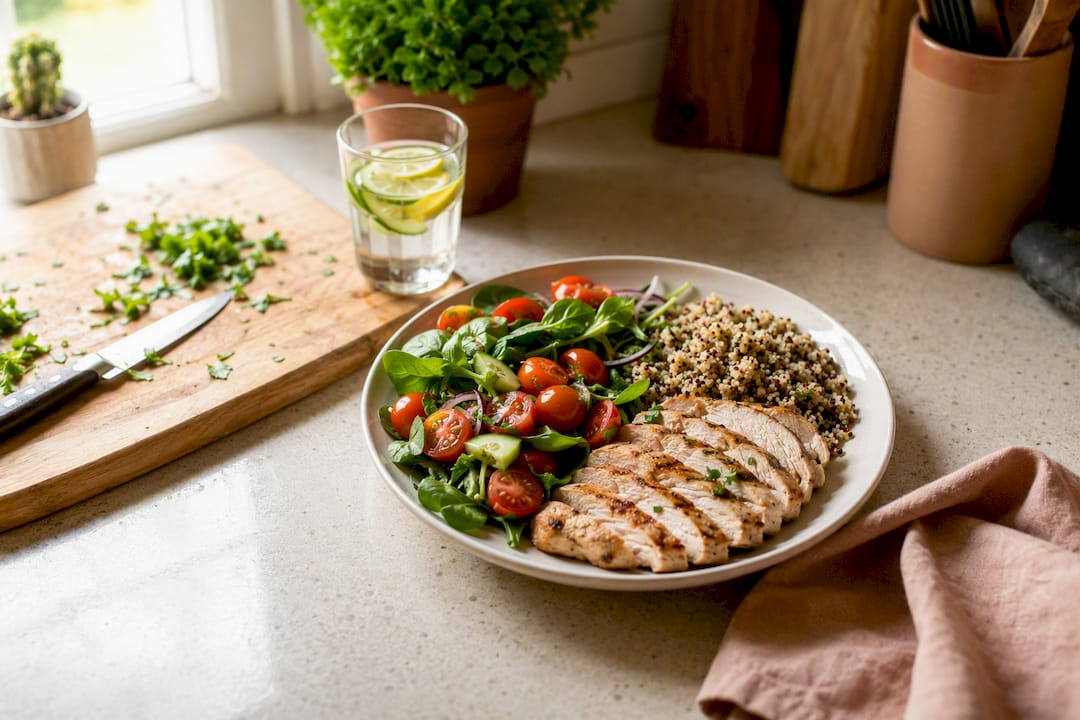
The most effective approach to PCOS meal planning is a protein-forward, low-glycemic plate built the same way at nearly every meal: half non-starchy vegetables, a quarter lean protein, a quarter whole grains or starchy vegetables, plus a source of healthy fat. Pair that with consistent meal timing so blood sugar doesn’t spike and crash between meals.
- a large portion of non-starchy vegetables (spinach, broccoli, peppers, zucchini)
- 25% lean protein (chicken, tofu, eggs, fish, legumes)
- 25% whole grains or starchy vegetables (quinoa, farro, sweet potato)
- A thumb-size portion of healthy fat (olive oil, avocado, nuts)
- Water throughout the day, aiming for pale yellow urine as your gauge
Pro Tip: Aim for roughly 25 to 35 grams of protein per meal and eat every 3 to 5 hours. Skipping meals tends to backfire on blood sugar more than it helps.
Key Takeaways
A protein-forward, plate-based approach with consistent meal timing is the most sustainable way to manage PCOS through food.
| Point | Details |
|---|---|
| Use the plate method | Fill half your plate with non-starchy vegetables, a quarter with lean protein, a quarter with whole grains. |
| Hit protein targets | Aim for 25 to 35 grams of protein per meal to support satiety and blood sugar control. |
| Skip elimination diets | Reduce refined carbs and sugary drinks instead of cutting whole food groups entirely. |
| Batch cook weekly | Prep proteins, grains, and vegetables separately on Sunday to mix into meals all week. |
| Automate the planning | Dinner Roulette Pro generates plate-based recipes with allergen filters and automatic grocery lists. |
Table of Contents
- What to Eat for PCOS Meal Planning and Why
- What Foods Should You Limit With PCOS?
- How Do You Portion Meals for PCOS?
- What Do PCOS-Friendly Meals Actually Look Like?
- How Do You Stay Consistent With PCOS Meal Prep?
- When Should You See a Dietitian for PCOS?
- Progress Over Perfection in PCOS Meal Planning
- Let an App Handle the Decision Fatigue
- Sources
What to Eat for PCOS Meal Planning and Why
There’s no single PCOS diet clinicians agree on. Instead, the strongest evidence points toward sustainable eating patterns like Mediterranean or DASH style eating, built around low-glycemic, fiber-rich carbohydrates. That framing matters, because it means you’re not chasing a perfect diet, you’re building a repeatable pattern.
Certain foods do more heavy lifting than others for PCOS symptoms:
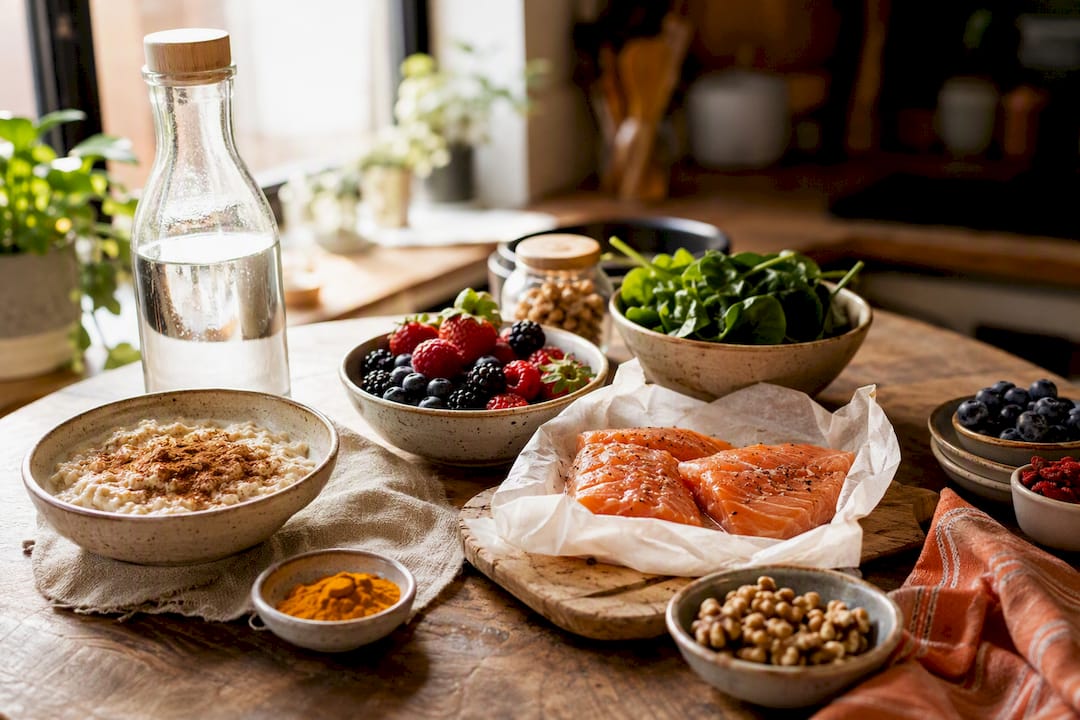
- Non-starchy vegetables: broccoli, leafy greens, mushrooms, cauliflower, brussels sprouts
- Legumes: lentils, chickpeas, black beans, edamame
- Whole grains: quinoa, steel-cut oats, farro, brown rice
- Lean proteins: chicken breast, turkey, eggs, Greek yogurt, tofu, tempeh
- Fatty fish: salmon, sardines, mackerel, two to three times a week
- Nuts and seeds: walnuts, chia, flax, pumpkin seeds
- Healthy fats: extra virgin olive oil, avocado
- Berries: blueberries and raspberries for fiber and antioxidants
- Anti-inflammatory herbs and spices: turmeric, cinnamon, ginger, garlic
Fiber is doing quiet, important work here. It slows glucose absorption and feeds the gut bacteria linked to lower inflammation, which is part of why prediabetes-focused eating guidelines land on nearly identical plate proportions to what dietitians recommend for PCOS. Both conditions share insulin resistance as a root driver, so the dietary logic overlaps almost completely.
Aim for 25 to 35 grams of fiber daily and two servings of fatty fish weekly for omega-3s. Cinnamon and turmeric aren’t magic, but working them into oatmeal, curries, or roasted vegetables adds anti-inflammatory compounds at essentially zero cost. Water matters too: dehydration can worsen fatigue and headaches that already overlap with PCOS symptoms, so keep a bottle within reach through the day.
What Foods Should You Limit With PCOS?
You don’t need to eliminate entire food groups. In fact, Johns Hopkins Medicine advises against cutting out whole macronutrients like carbs entirely, since that approach is hard to sustain and can create nutrient gaps. The goal is reducing, not banning.
Foods worth scaling back:
- Refined carbs: white bread, white pasta, pastries
- Sugary drinks: soda, sweetened coffee drinks, most fruit juice
- Highly processed snacks: chips, packaged cookies, candy
- Fried foods: fast food, deep-fried anything
- Excess red or processed meat: bacon, sausage, deli meat
- Heavy alcohol use
Swap white rice for quinoa, soda for sparkling water with fruit, and fried chicken for grilled or air-fried. Pro Tip: Rigid elimination diets tend to increase stress and cortisol, which can work against you metabolically. A dietitian-aligned pattern beats a perfect one you can’t maintain.
How Do You Portion Meals for PCOS?
Turning the plate template into real portions is easier with visual cues instead of scales.
- Non-starchy vegetables: fill half your plate, roughly two fists’ worth
- Lean protein: a portion about the size of your palm, 3 to 4 ounces
- Whole grains or starchy vegetables: about one cupped hand
- Healthy fat: a thumb-size amount, like a tablespoon of olive oil or a quarter avocado
For protein, 25 to 35 grams per meal is a common practical target in dietitian-built PCOS plans, with 10 to 15 grams for snacks. A macro-based meal planner can help you hit these numbers without doing math at every meal.
- Never eat carbs alone. Pair fruit with nut butter, crackers with hummus, rice with chicken.
- Naked carbs spike blood sugar faster than the same carb eaten with protein or fat.
Pro Tip: If breakfast is your weak spot, add a hard-boiled egg or Greek yogurt to your usual toast or oatmeal. That small addition changes your blood sugar response for hours.
What Do PCOS-Friendly Meals Actually Look Like?
Here’s how the plate template translates into meals you’d actually make on a Tuesday.
Breakfast: Greek yogurt with berries, chia seeds, and walnuts. Or veggie scramble with two eggs, spinach, and a slice of whole grain toast.
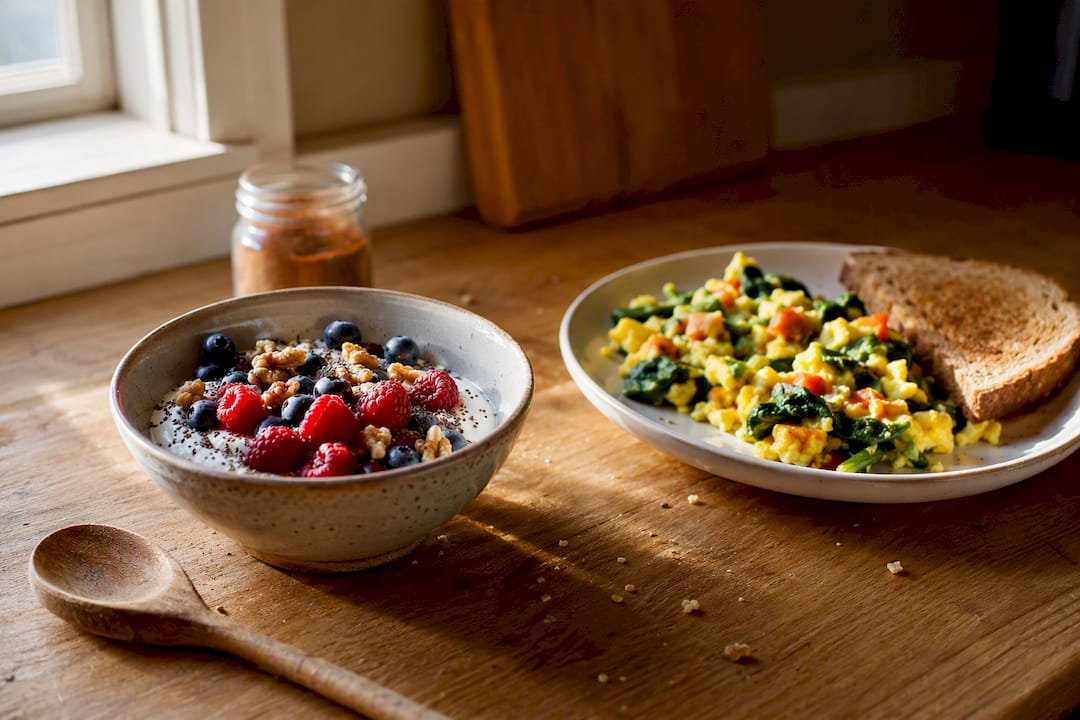
Lunch: Grilled chicken over mixed greens with chickpeas, cucumber, olive oil vinaigrette, and a small portion of farro.
Snack: Apple slices with almond butter, or cottage cheese with cinnamon.
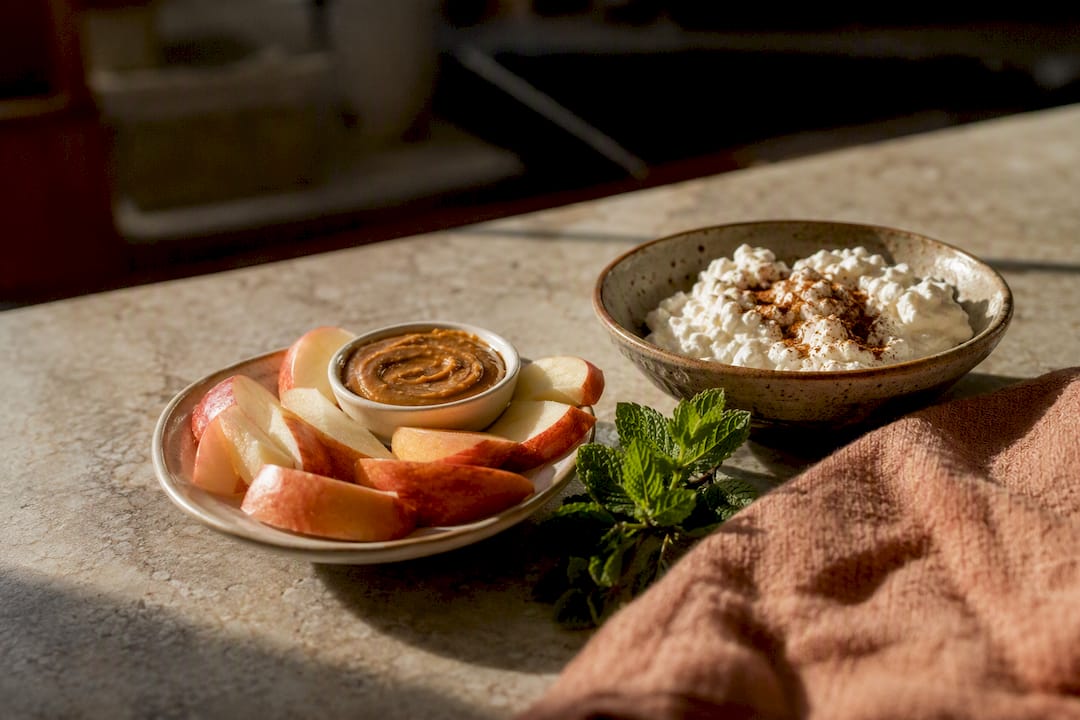
Dinner: Baked salmon, roasted broccoli and peppers, and a half cup of quinoa.
A rough week might look like this, mixing and matching those same building blocks:
- Monday: turkey chili with beans and a side salad
- Tuesday: salmon, quinoa, roasted vegetables
- Wednesday: chicken stir-fry with brown rice and broccoli
- Thursday: lentil soup with whole grain bread
- Friday: tofu and vegetable curry over cauliflower rice
- Saturday: turkey burgers, sweet potato wedges, side salad
- Sunday: sheet-pan chicken thighs with root vegetables
For vegetarian needs, swap animal protein for tofu, tempeh, or legumes and double the portion for equivalent protein. For dairy-free, use coconut or almond yogurt and nutritional yeast instead of cheese. Short on time, lean on pre-cooked rotisserie chicken and frozen vegetables. Tight on budget, canned beans and frozen fish stretch further than fresh salmon every week. A meal planner built for dietary restrictions can automate most of these swaps for you.
How Do You Stay Consistent With PCOS Meal Prep?
The plate template only works if you actually cook it on a Tuesday night when you’re tired. That’s a planning problem, not a willpower problem.
Batch-cook a protein (shredded chicken or baked tofu), a grain (quinoa or farro), and two roasted vegetables every Sunday. Store them separately so you can mix new combinations all week instead of eating the same bowl five days straight. Build your grocery list around the plate categories first: vegetables, proteins, whole grains, healthy fats, then fill in extras.
- Grocery-list priority: vegetables and proteins first, so you don’t default to convenience carbs
- Takeout swap: choose grilled over fried, ask for dressing on the side, add a vegetable side
- Travel swap: pack nuts, jerky, or a protein bar so you’re not stuck with airport pastries
A grocery-list app with one-tap ordering removes a lot of the friction here, since the list builds itself from whatever meals you’ve already chosen.
Pro Tip: Look for a planning tool that lets you filter by dietary restriction and allergy, not just calorie count. Nutrition data alone doesn’t help if the recipe still contains something you can’t eat.
When Should You See a Dietitian for PCOS?
A general plate template works for most people, but see a registered dietitian if symptoms aren’t improving, you’re trying to conceive, or you have overlapping conditions like diabetes or unexplained weight changes.
Bring 3 to 4 days of food logs, a symptom log, and your current medication list. A dietitian can then personalize your macros, meal timing, and micronutrient needs in ways a general plan can’t. Since PCOS carries broader metabolic risks, coordinate any significant dietary change with your clinician first.
Progress Over Perfection in PCOS Meal Planning
Nobody eats a perfect plate seven days a week, and treating PCOS meal planning like a pass/fail test is how most people quit within a month. The plate method works because it’s forgiving. Miss the ratio at lunch, hit it at dinner.
Two low-stress wins worth trying this week: keep a bag of frozen shrimp or pre-cooked lentils on hand for nights you don’t want to cook, and add cinnamon to your coffee or oatmeal since it costs nothing and builds a habit. Consistency beats precision here, every time.
Let an App Handle the Decision Fatigue
Building a PCOS-friendly plate every night is simple in theory and exhausting in practice, especially on a low-energy week when cooking feels like one more task. Dinner Roulette Pro turns the plate template into a recipe you can actually spin up in seconds, generating meals that already hit your protein and fiber targets without you doing the math.
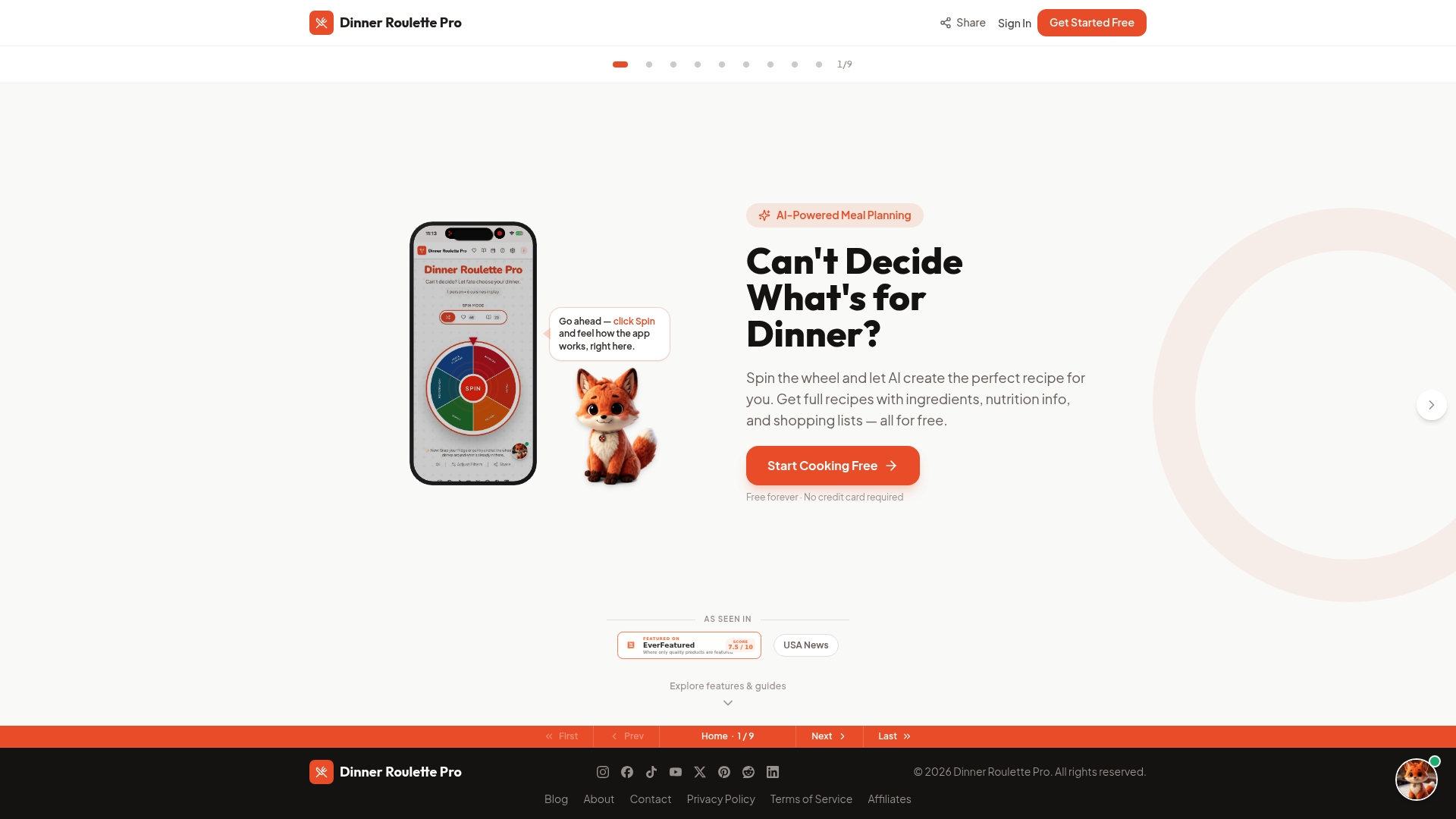
For PCOS specifically, the app auto-builds plate-based recipes around your macros, filters out allergens and ingredients you’re avoiding, and can front-load carbs earlier in the day if that’s a strategy your dietitian has recommended. Once a meal is picked, the shopping list builds itself and pushes straight to one-tap grocery ordering, so the plan doesn’t die at the grocery store. The app assists with planning and food choices, but it doesn’t replace personalized medical advice. Talk to a registered dietitian or clinician before making major changes to manage PCOS. Check out the nutrition guide to see how the macro tracking and plate templates work before your next spin.
Sources
- PMC12049039
- Prediabetes diet: How to help prevent progression to diabetes — Harvard Health
- PMOS Diet | Johns Hopkins Medicine
- Polycystic ovary syndrome — WHO fact sheet
This article is general information, not a substitute for advice from a qualified doctor. Consult a qualified healthcare professional about your own circumstances before acting on anything here.