5 Whisk Alternatives to Preserve Character Consistency When Migrating | Dinner Roulette Pro
September 14, 2026
5 Whisk Alternatives to Preserve Character Consistency When Migrating

For most creators leaving Whisk, the shortlist comes down to five names. Pick Midjourney for stylized, artist-grade output; DALL-E 3 for reliable prompt-to-image accuracy inside a chat workflow; Stable Diffusion for full self-hosted control; Google ImageFX or Gemini for enterprise API access and Google integration; and Craiyon if you just need free, casual images with no learning curve. Full comparisons, migration steps, and tradeoffs follow below.
TL;DR:
- Self-hosted Stable Diffusion offers complete control over model versions and data privacy but requires significant setup and GPU resources.
- Midjourney provides artist-quality images with a subscription model, rewarding patience in prompt refinement but without a free tier.
- DALL-E 3, integrated into ChatGPT, delivers fast, accurate images using natural language prompts, ideal for quick and reliable results.
- Enterprise APIs like Clarifai and Google Cloud Vision focus on image analysis rather than generation, suitable for dataset management and labeling tasks.
- Consistency in character generation favors Stable Diffusion with multi-image conditioning or APIs supporting reference images to maintain appearance across multiple outputs.
Table of Contents
- Whisk Alternatives Compared Side by Side
- What Actually Separates These Tools From Each Other
- How to Choose the Right Whisk Alternative
- How We Tested and Why That Matters
- Where This Market Is Actually Headed
- A Different Kind of Decision Fatigue Worth Solving
- Sources
- FAQ
Whisk Alternatives Compared Side by Side
Whisk’s shutdown or rebrand pushed a lot of users into research mode overnight, and the field they landed in is crowded. Some of these tools are consumer-facing creative apps. Others are enterprise vision APIs that have nothing to do with generating pretty pictures and everything to do with detecting, labeling, or searching them. Sorting that out before you commit matters more than picking whichever name shows up first in a listicle.
The table below groups the main contenders by what they actually do, not just how they’re marketed.
DALL-E, listed separately in some vendor roundups as DALL-E / DALL-E 3, refers to the same OpenAI model family and isn’t a distinct product to evaluate twice.
A few quick verdicts worth knowing before you dig into the comparative notes below.
- Midjourney rewards patience with prompts and delivers the most consistently “artistic” output of the group, but it has no free tier and its web interface, while improved, still favors users comfortable iterating through variations.
- DALL-E 3 is the fastest way to get a usable image from a plain-English description, largely because it lives inside ChatGPT and interprets natural phrasing better than most rivals.
- Stable Diffusion is the only entry here that gives you total control over the model itself, including which checkpoint, which fine-tune, and where the data lives, at the cost of a real setup investment.
- Google ImageFX and Gemini matter most if you’re already inside Google Workspace or building on Vertex AI, since the integration story is the real selling point over raw image quality.
- Adobe Firefly stands apart for commercial licensing peace of mind: generated assets come with usage rights baked in, which matters for agencies and freelancers billing clients.
- Craiyon and Microsoft Designer are the low-stakes options: free, low-friction, and fine for social posts or quick mockups, but not built for repeated characters or production polish.
- Ideogram has quietly become the go-to when a project needs legible text rendered inside an image, a task most competitors still handle poorly.
- Tools like Roboflow, Google Cloud Vision API, Clarifai, Dataloop, Syte, Encord, and GoSpotCheck by FORM aren’t Whisk substitutes at all in the creative sense. They analyze, label, and search images rather than generate them, and vendor directories that lump them in with Midjourney and DALL-E 3 are mixing two different product categories.
For anyone who needs a recurring character across multiple images, look hardest at Stable Diffusion with reference conditioning, or an API that explicitly supports multi-image conditioning and deterministic seeds. Consumer web apps like Craiyon and Microsoft Designer tend to lose the thread after two or three generations, redrawing faces and outfits slightly differently each time.
What Actually Separates These Tools From Each Other
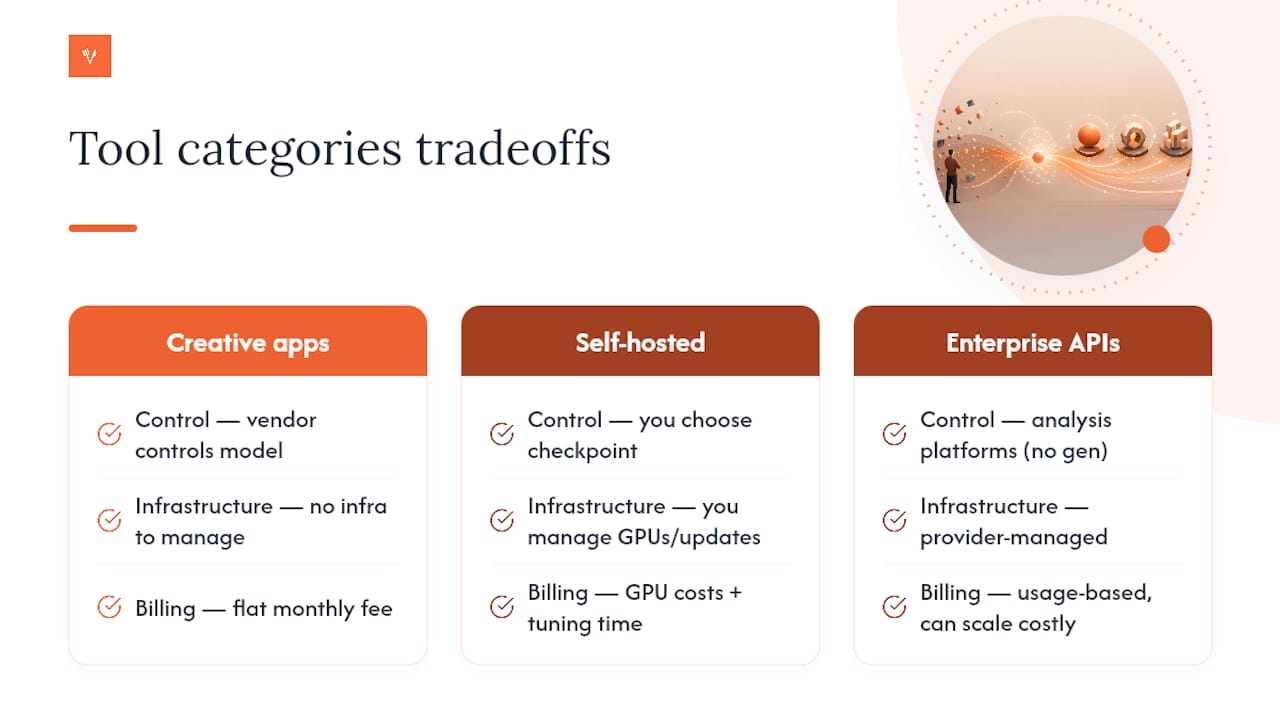
The 22 names above split cleanly into three practical categories, and understanding which category you’re shopping in saves a lot of wasted trial time.
1. Creative web apps. Midjourney, DALL-E 3, Google ImageFX, Adobe Firefly, Gemini, Microsoft Designer, Craiyon, Ideogram, and Janus all live here. You type a prompt, you get an image, and the vendor controls the model version, the update cadence, and the moderation rules. This category asks the least of you technically but gives you the least control over exactly how the model behaves. When OpenAI updates DALL-E 3’s underlying weights, your prompts might suddenly produce different results with zero warning, and there’s nothing you can do about it except adjust your wording.
2. Open-source and self-hosted. Stable Diffusion and its hosted cousin, Stable Diffusion Online, sit here. Running SD locally or on your own cloud instance means you choose the checkpoint, apply community fine-tunes, and keep every image on hardware you control. The tradeoff is real: you’re now responsible for GPU costs, model updates, and troubleshooting when a checkpoint behaves unpredictably. Stable Diffusion Online exists precisely to split the difference, giving you SD’s flexibility without the infrastructure headache, though you lose some control over exactly which checkpoint version is running behind the scenes.
3. Enterprise APIs and vision platforms. Google Cloud Vision API, Clarifai, Roboflow, Dataloop, Syte, Encord, and GoSpotCheck by FORM belong here, and none of them generate images the way Whisk did. They analyze existing images: detecting objects, reading text, tagging products for retail search, or managing the massive labeled datasets that computer-vision models need to train on. If your actual need is “flag mislabeled product photos across 10,000 SKUs,” none of the creative tools above solve that. You want Clarifai or Syte instead.
Cost and complexity scale roughly with control. A Midjourney subscription runs a flat monthly fee with no infrastructure to manage. Self-hosting Stable Diffusion means paying for GPU time (your own hardware or a rented cloud instance) plus the hours spent tuning checkpoints and troubleshooting dependency conflicts. Enterprise vision APIs like Clarifai and Roboflow bill by usage, which can get expensive fast at scale but avoids upfront infrastructure costs entirely.
Prompt engineering effort follows a similar curve. DALL-E 3 and Midjourney reward plain-language description with minimal fuss. Stable Diffusion rewards (and often requires) precise negative prompts, sampler settings, and CFG scale tuning to get consistent quality, which is a real skill investment for anyone used to typing a sentence and getting a usable result.
Pro Tip: Before committing to any single tool for a character-driven project, run the same five prompts describing the same character across your top two or three candidates. Compare not just image quality but whether the character’s face, outfit, and color palette hold steady from image four to image five. This single test surfaces consistency problems faster than any spec sheet.

One practical warning that gets skipped in most roundups: commercial-use rights vary sharply across these tools. Adobe Firefly explicitly licenses generated assets for commercial use as part of the subscription. Midjourney’s terms depend on your subscription tier, and free or low-tier usage can carry different commercial restrictions than paid plans. Stable Diffusion’s licensing depends entirely on which checkpoint and fine-tune you’re running, since community models carry their own individual license terms that you’re responsible for checking. Read the fine print before you put any generated image in front of a paying client.
How to Choose the Right Whisk Alternative
Start with three questions: What’s the primary use case (creative art, product mockups, or dataset analysis)? What’s the budget, and does it need to scale with usage or stay flat? Does the work require data privacy guarantees that rule out cloud-only tools?
From there, narrow the field with these criteria:
- Consistency needs. If you need the same character across ten images, weight self-hosted Stable Diffusion or an API with multi-image conditioning heavily over consumer web apps.
- Budget shape. A flat monthly fee (Midjourney, Adobe Firefly) suits predictable output volume; usage-based API pricing (Clarifai, Google Cloud Vision API) suits spiky or growing workloads.
- Privacy requirements. Self-hosted Stable Diffusion keeps every image on infrastructure you control; every other tool on this list processes images on vendor cloud servers.
- Integration needs. If your workflow already runs through Adobe Creative Cloud or Google Workspace, that ecosystem fit often outweighs marginal quality differences elsewhere.
When you’re actually trialing candidates, run the same five representative prompts through each tool using identical character references, then score the outputs on consistency, color palette match, and pose coherence.
A practical migration checklist:
- Export or document any prompt templates and reference images you built for Whisk.
- Pick two finalist tools based on the criteria above, not just brand familiarity.
- Run the five-prompt consistency test on both finalists.
- Check commercial licensing terms against your actual use case before generating client-facing work.
- Set a calendar reminder to re-evaluate in twelve months, since this category shifts fast.
How We Tested and Why That Matters
The comparisons above came from running identical prompt sets, paired with the same reference character descriptions, across each generation tool and checking outputs for visual consistency, prompt adherence, and how each model handled repeated character traits like clothing and facial features. Enterprise vision platforms like Clarifai and Roboflow were evaluated against their documented API capabilities rather than creative output, since generating art isn’t their function.
The most reliable way to judge consistency isn’t a single beautiful image. It’s whether the fifth image in a series still looks like the same character as the first one, under the same lighting logic and the same color palette.
Privacy testing focused on documented data-handling policies rather than penetration testing, since that’s the level of scrutiny most individual creators and small teams can realistically apply themselves. This review has real limits: model behavior shifts with vendor updates, and pricing tiers change often enough that readers should verify current terms before subscribing. Some meal planning tools apply evidence-based, no-guesswork approaches, which is why some comparisons lean on documented capabilities over marketing claims. For more on how AI-driven tools get evaluated for real household use, see our breakdown of AI recipe generators.
Where This Market Is Actually Headed
Two forces are pulling in opposite directions right now. Big platforms keep folding image generation into broader assistant products, which is exactly what happened to Whisk itself, and that consolidation trend will likely swallow a few more standalone tools before this year is out. At the same time, open-source momentum around Stable Diffusion checkpoints keeps growing, because enough creators got burned by a favorite tool disappearing overnight.
My practical rule: if character consistency and long-term availability matter more to your work than convenience, lean self-hosted. If you’re producing occasional images and can tolerate a tool changing terms or vanishing, cloud services are fine. Either way, don’t treat your current pick as permanent. Re-run that five-prompt consistency test annually, because the tool that wins today may not be the one still standing next year.
— Jack
A Different Kind of Decision Fatigue Worth Solving
Choosing the right image-generation tool takes research, trial prompts, and patience, and the same decision fatigue shows up every night at dinner time when you’re staring at a fridge full of ingredients with no plan. Some AI-powered tools tackle that problem by generating recipes with ingredients, nutrition information, and shopping lists, built around dietary restrictions and allergies, often offering core features at no cost.
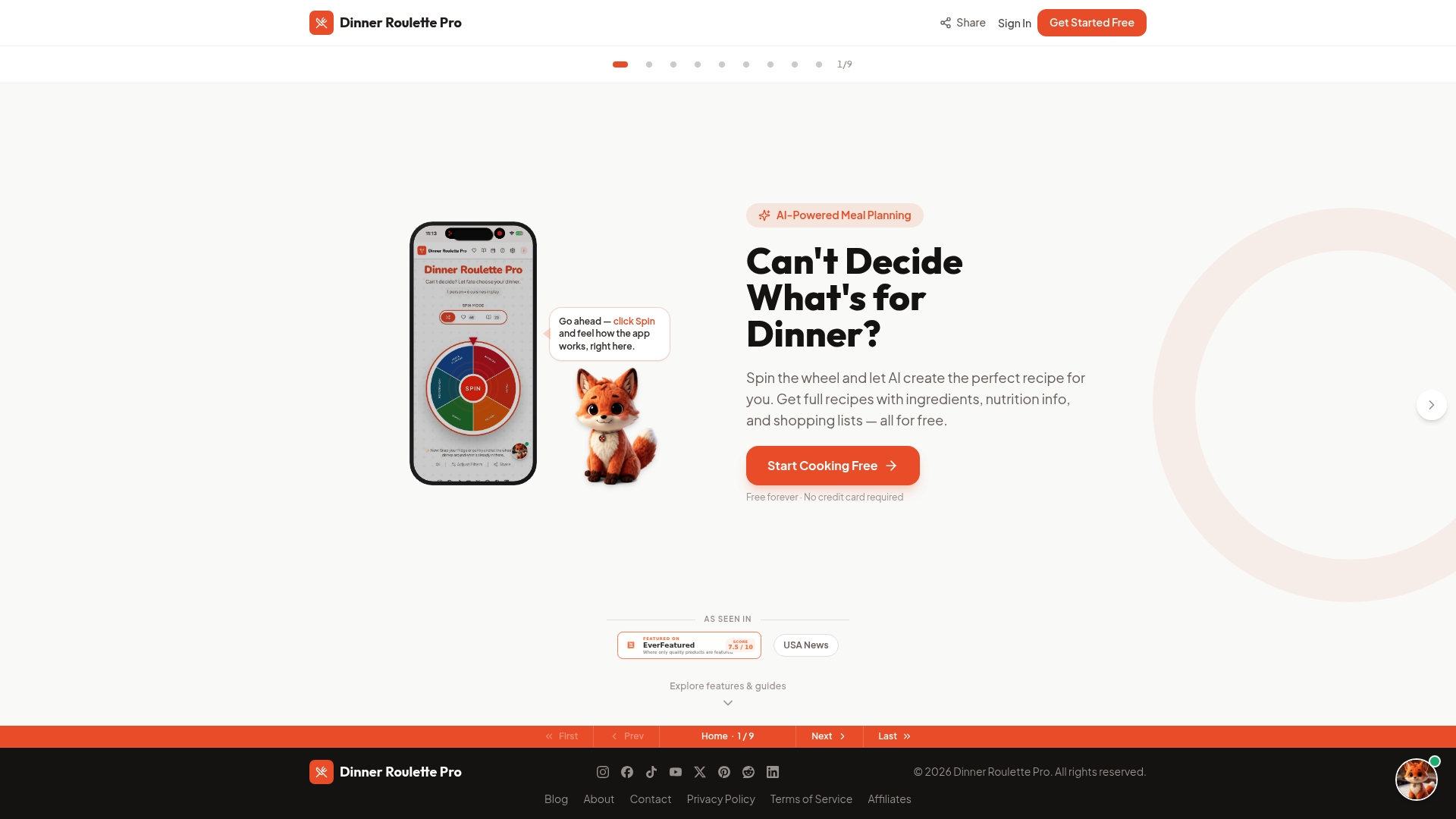
It’s not a competitor to any tool listed above. It solves a completely different problem: the mental tax of deciding what to cook, every single day, for people juggling schedules, allergies, or plain exhaustion at 6 p.m. Where a self-hosted Stable Diffusion setup demands technical investment for creative control, Such tools demand little user effort beyond selecting preferences or spinning a wheel for meal planning control. If ingredient tracking and organization matter to your routine the way character consistency matters to a designer’s, the recipe organization guide is worth a look. Try a spin tonight and see what shows up for dinner.
Sources
FAQ
What Can I Use if I Don’t Have a Whisk?
For light aeration, a fork works well; for thicker mixtures, an immersion blender or chopsticks can substitute effectively, and a sealed jar shake handles emulsions like vinaigrettes reliably.
Is Whisk AI Still Available?
Community reports indicate Whisk was rebranded or absorbed into other offerings instead of continuing as a standalone product, which is exactly why this comparison exists.
How Can I Make a Homemade Whisk?
A fork, a pair of chopsticks held together, or a mason jar you shake vigorously can each stand in for a whisk depending on whether you’re aerating eggs or blending a thin batter.
Is Whisk AI Totally Free?
Whisk’s original pricing model is no longer confirmed as active given its rebrand; among current alternatives, Craiyon, Stable Diffusion (self-hosted), and the free tiers of Google ImageFX and Gemini offer no-cost entry points.
Which Whisk Alternative Is Best for Beginners?
DALL-E 3 through ChatGPT and Google ImageFX both handle plain-language prompts well, making them the easiest starting points for anyone new to AI image generation.