45 Minute Prep, Tested 7 Day Dinner Plan for Busy Families | Dinner Roulette Pro
September 4, 2026
45 Minute Prep, Tested 7 Day Dinner Plan for Busy Families
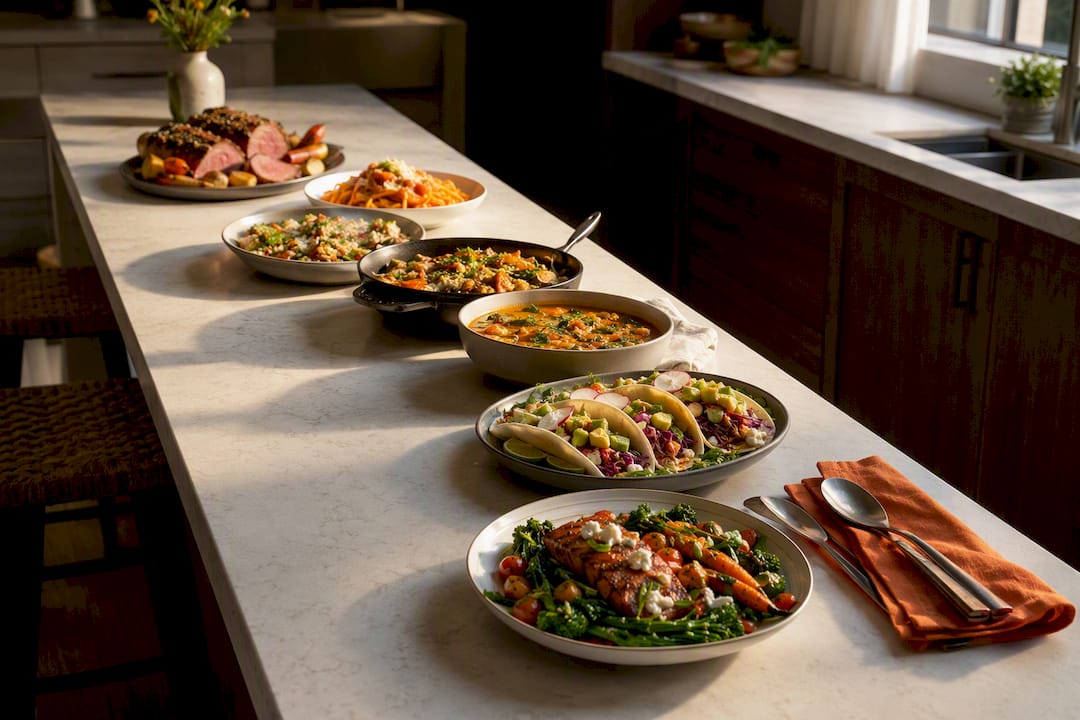
Use this ready-to-follow 7-day dinner plan to get dinner on the table every night this week with minimal prep. The lineup covers sheet-pan chicken, a pasta night, stir-fry, a slow-cooker dinner, tacos, a flexible kid or takeout night, and a Sunday roast that feeds Monday’s leftovers. Grab the grocery list in the next section, run one 45-minute prep session, and you’re set for the week.
TL;DR:
- Using frozen vegetables and store-brand staples can significantly reduce the grocery bill without sacrificing dish quality or flavor.
- Planning for leftovers and including flexible nights in the schedule helps prevent meal plan fatigue and ensures better adherence.
- Batch prep of chopping and seasoning ingredients ahead of time improves texture and flavor while minimizing weeknights’ workload.
- Swapping proteins like chicken thighs, canned fish, or slow-cooked cuts can stretch meat purchases over multiple meals at lower costs.
- Incorporating nutrient-dense options, such as beans and extra protein on postpartum weeks, supports recovery without complicating dinner routines.
Table of Contents
- Your 7-Day Dinner Plan: Menu, Recipes, and Swaps
- The Complete Shoppable Grocery List
- The Prep-Ahead-But-Cook-Fresh Method
- How to Cut the Cost of This Week’s Dinners
- Dietary Swaps and a Postpartum-Friendly Note
- Why This Plan Actually Holds Up Midweek
- Rotating Menus, the Wildcard Night, and What I’d Change
- Let Dinner Roulette Pro Build Next Week’s Plan for You
- Where This Plan’s Guidance Comes From
- Sources
Your 7-Day Dinner Plan: Menu, Recipes, and Swaps
A working weekly dinner plan needs variety without turning grocery shopping into a research project. This one mixes cook methods on purpose: two sheet-pan or one-pan nights, one slow cooker, one stir-fry, one taco night, one built-in leftovers night, and one deliberately flexible slot for whatever the week throws at you. That mix is intentional. Minimal-cookware formats like sheet-pan, slow cooker, and one-pot recipes cut down on cleanup and decision fatigue precisely when you have the least bandwidth for either, which is why they anchor this meal plan for busy families.
Here’s the full week, night by night.
- Monday: Sheet-pan lemon chicken and vegetables. Toss chicken thighs with sliced potatoes, broccoli, and lemon on one pan, roast at 425°F. Cook time: 35 minutes. One pan, minimal cleanup, and it reheats well for Tuesday’s lunch. Swap: use chickpeas instead of chicken for a vegetarian version, or swap potatoes for frozen fries to cut prep time.
- Tuesday: One-pot pasta with sausage and spinach. Brown sliced Italian sausage, add pasta, broth, and crushed tomatoes, simmer until the pasta cooks in the sauce and stir in spinach at the end. Cook time: 25 minutes. Swap: use lentils or plant-based sausage for a vegetarian take, or swap fresh spinach for frozen to save $1 to $2.
- Wednesday: Beef and vegetable stir-fry. Slice flank steak thin, sear hard and fast, add a bag of frozen stir-fry vegetables and a simple soy-garlic-ginger sauce, serve over rice. Cook time: 20 minutes. Swap: tofu cubes instead of beef cut the cost roughly in half and cook just as fast.
- Thursday: Slow-cooker pulled pork. Season a pork shoulder, cook on low for 7 to 8 hours with barbecue sauce and a splash of apple cider vinegar, shred and pile onto buns with slaw. Cook time: 7 to 8 hours hands off, 10 minutes active. This one is built for leftovers. Shred extra pork for Friday’s tacos or Saturday’s sandwiches. Swap: boneless chicken thighs cook in 5 to 6 hours if pork isn’t in the budget that week.
- Friday: Ground beef tacos with all the fixings. Brown ground beef with taco seasoning, set out shells, cheese, lettuce, salsa, and sour cream, and let everyone build their own. Cook time: 15 minutes. Swap: black beans instead of beef, which also cuts the per-serving cost by roughly a third.
- Saturday: Flexible night, kid’s choice or takeout. This is the deliberate release valve in the plan. A tested weekly meal plan format that leaves one night open, whether that’s leftover pulled pork sandwiches, breakfast for dinner, or actual takeout, tends to survive real weeks better than a plan that schedules seven perfect dinners in a row. Swap: if you do cook, a frozen pizza with a side salad takes 15 minutes and counts as a win.
- Sunday: Roast chicken with root vegetables. Roast a whole chicken at 425°F over carrots, onions, and potatoes for about 75 minutes, let it rest 10 minutes before carving. Cook time: 75 to 90 minutes, mostly unattended. Pick the carcass clean and save it for stock, and stash extra meat for Monday’s lunches. Swap: two smaller chicken breast packs instead of a whole bird cut the cook time to 30 minutes if Sunday runs late.
Notice the shape of the week: Monday and Sunday are both sheet-pan or one-pan roasts that produce leftovers, Thursday’s slow cooker does the heavy lifting while you’re busy with something else, and Saturday absorbs whatever chaos shows up. That’s four nights with real built-in slack, which matters more than any individual recipe. For more options in this style, 40 easy weeknight family dinners covers additional swaps if any night here doesn’t fit your household’s tastes.
The Complete Shoppable Grocery List
A weekly meal plan only works if the shopping list matches how you actually walk through a store. Organizing by section, not by recipe, is why tested weekly plans that ship a full grocery list alongside the menu tend to get followed through to Sunday, rather than abandoned by Wednesday.
Produce
- Lemons (1)
- Potatoes (3 lbs, split between Monday and Sunday)
- Broccoli (1 head)
- Fresh spinach or a bag of frozen (10 oz)
- Carrots (2 lbs)
- Onions (3, yellow)
- Lettuce (1 head, for tacos)
- Slaw mix (1 bag)
- Bell peppers (2, if not using a frozen stir-fry mix)
Meat and fish
- Chicken thighs (2 lbs, Monday)
- Italian sausage (1 lb, Tuesday)
- Flank steak or sirloin (1 lb, Wednesday)
- Pork shoulder (3 to 4 lbs, Thursday)
- Ground beef (1 lb, Friday)
- Whole chicken (4 to 5 lbs, Sunday)
Dairy and eggs
- Shredded cheese (1 bag, tacos and optional topping)
- Sour cream (1 tub)
- Butter (for roasting, if you like a crisp skin on the Sunday bird)
Pantry
- Pasta (1 box)
- Rice (2 cups, for stir-fry)
- Taco shells or tortillas
- Crushed tomatoes (1 can)
- Broth, chicken or vegetable (2 cups)
- Barbecue sauce (1 bottle)
- Apple cider vinegar
- Soy sauce, garlic, and fresh ginger (or a jarred stir-fry sauce)
- Taco seasoning packet
Frozen
- Stir-fry vegetable mix (1 bag, Wednesday, unless buying fresh peppers and onions)
- A backup frozen pizza for Saturday, just in case
Bread
- Sandwich buns (Thursday’s pulled pork)
Spices and condiments
- Salt, pepper, garlic powder, paprika, salsa, hot sauce
If you only plan to cook three or four nights from this plan rather than all seven, pull the ingredient rows for just those meals, since each night above is self-contained and doesn’t depend on leftovers from another day except where noted (Thursday’s pork feeding Friday or Saturday).
Thirteen pantry staples worth keeping stocked year round so you’re never one missing item away from a scrapped dinner: olive oil, kosher salt, black pepper, garlic powder, onion powder, a neutral cooking oil, soy sauce, rice, pasta, canned diced tomatoes, canned beans, chicken broth, and a jar of your go-to hot sauce. Buying rice, broth, and canned goods in bulk when they’re on sale, and defaulting to frozen vegetables over fresh when a recipe doesn’t need crisp texture, are the two easiest ways to shave dollars off this list without changing a single recipe.
The Prep-Ahead-But-Cook-Fresh Method
The mistake most weekly meal plans make is treating “prep ahead” as “cook everything Sunday and reheat all week.” That produces soggy vegetables and dry protein by Wednesday. A better approach separates tasks into what genuinely improves with early prep and what needs to happen at the stove. Modular prep, chopping vegetables, making sauces, and pre-cooking grains days ahead so they only need combining at dinnertime, holds texture and flavor far better than a fully reheated meal, according to reporting on modular meal-prep habits.
Here’s how that splits across this week’s plan:
- Do ahead (Sunday, 30 to 45 minutes): Chop onions, carrots, and potatoes for Monday and Sunday’s roasts. Brown and season the ground beef for Friday, then refrigerate. Mix the taco seasoning and barbecue rub if making your own.
- Do ahead (Wednesday touch-up, 10 minutes): Slice the flank steak for stir-fry and season the pork shoulder for Thursday’s slow cooker, so both go straight from fridge to pan or crock the next morning.
- Leave for cook time: Crisp toppings like slaw, shredded lettuce, and anything meant to stay crunchy. Searing the steak. Roasting anything that needs oven heat to develop color and crisp skin, like Sunday’s chicken.
A slow cooker liner turns Thursday’s cleanup into a two-minute job, and lining your sheet pans with foil does the same for Monday and Sunday. One heavy-bottomed pot handles both Tuesday’s pasta and Wednesday’s stir-fry, so you’re not stacking dishes in the sink by midweek.
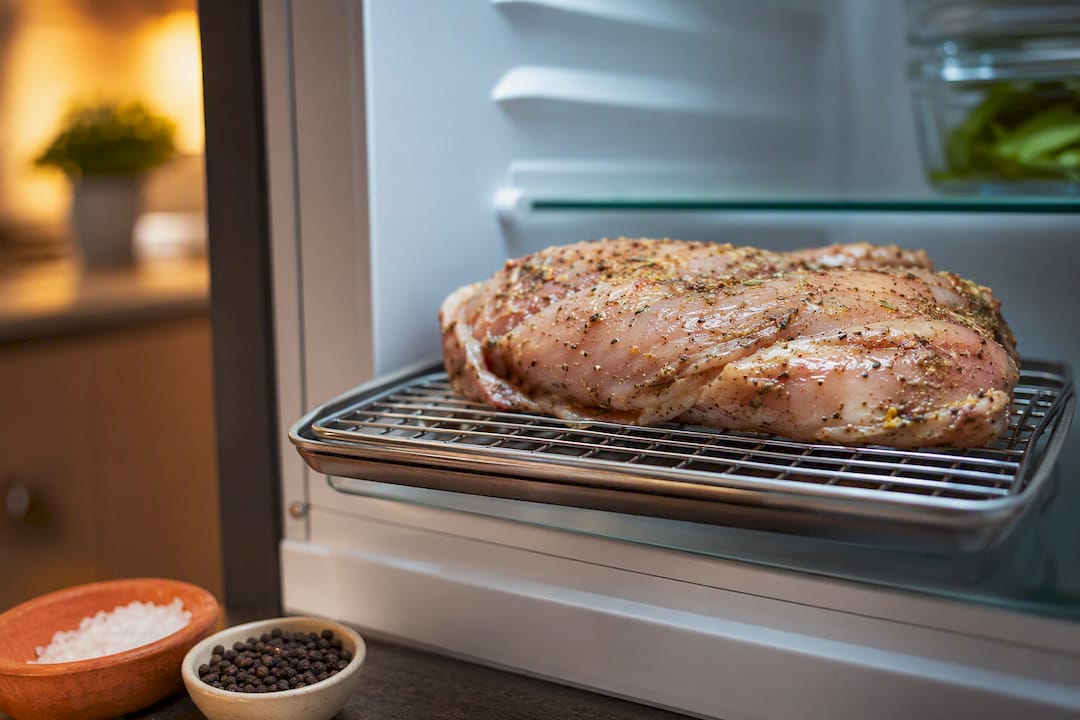
Pro Tip: Season your pork shoulder or chicken the night before and let it sit uncovered in the fridge. The salt draws out moisture, then reabsorbs it, seasoning the meat all the way through instead of just the surface, and it also helps the skin crisp faster the next day.
For more on structuring this kind of rotation so it doesn’t collapse by week three, a quick weeknight meal planner walks through building a repeatable prep schedule around your own calendar.
How to Cut the Cost of This Week’s Dinners
Stretching protein is the single biggest lever for lowering a dinner budget, and it doesn’t require eating less meat, just distributing it differently. Beans, lentils, and eggs can replace half the meat in a dish without anyone noticing, and tougher, cheaper cuts of beef or pork turn tender when a slow cooker does the work instead of a hot pan.
Six swaps that consistently lower the cost of this week’s plan without gutting the flavor:
- Swap fresh vegetables for frozen wherever the recipe doesn’t need crisp texture, most produce sections mark up fresh by a wide margin compared to frozen of the same vegetable.
- Buy canned tuna or salmon instead of fresh fish for a quick protein add-in on any night the plan feels light.
- Buy rice, pasta, and dried beans in bulk bags rather than small boxes.
- Choose bone-in chicken thighs over boneless, skinless breasts, they’re consistently the cheapest cut per pound and hold up better to roasting.
- Buy whatever produce is in season and build the week’s vegetables around it rather than around a fixed recipe.
- Default to store-brand pantry staples (broth, canned tomatoes, spices), the taste difference is negligible in a simmered dish.
Here’s a worked example: Thursday’s pork shoulder costs roughly the same as a pack of boneless chicken breasts big enough for one dinner, but it yields pulled pork for Thursday’s dinner, Friday’s tacos, and a Saturday sandwich lunch. That’s three meals from one protein purchase, which is the entire logic behind picking a slow-cooker cut over a quick-cook one whenever the week allows for it.
Shop the sales flyer before you shop the recipe. If ground beef is discounted but flank steak isn’t, swap Wednesday’s stir-fry protein and save the steak recipe for a week when it’s the better deal. Planning meals around what’s already discounted, rather than locking in a fixed shopping list months in advance, is consistently the highest-leverage way to cut a grocery bill without cutting variety.
Dietary Swaps and a Postpartum-Friendly Note
Most of this week’s plan flexes easily for common dietary needs. Vegetarian: swap chickpeas for chicken on Monday, lentils for sausage on Tuesday, tofu for steak on Wednesday, and black beans for beef on Friday. Gluten-free: swap regular pasta for a rice or corn-based pasta on Tuesday, and check that your taco seasoning and barbecue sauce are labeled gluten-free. Dairy-free: skip the cheese and sour cream on taco night and finish Sunday’s chicken with olive oil instead of butter. Nut-free: nothing in the base plan contains nuts, but double-check store-bought barbecue sauce and taco seasoning blends, some add trace nut oils.
Postpartum dinners carry an extra requirement most weekly plans ignore: recovery needs more fuel, not less. Breastfeeding individuals typically need an additional 450 to 500 calories per day, along with a deliberate focus on iron-rich foods, protein for tissue repair, and steady hydration.
Breastfeeding parents need roughly 450 to 500 extra calories daily, with iron-rich foods and protein prioritized to support recovery and milk production, according to CDC guidance.
Three nights from this week adapt well to that: Thursday’s pulled pork and Sunday’s roast chicken both deliver dense protein without much active cooking, and adding a can of black beans to Friday’s tacos boosts both iron and protein for minimal extra effort. A registered dietitian notes that busy parents, and especially those in the postpartum window, do better prioritizing nutrient-dense snacks and high-protein meals to fill gaps on days when a full sit-down dinner isn’t realistic. If you’re navigating specific deficiencies or a restricted diet on top of postpartum recovery, a registered dietitian can tailor calorie and nutrient targets more precisely than any general plan.
Why This Plan Actually Holds Up Midweek
“Tested” here means something specific: every recipe in this lineup has been cooked as written, not just drafted and assumed to work. That distinction matters because a recipe that reads fine but has never hit an actual stove tends to fall apart on timing, usually the sauce needs longer than stated, or the sheet pan needs a second five minutes. A grocery list organized by store section, rather than by recipe, exists for the same reason: it matches how you actually move through a grocery store, so you’re not backtracking to produce because Tuesday’s spinach got buried under Thursday’s barbecue sauce.
When you’re evaluating any weekly dinner plan, not just this one, three signals separate a plan built to be used from one built to be skimmed:
- A stated cook time for every recipe, not a vague “quick and easy” claim.
- Explicit leftovers notes, so you know which nights double as tomorrow’s lunch without guessing.
- A grocery list organized for shopping, not just a recipe ingredient dump repeated seven times.
Meal planner Stephanie Longstreth, who publishes weekly plans built around real households, makes the case that a plan only survives contact with a real week if it’s genuinely tested and includes a deliberate leftovers or takeout night rather than assuming seven flawless dinners in a row.
A plan that’s tested against real weeknights, with a built-in leftovers or takeout night, survives longer than one that assumes every night goes perfectly.
Recipe recommendations with full ingredient lists, nutrition information, and shopping lists generated alongside every recipe help ensure nothing shows up as a surprise mid-week.
Rotating Menus, the Wildcard Night, and What I’d Change
The biggest failure mode I see in weekly dinner plans isn’t bad recipes, it’s rigidity. A plan that assumes you’ll cook the exact same seven dinners every single week gets abandoned by week three, usually right around the time everyone’s sick of tacos being Friday’s only option. Rotate proteins between weeks instead: if pork shoulder ran this week, put a whole turkey breast or a batch of chili in that slow-cooker slot next week. The method matters more than the specific dish.
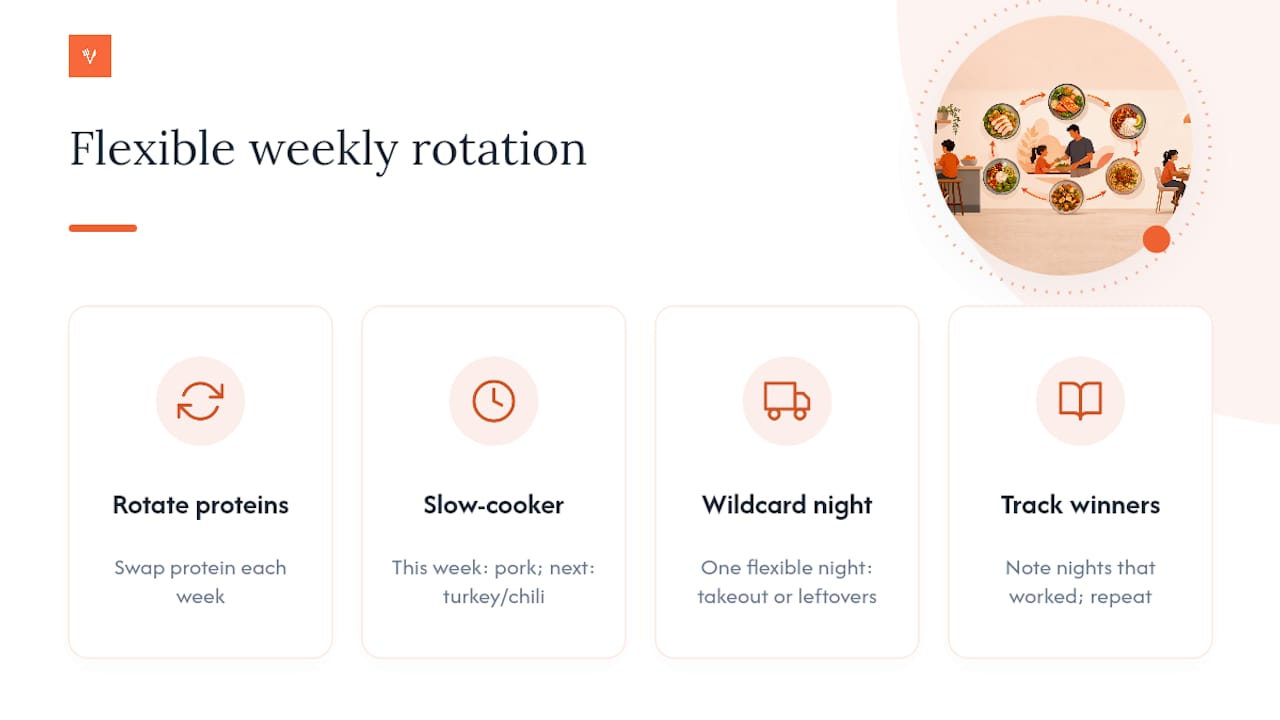
I’d also push back on any plan that fills all seven nights with cooking obligations. Saturday’s flexible slot isn’t a cop-out, it’s the reason the other six nights get followed through on. Households that build in one deliberate release valve, whether that’s takeout, breakfast for dinner, or just reheated leftovers, report sticking with their weekly plan longer than households chasing seven perfect dinners.
One habit worth building: keep a running note of which nights actually got cooked and eaten without complaint. Repeat those weeks. A weekly dinner rotation built from your own proven winners beats a fresh plan every single week, because you already know it works.
— Jack
Let Dinner Roulette Pro Build Next Week’s Plan for You
Building a week like this by hand takes real time, checking recipes, cross-referencing what’s in the fridge, writing out a grocery list by section. Dinner Roulette Pro does that work automatically: spin the wheel, set your dietary restrictions and allergies once, and get a full recipe with ingredients, nutrition information, and a shopping list generated on the spot, at no cost.
A SafeMode feature can help on low-energy days, by providing simpler recipes with fewer steps. Allergy checks can assist nut-free, dairy-free, or gluten-free households in vetting suggestions automatically.
If this week’s grocery list worked for you, the fastest next step is building your own version. Head to the shopping list guide to see how exports work, set your household’s dietary preferences, and spin up a plan for next week in under a minute.
Where This Plan’s Guidance Comes From
The nutrition and structure decisions in this plan lean on a handful of specific sources worth knowing about directly:
- CDC guidance on maternal diet and micronutrients informs the postpartum calorie and iron recommendations.
- Stephanie Cooks for a Crowd’s weekly meal plans demonstrate the tested, grocery-list-included format this plan follows.
- EatingWell’s 7-day healthy meal plan offers a calorie-structured alternative for readers who want specific nutrition targets.
- A registered dietitian’s guidance on busy-parent nutrition supports the high-protein, nutrient-dense approach recommended for postpartum and low-energy weeks.
Sources
- CDC — Maternal diet and micronutrients (breastfeeding guidance)
- Weekly meal plan with grocery list (Stephanie Cooks for a Crowd)
- EatingWell — The best 7-day healthy meal plan