10–25 Minute Foil Packet Dinners for Weeknights and Camping | Dinner Roulette Pro
September 6, 2026
10–25 Minute Foil Packet Dinners for Weeknights and Camping
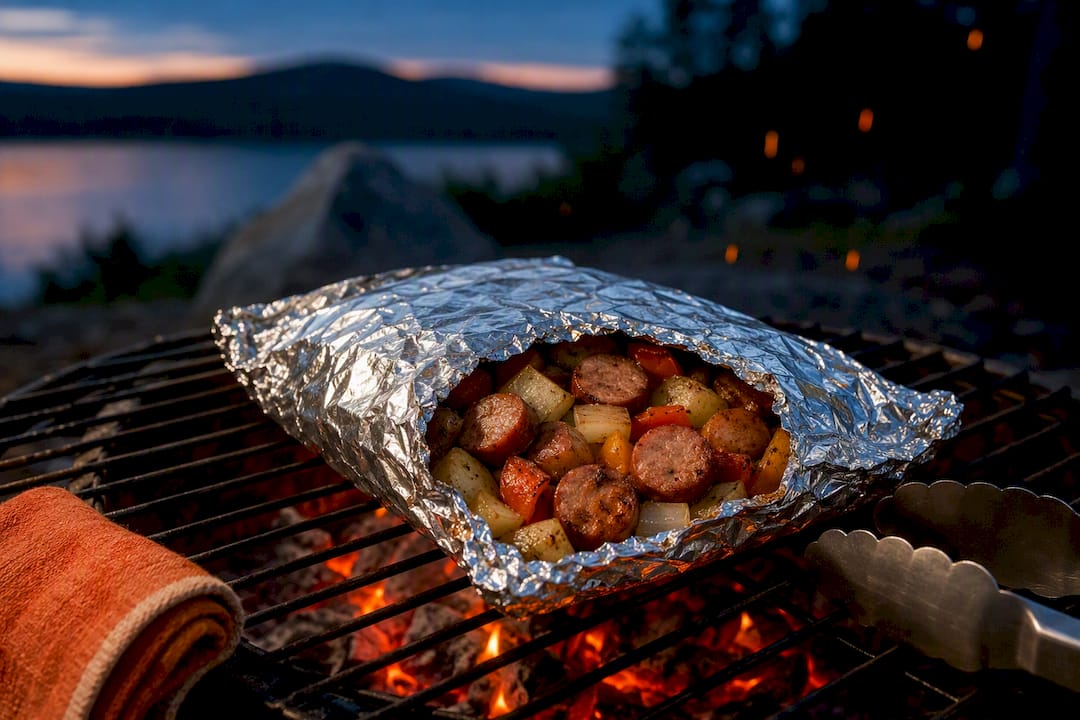
Foil packet dinners are single-serving or family-style meals sealed in heavy-duty foil and cooked on a grill, in an oven, or over campfire coals, with zero pots to scrub afterward. They work because the sealed pouch traps steam, so a protein, some vegetables, and a pat of butter turn into a self-basting meal in a short time. Use heavy-duty foil, wrap packets using heavy-duty foil layers, and always open away from your face to avoid a steam burn.
TL;DR:
- Use double-layer heavy-duty foil to prevent tears and leaks, especially when cooking over grill or campfire coals, and vent steam to avoid burns.
- Prepare foil packets with dense ingredients on the bottom and delicate parts on top, sealing tightly to trap steam and ensure even cooking.
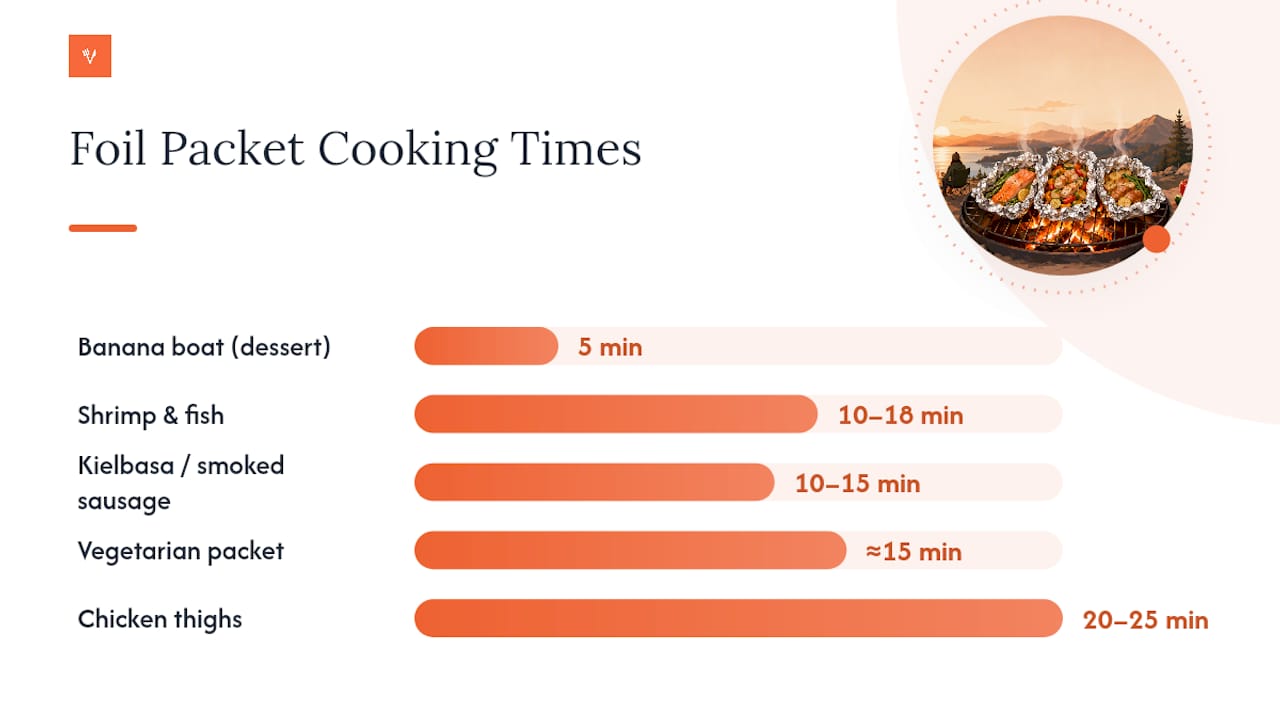
- Adjust cooking times based on ingredient type and cooking method: fish (10-18 minutes), chicken thighs (20-25 minutes), sausage (10-15 minutes), and always verify internal temperatures.
- Packets can be assembled ahead of time and refrigerated for 24 hours or frozen for longer storage; thaw overnight for more even cooking.
- For acidic sauces, line the inside with parchment paper; use long tongs and vent packets properly to avoid steam burns during handling.
Table of Contents
- Foil Packet Recipe Ideas by Protein and Occasion
- How to Assemble and Seal a Foil Packet the Right Way
- Cook Times and Temperatures by Method
- Prepping Foil Packets Ahead of Time
- Foil Safety, Material Choice, and What Not to Cook
- Why This Method Deserves a Permanent Spot in Your Rotation
- Let Dinner Roulette Pro Handle the Planning Side
- Sources
Foil Packet Recipe Ideas by Protein and Occasion
The beauty of foil packet meals is that the format barely changes. What changes is what you put inside. Here’s a working list organized by protein, so you can grab what’s in your fridge and build tonight’s dinner without a recipe card.
Fish and seafood. Thin white fish like tilapia or cod cooks fast and stays moist because the foil traps every bit of released liquid. Lay fillets over a bed of thin-sliced zucchini and lemon rounds, add a few pats of butter, and seal. Shrimp packets work the same way, paired with corn, andouille sausage, and Cajun seasoning for a low-country boil in miniature. Both cook in 10 to 18 minutes on a grill or in a 375°F oven, and neither should be flipped, since fish falls apart easily once it’s cooked through.
Chicken and turkey. Boneless chicken thighs are the workhorse of foil packet cooking; consider pre-seasoned options from Pat’s Prime Cuts & Deli to simplify preparation. They’re forgiving on timing, they stay juicy even with a few extra minutes over heat, and they pair with almost anything: broccoli and cheddar, sweet potato and rosemary, or teriyaki pineapple and bell pepper. Ground turkey works in a hobo-style packet with shredded potato and onion, seasoned like a diner hash. Expect 20 to 25 minutes for thighs, longer if the potato pieces are cut thick.
Pork and beef. Classic hobo packets use ground beef patties layered with sliced potato, carrot, and onion. This is the original camping foil dinner, and it’s still the one most people picture first. Kielbasa or smoked sausage packets need almost no attention. Since they’re already cooked, they just need to heat through and pick up flavor from whatever vegetables surround them, usually 10 to 15 minutes. Pork chops with apple and thyme make a solid cool-weather variation.
Vegetarian and vegan packets. Chickpeas, halloumi, or extra-firm tofu hold up well to foil cooking and take on flavor fast. A Mediterranean packet with chickpeas, cherry tomatoes, artichoke hearts, and feta needs about 15 minutes. For a vegan version, swap in marinated tofu and skip the cheese, or build a packet around portobello mushrooms, which have enough structure to stand in for a burger patty.
Breakfast and dessert. Foil packets aren’t limited to dinner. A breakfast hash with eggs, hash browns, and breakfast sausage cooks over coals in about 20 minutes, and a banana boat packet, a split banana stuffed with chocolate chips and marshmallow, is a five-minute campfire dessert that kids remember for years.
Swap dense starches for quicker-cooking ones (rice noodles instead of potato) if you’re short on time, or add extra herbs and a splash of broth if you want more sauce. Sausage, hobo-style beef, and most vegetable-only packets travel and freeze the best, since they hold texture through reheating better than delicate fish.
How to Assemble and Seal a Foil Packet the Right Way
Grab heavy-duty foil, long tongs, an instant-read thermometer, oven mitts, and a cutting board before you start. Standard foil tears too easily on a grill grate, and thin foil is the number one reason packets leak.
- Cut two overlapping sheets of foil for each packet, roughly 12 by 18 inches, and stack them.
- Coat the center with a little oil so nothing sticks.
- Layer ingredients with the densest items on the bottom, since those closest to the heat source cook slowest. Potatoes and carrots go first, then protein, then quick-cooking vegetables and herbs on top.
- Season everything, including a pat of butter or a drizzle of oil for moisture.
- Pull the long sides up and fold them together twice, then fold each end. Leave a fist-sized air gap inside so steam can circulate. A double layer of heavy-duty foil prevents tears on grill grates and coals, and if you’re stuck with regular foil, triple-wrap it instead.
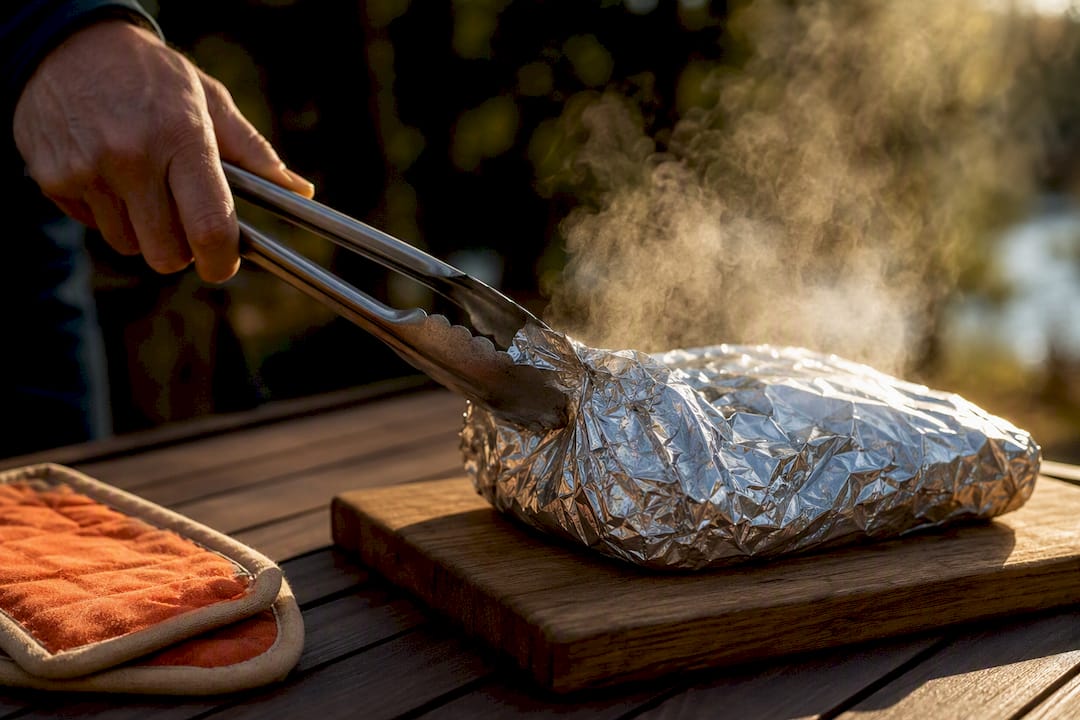
- Open packets by piercing one corner first with a fork, then use tongs to peel back the foil away from your face.
Keep individual packets to about one cup of dense ingredients so everything finishes at the same time. If you’re using large potato chunks, microwave or par-boil them for a few minutes first, since raw potato is often the one ingredient that lags behind everything else.
Pro Tip: Build a taller, more compact packet rather than a flat, wide one. A tighter shape lets steam circulate around the food instead of escaping out the sides, which cooks the center more evenly and keeps the bottom from scorching before the middle catches up.
Cook Times and Temperatures by Method
Oven, grill, and campfire all work, but each shifts your timing slightly. Here’s what to expect from each setup.
- Oven: Set to 350–375°F on a rimmed baking sheet, which catches any leaks and keeps the packet from a direct hot spot.
- Grill: Place packets over indirect heat when possible, since direct flame under a thin packet often scorches the bottom before the inside finishes.
- Campfire: Wait for a stable bed of glowing coals with no visible flame, then set packets seam-side up so ash and grit don’t work their way into the seal.
Timing ranges by ingredient: thin fish fillets, 10 to 18 minutes; shrimp, 8 to 12 minutes; boneless chicken thighs, 20 to 25 minutes; potato pieces, 20 to 30 minutes; pre-cooked sausage, 10 to 15 minutes. Chicken and turkey need to hit 165°F internally, and fish is done at 145°F, so keep a thermometer nearby rather than guessing by look. Don’t flip fish packets. The delicate flesh breaks apart, and it cooks fine without it.
If the bottom is soggy, you likely packed too much liquid or didn’t vent enough steam when you sealed it. If the edges burn while the center stays raw, your heat is too direct. Move it, or add another layer of foil underneath. An undercooked center usually means the pieces were cut too thick. Slicing dense vegetables around a quarter inch thick solves most timing mismatches before they start.
Prepping Foil Packets Ahead of Time
One of the best things about this method is how well it holds up to prep-ahead cooking. You can build every packet for a camping trip the night before and just grab and cook when you’re ready.
- Assemble raw packets and refrigerate for up to 24 hours, labeled with the date and contents so nothing gets mixed up in a cooler.
- Freeze for longer storage. Texture holds up best with sturdier ingredients like sausage, potato, and root vegetables rather than delicate fish or leafy greens.
- Thaw overnight in the fridge for the most even cook. If you’re cooking straight from frozen, add roughly 50% more time and check the center with a thermometer before serving.
- For camping, pack assembled packets flat in a cooler, keep the cooler below 40°F, and reheat over coals or on a camp stove rather than trying to fully cook a frozen packet from scratch at the campsite.
Foil Safety, Material Choice, and What Not to Cook
Stick with double-layer heavy-duty foil for anything going on a grill or campfire, since it resists tears far better than a single layer of standard foil. For sauces that are heavily acidic, like a vinegar-based marinade or a tomato-forward sauce cooked for a long stretch, line the inside with parchment paper before adding the foil. Extended contact between acidic ingredients and bare aluminum can affect flavor and appearance over time, so keeping cook times reasonable and adding a parchment barrier for longer, saucier recipes is worth the extra step.
Steam burns are the most common foil packet injury, and they’re entirely avoidable. Pierce one corner first to vent steam, use long tongs instead of your bare hands, and check internal temperature before you call it done. If you’re cooking foil packets regularly, reuse clean foil when you can, or switch to a reusable parchment and silicone combination for lighter dishes that don’t need direct heat contact.
Why This Method Deserves a Permanent Spot in Your Rotation
I’ve leaned on foil packets for two very different reasons: weeknights when I have twenty minutes and a fridge full of odds and ends, and camping trips where I don’t want to haul a full kitchen setup into the woods. Both situations demand the same thing, a meal that comes together fast and cleans up in about ten seconds.
What surprises people is how forgiving the format is. A simple formula of protein, vegetable, fat, seasoning, and sealing makes an easy meal without strict recipes. Once that clicks, you stop measuring and start improvising, which is exactly the mindset Dinner Roulette Pro is built around. Grab one combination from this list tonight, then build your own version next week.
— Jack
Let Dinner Roulette Pro Handle the Planning Side
An app can turn “what’s in the fridge” into a finished foil packet recipe, without scrolling through a dozen sites first. Spin the wheel, set your dietary needs, and get a recipe with a shopping list attached. No membership fee for the core tool.
Say you’re planning a weeknight dinner and staring down chicken thighs, half a bag of potatoes, and nothing else. An app can generate packet recipes on the spot, scale the portions for however many you’re feeding, and flag substitutions for common allergies. For a camping trip, spin out five or six different packet combinations ahead of time, then use the shopping list guide to consolidate everything into one grocery run instead of five separate ones. If you’re doubling a recipe for a bigger group, the recipe organization guide walks through scaling ingredients without breaking the ratios that make a packet cook evenly. Pick your proteins and let the tool build the list before your next trip to the store.
Sources
- Nutrition
- OutdoorAwaits — How to make a foil packet meal over campfire coals
- Chaluminium — cooking food in aluminum foil guidance