When You're Too Tired to Cook: 8 Low Energy Meals and Appliance Tricks | Dinner Roulette Pro
September 8, 2026
When You’re Too Tired to Cook: 8 Low Energy Meals and Appliance Tricks
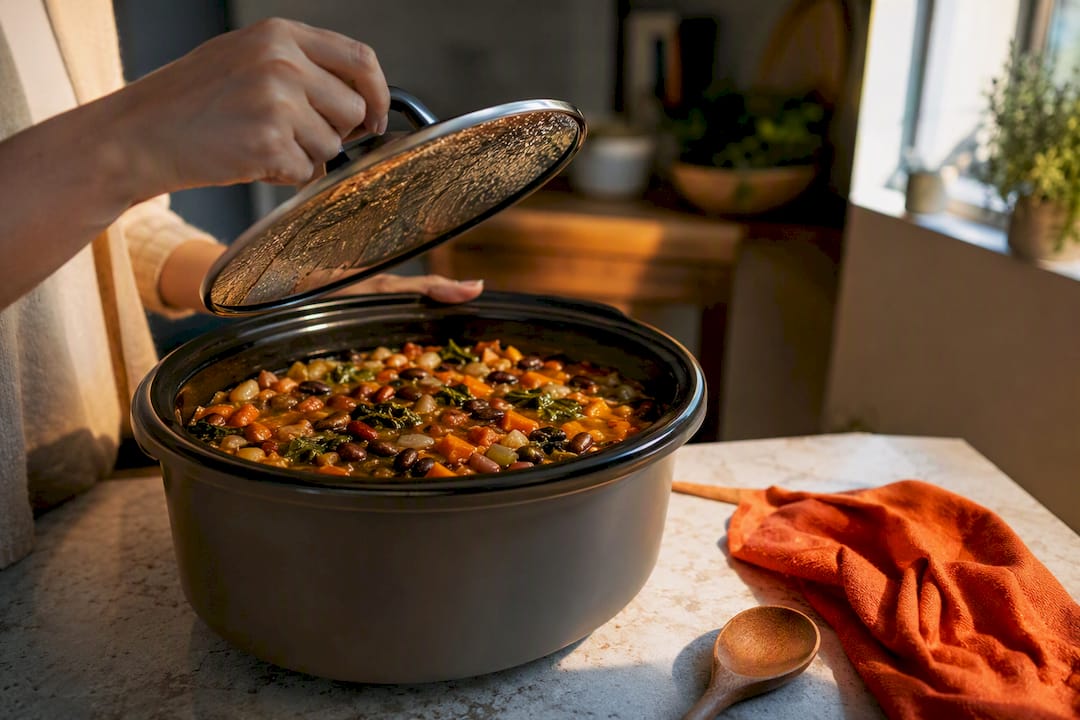
On a low-energy day, skip the recipe and reach for a template: a no-cook bowl or a dump-and-go slow cooker meal. Both need almost no decision-making and almost no standing time. Below you’ll find exact meal builds, appliance shortcuts that cut active cooking to minutes, and the food-safety lines you shouldn’t cross even when you’re running on empty. Convenience foods, canned and frozen included, can absolutely carry real nutrition.
TL;DR:
- No-cook meals combining pre-cooked proteins with fresh vegetables or grains can provide balanced nutrition with minimal effort and almost no active cooking time.
- Using slow cookers, pressure cookers, and residual heat techniques significantly reduces stove and oven energy consumption, with energy savings of up to approximately 80%.
- Preparing batch meals and stocking a well-organized freezer allows for quick, low-energy dinners on days when energy or motivation are limited.
- Selecting appliances like pressure cookers or air fryers over traditional ovens can cut cooking energy use and time, especially when properly sized and covered with lids.
Table of Contents
- Quick No-Cook Meals for Low Energy Cooking
- How Do One-Pot and Passive Cooking Methods Save Effort?
- Batch Cooking and Freezer Shortcuts for Future Bad Days
- Which Appliances Actually Cut Cooking Effort and Energy Use?
- Nutrition and Food Safety Rules for Tired Cooks
- Eight Meal Templates That Remove All the Decisions
- Adapting These Templates to Dietary Restrictions
- Mindful Eating When Fatigue Changes Your Appetite
- What I’d Tell a Friend Running on Empty
- Let an App Handle the Decisions for You
- Sources
Quick No-Cook Meals for Low Energy Cooking
Low energy cooking doesn’t require a stove at all. The fastest path to a real meal is assembly, not cooking: combine something already protein-rich with something already prepped, and call it dinner.
Rotisserie chicken, canned tuna, canned beans, hard-boiled eggs, and pre-cooked shrimp all work as instant protein bases. Pair one of those with a bagged salad kit, sliced cucumber, or thawed frozen corn, and you’ve built a plate with protein, fiber, and carbohydrate without touching a burner.
Good no-cook combinations to keep on rotation:
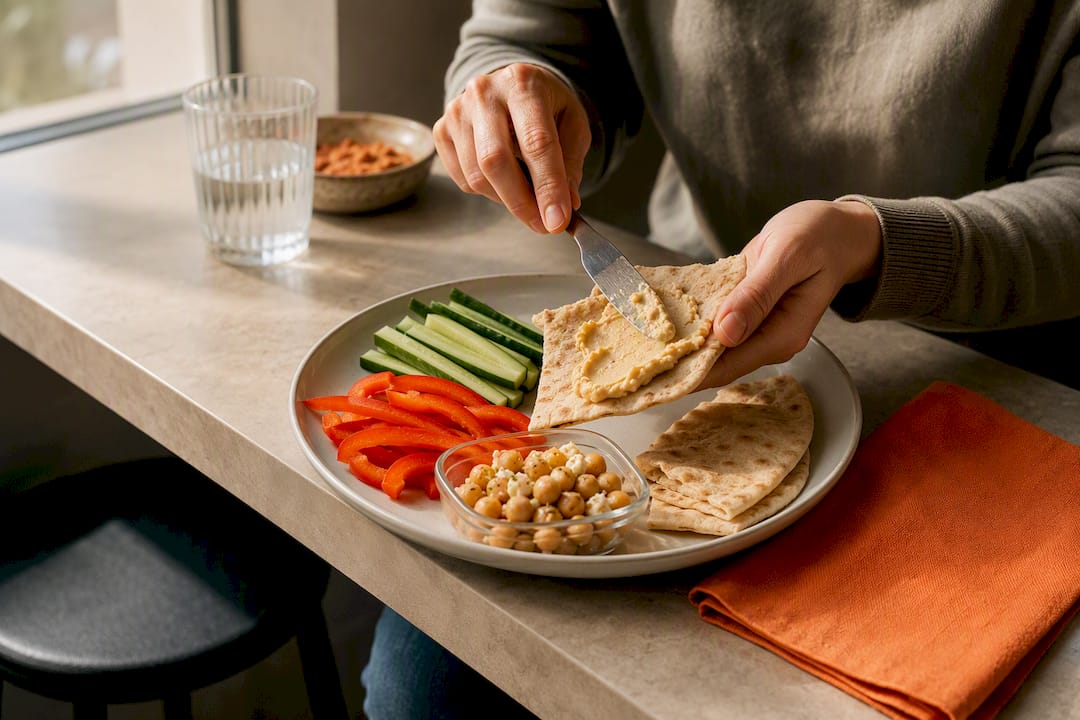
- Canned salmon or tuna + hummus + whole-grain crackers + baby carrots
- Rotisserie chicken + microwaved frozen rice pouch + jarred salsa
- Cottage cheese + canned peaches or thawed frozen berries + a drizzle of honey
- Deli turkey and cheese roll-ups with pre-washed spinach, no bread required
- Canned white beans + olive oil + lemon juice + whatever soft herbs are in the fridge
For hydration and gentle recovery, a warm mug of low-sodium broth, an electrolyte drink, or a two-ingredient smoothie (frozen banana plus milk or yogurt) covers fluids and a little nourishment without any prep beyond opening the blender lid. Houston Methodist’s guidance on eating when you’re too tired to cook leans on this same logic: assembled meals count as real food.
How Do One-Pot and Passive Cooking Methods Save Effort?
The slow cooker and the pressure cooker do the work while you rest, which is the entire point when you’re depleted. The formula is almost always the same: protein, a starch or beans, a liquid, and whatever vegetables you have, dumped in together.
Three dump-and-go formulas worth memorizing:
- Chicken thighs + a jar of salsa + a can of black beans, slow cooker on low for 6 to 8 hours, shredded and served over rice or in tortillas.
- Ground turkey or beef + a can of diced tomatoes + a bag of frozen mixed vegetables + broth, pressure cooker on high for 8 minutes, eaten as a rough stew.
- Frozen meatballs + a jar of marinara + a handful of dry pasta, all in one pot, simmered until the pasta is tender.
Residual-heat finishing, sometimes called the “turn off early” trick or insulated-box cooking, lets food finish in its own retained heat instead of on an active burner. Research on minimizing kitchen energy use confirms that insulated finishing techniques can meaningfully cut on-stove time, and journalists covering the revival of insulated cooking boxes in Italy found home cooks using towels, coolers, or wrapped pots to finish rice and beans without any added heat. Skip this method with raw poultry or ground meat, though. Those need to reach a verified internal temperature on active heat, not coast there passively.
Pro Tip: Line your slow cooker or baking dish with a liner or parchment before you start. Cleanup drops to a quick wipe instead of a soak, which matters more than it sounds like on a day you can barely stand at the sink.
Batch Cooking and Freezer Shortcuts for Future Bad Days
The best low-energy meal is one you already made. Doubling a soup, chili, or pasta sauce recipe costs you almost nothing extra in active time but buys you two or three future dinners.
Stock a freezer and pantry with items that hold up well and need zero prep:
- Frozen pre-chopped vegetables (no washing, no cutting board)
- Canned beans and lentils, rinsed and ready
- A store-bought rotisserie chicken, portioned and frozen the day you buy it
- Individually frozen soup or chili portions in labeled containers
- Frozen rice and grain pouches that microwave in 90 seconds
Label every container with the contents and the date. Most cooked leftovers hold safely in the freezer for two to three months without a major quality drop, and reheating to a full simmer or 165°F throughout kills off anything that grew during storage.
Which Appliances Actually Cut Cooking Effort and Energy Use?
Not every appliance saves the same amount of work. A microwave wins on raw speed for single portions. A slow cooker wins on zero supervision. A pressure cooker splits the difference: fast, but still mostly hands-off. An air fryer or toaster oven beats a full oven for small batches because it heats up faster and needs less monitoring.
Switching from a conventional oven to a smaller appliance like a pressure cooker or slow cooker for comparable dishes can cut energy use by roughly 80%.
That’s a convenience win as much as a utility-bill win. Less preheating, less monitoring, less standing over a hot stove.
A few habit changes stack on top of that:
- Match your pot size to the burner. A small pot on a large burner wastes heat that never reaches the food, according to Entergy’s kitchen energy guide.
- Keep lids on. Trapped heat cooks faster and needs less of your attention.
- Skip preheating for long, slow dishes like stews or braises. The oven catches up before it matters.
Nutrition and Food Safety Rules for Tired Cooks
Aim for one protein source, one fiber source, and a bit of fat at every meal, even a lazy one. Peanut butter on crackers, a can of chickpeas tossed with olive oil, or Greek yogurt with granola all hit that mark in under two minutes.
Food safety doesn’t get suspended just because you’re exhausted:
- Reheat leftovers to a visible simmer or steaming hot throughout, roughly 165°F at the center.
- Don’t leave cooked food sitting at room temperature past two hours.
- Refrigerated leftovers are safest eaten within three to four days.
- Thaw frozen meat in the fridge or microwave, never on the counter overnight.
If fatigue drags on for weeks, worsens, or comes with poor appetite, fever, or weight loss, that’s worth a conversation with a doctor rather than another workaround. The NHS’s self-help guidance on fatigue frames small, nutrient-dense meals and pacing as reasonable first steps, but persistent exhaustion deserves a real look, not just a better dinner.
Eight Meal Templates That Remove All the Decisions
Templates work because they kill the blank-page problem. Pick one, plug in whatever’s on hand, done.
- Overnight oats: oats + milk + yogurt, refrigerated overnight, topped with whatever fruit exists.
- Protein oatmeal: instant oats cooked in milk with a scoop of protein powder stirred in at the end.
- Two-ingredient smoothie: frozen fruit + milk or yogurt, blended.
- No-cook grain bowl: microwaved rice pouch + canned beans + shredded cheese + salsa.
- Rotisserie and steam-bag dinner: shredded rotisserie chicken + a microwave steam bag of vegetables.
- One-pan pasta dump: pasta, jarred sauce, and frozen vegetables simmered together in a single pot until the pasta is done.
- Snack plate: hummus + baby carrots + whole-grain pita.
- Recovery mug: low-sodium bone broth, warmed, sipped slowly.
Community recipe threads land on nearly identical patterns. A widely shared low-energy meal thread on r/Cooking keeps circling back to grain bowls, doctored canned soup, and eggs cooked three different lazy ways, which tracks with everything above.
Adapting These Templates to Dietary Restrictions
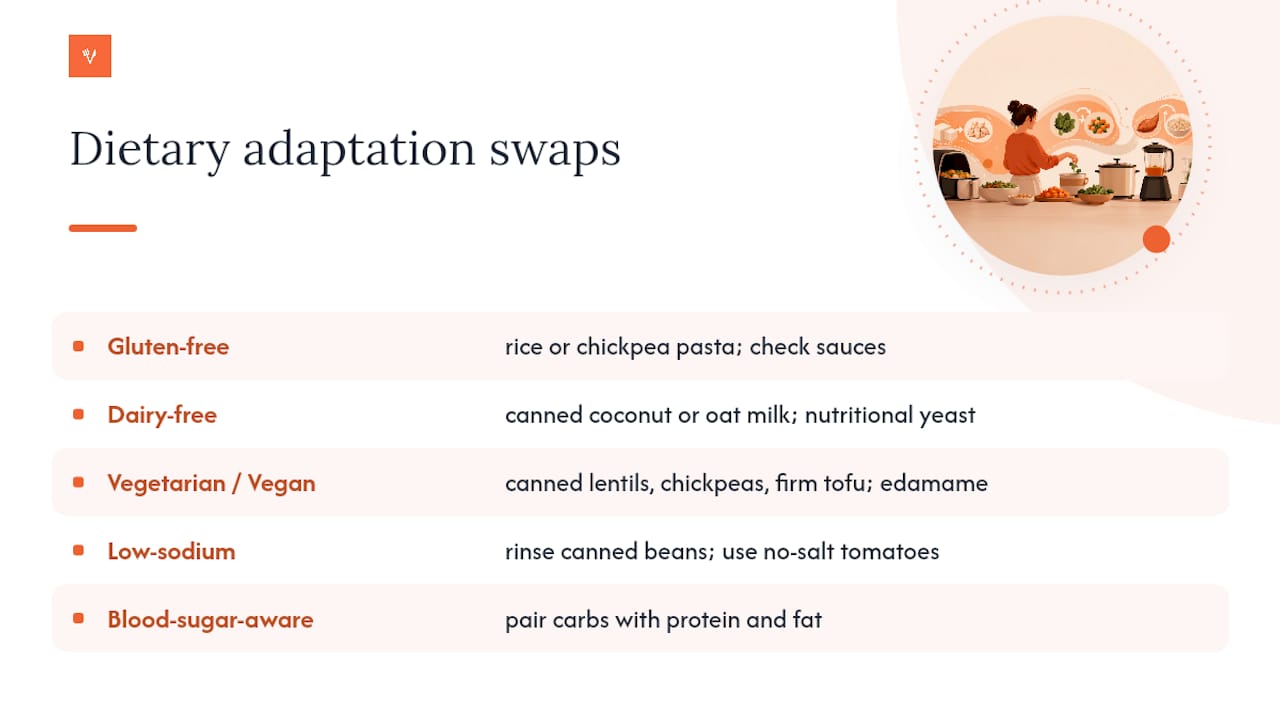
Every template above flexes without much extra thought. For gluten-free eating, swap regular pasta for a rice or chickpea-based version and check that jarred sauces and broths list no wheat-derived thickeners. Canned beans and rotisserie chicken are naturally gluten-free as long as the seasoning blend doesn’t hide soy sauce or malt vinegar.
Dairy-free swaps are just as simple: canned coconut milk or oat milk replaces dairy milk in smoothies and oatmeal, and a tablespoon of nutritional yeast stands in for the cheesy flavor in a grain bowl.
For vegetarian or vegan versions, canned lentils, chickpeas, and firm tofu replace rotisserie chicken as the protein anchor. Frozen edamame works well tossed straight into a one-pan pasta dump. Nutritional needs shift a little here. Plant proteins are often lower in iron and vitamin B12, so pairing beans with a vitamin C source like citrus or bell pepper improves iron absorption, and a fortified plant milk helps close the B12 gap.
Low-sodium needs matter most with canned goods and jarred sauces, since these often carry heavy sodium loads. Rinsing canned beans under water cuts a meaningful share of their sodium, and choosing “no salt added” canned tomatoes or low-sodium broth keeps a slow cooker dinner from becoming a sodium bomb.
If diabetes or blood sugar management is part of the picture, pairing any carbohydrate, rice, pasta, or bread, with a protein and a fat slows the glucose spike. A can of beans stirred into a grain bowl does double duty here: fiber and protein together.
None of these swaps demand extra cooking skill. They just mean reading a label once and keeping the right substitute stocked.
Mindful Eating When Fatigue Changes Your Appetite
Fatigue scrambles appetite in both directions. Some days you’re not hungry at all; other days you’re reaching for anything fast and carbohydrate-heavy because chewing feels like less effort than deciding. Both responses are normal, and neither one needs to be fought.
When appetite disappears, smaller and more frequent mini-meals tend to work better than forcing a full plate. A handful of nuts, a piece of cheese, or half a smoothie every few hours can add up to real intake without the pressure of finishing dinner.
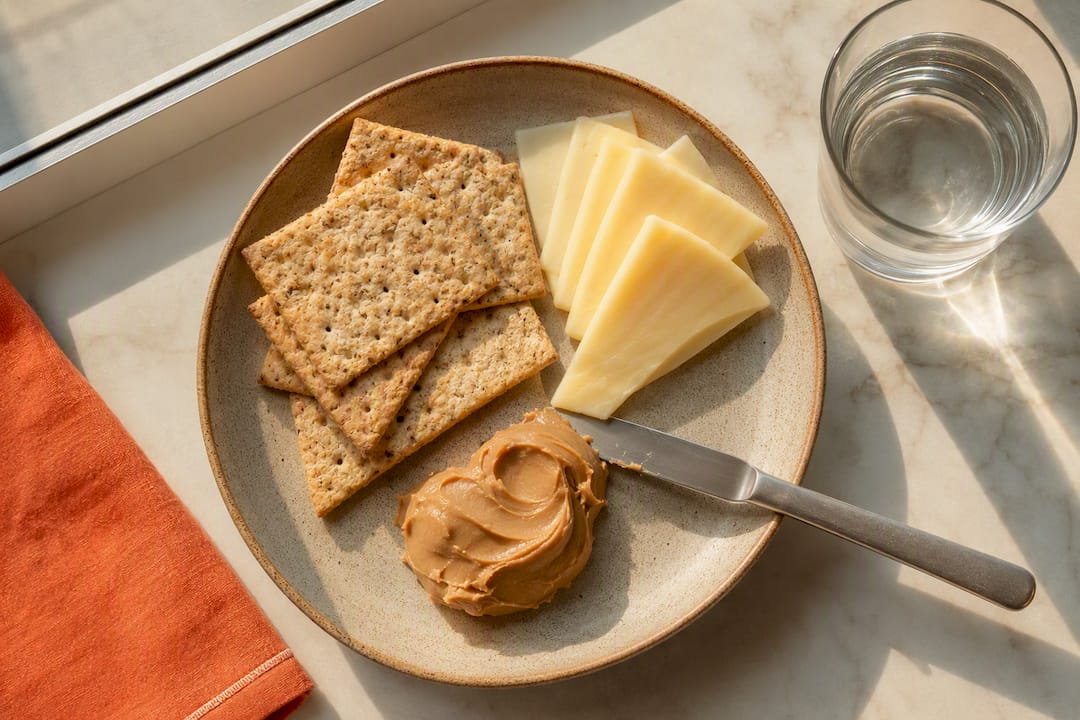
When cravings run toward constant snacking, the fix isn’t restriction. It’s pairing whatever you’re craving with something that adds staying power. Crackers alone digest fast and leave you hungry again in an hour; crackers with peanut butter or cheese hold longer and quiet the grazing loop.
Eating slowly, even for five extra minutes, gives your body time to register fullness signals that fatigue tends to blunt. That’s not a discipline issue. It’s a physiological lag, and slowing down is the practical workaround, not a moral one.
What I’d Tell a Friend Running on Empty
Simplifying dinner isn’t giving up. It’s the right response to a body that’s telling you something. Pick a fallback box of shelf-stable staples, set two go-to templates you never have to think about again, and let one batch-cooking session a month do the heavy lifting. If you want more ready-made ideas, our lazy dinner roundup and weeknight cooking guide are built exactly for days like this.
— Jack
Let an App Handle the Decisions for You
Some low-effort ideas come from a saved recipe feed like Yumzi; others come from a tool that removes the choosing entirely. There are apps designed for exactly the moment this article describes: when you don’t have the energy to plan, you can spin a wheel and get a full recipe, complete with a shopping list, instead of staring at the fridge for ten minutes.
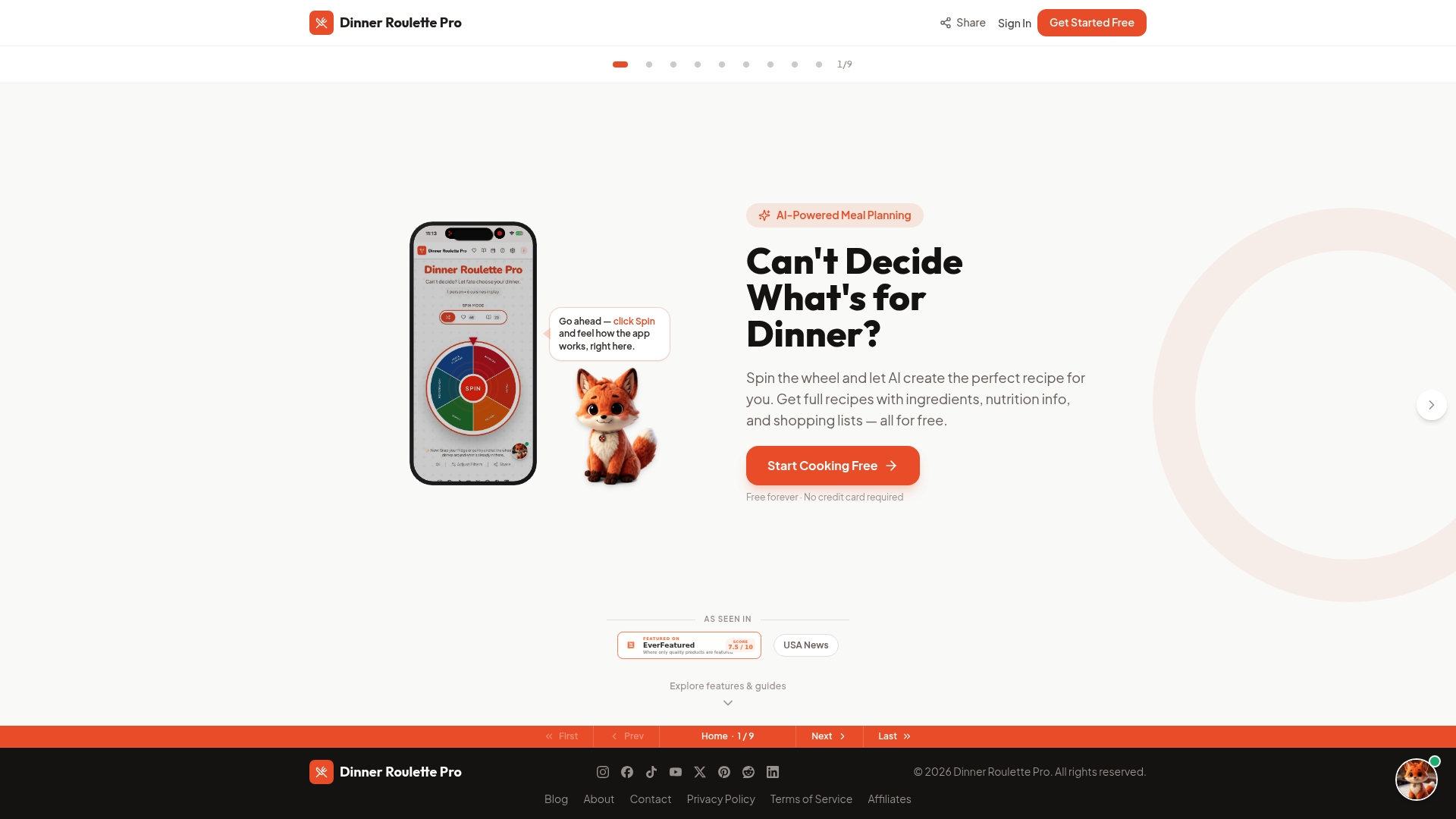
Set your dietary filters once, allergies and all, and every future spin respects them automatically. That’s the real time savings: no repeated typing, no re-explaining your restrictions, no decision fatigue stacked on top of the physical kind. When you’re ready to stop rebuilding the same grocery list from memory every week, the shopping list guide walks through setting up a reusable staples list you can pull from in seconds.
Sources
- Energy Efficient Kitchen: How to Cook for the Least Energy
- Cooking up energy savings in your kitchen - Entergy
- Self-help tips to fight fatigue
- Minimizing energy usage in cooking to protect environments and health