A Pescatarian Meal Planning Guide With a Ready 7-Day Plan | Dinner Roulette Pro
August 19, 2026
A Pescatarian Meal Planning Guide With a Ready 7-Day Plan
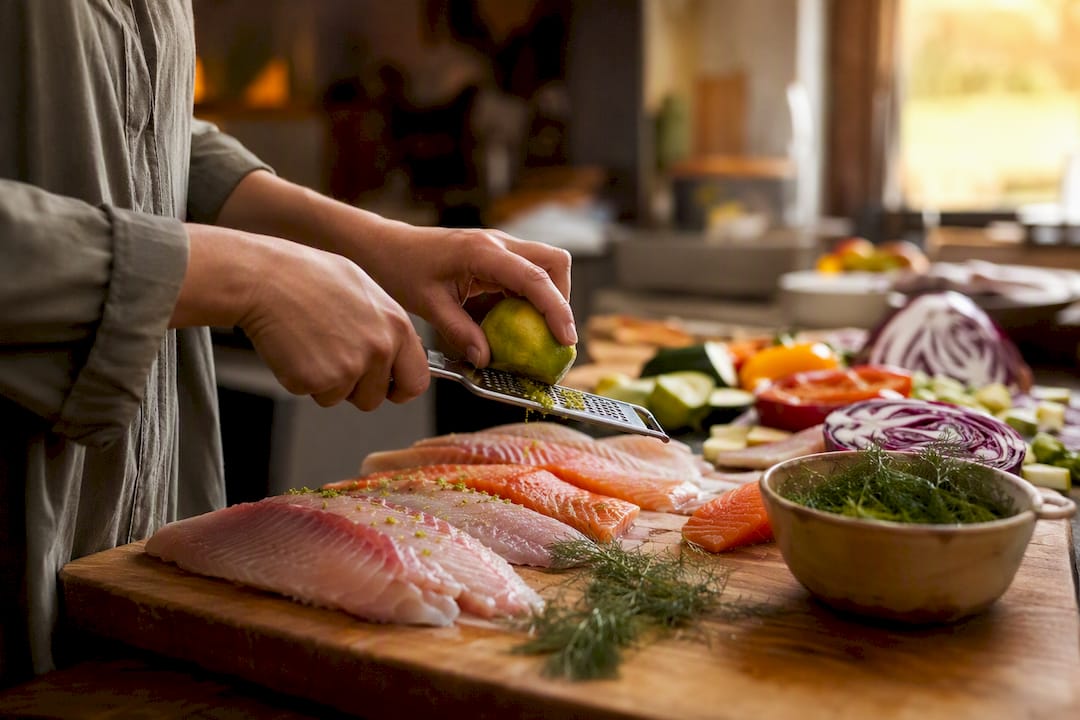
A practical pescatarian meal plan centers on three things: two or more seafood-focused meals per week, plate-building that keeps half your plate vegetables, and a batch-prep routine that turns Sunday into Tuesday’s dinner. Everything else, the recipes, the swaps, the mercury math, is detail work you layer on once those three habits stick.
Start with these rules before you touch a grocery list:
- Target 2+ seafood meals weekly to hit omega-3, selenium, and B12 targets.
- Build plates at roughly half vegetables, a quarter seafood or plant protein, and a quarter whole grain.
- Default to low-mercury oily fish (salmon, sardines, trout) for the omega-3 workload.
- Keep frozen fillets and canned tuna on hand for the nights fresh fish isn’t happening.
- Batch-cook grains and roasted vegetables once, then reassemble all week.
The full 7-day menu with prep notes and calorie cues is laid out further down this guide, ready to copy straight into your week.
Key Takeaways
A sustainable pescatarian plan works because it combines a repeatable plate model, rotated low-mercury seafood, and a single weekend batch-prep session that removes nightly decision-making.
| Point | Details |
|---|---|
| Hit the seafood minimum | Aim for at least two seafood-focused meals weekly to cover omega-3s, selenium, and B12. |
| Use the plate model | Build dinners as 50% vegetables, 25% seafood or plant protein, 25% whole grain. |
| Rotate, don’t repeat | Cycle through salmon, sardines, trout, shrimp, and canned tuna to manage mercury exposure. |
| Batch-cook once weekly | Prep grains, roasted vegetables, and one protein in a single session to cut weeknight cooking to minutes. |
| Automate the routine | Dr-pro turns the plate model and grocery list into a spin-to-generate recipe with built-in allergy checks and scaling. |
Table of Contents
- What Is a Pescatarian Diet and Who Should Try It?
- What Nutrients Matter Most, and What Are the Risks?
- How Do You Scale a Pescatarian Plan to Your Goals?
- What Does a Sample 7-Day Pescatarian Meal Plan Look Like?
- What Should Your Grocery List and Prep Routine Look Like?
- How Do You Adjust the Plan for Allergies or Picky Eaters?
- How Do You Choose Sustainable, Lower-Mercury Seafood?
- What Evidence Backs This Meal Plan?
- A Publisher’s Note on Making This Stick
- Put This Plan on Autopilot With Dinner Roulette Pro
- Sources
What Is a Pescatarian Diet and Who Should Try It?
A pescatarian diet is plant-forward eating that includes fish and shellfish but cuts out meat and poultry. Most people following it still eat eggs and dairy, which makes it noticeably easier to sustain than a strict vegan diet, since you’re not troubleshooting B12 and complete protein from scratch every day.
It suits a specific set of people well. Anyone cutting back on red and white meat for heart-health reasons, Mediterranean-diet followers looking for more structure, people chasing higher omega-3 intake without fish oil capsules, and families who want a weeknight protein that cooks in fifteen minutes all land here comfortably.
The guideline that shows up across most nutrition sources: build your week around at least two seafood-focused meals, then fill the remaining days with vegetarian meals built on eggs, legumes, dairy, and whole grains. That’s not an arbitrary number. Two servings a week is roughly the threshold most dietary guidance points to for meaningful omega-3 and selenium intake without turning every dinner into a seafood dinner.
What Nutrients Matter Most, and What Are the Risks?
Five nutrients deserve your attention on this diet: omega-3 fatty acids, vitamin B12, selenium, iodine, and iron. Fish covers the first three well. B12 comes along for free if you’re still eating eggs and dairy. Iron and iodine take a little more intention since you’ve dropped red meat, a common iron source, from the rotation.
The benefits show up fast for most people. Heart health tends to improve because you’re swapping saturated-fat-heavy meat for fish and plant fats. Fiber intake climbs because plant-forward plates naturally include more legumes and vegetables. And getting adequate B12 and omega-3s is considerably easier here than on a strict vegan diet, where both require supplementation.
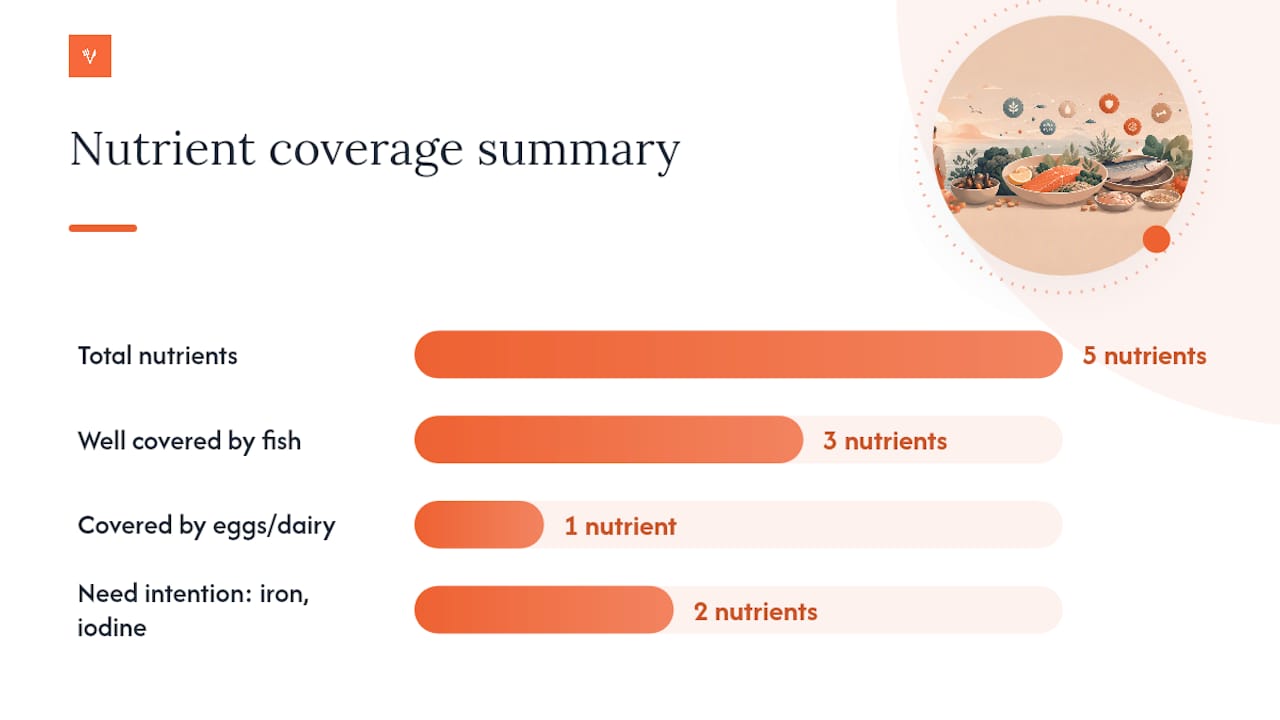
The risks are real but manageable. Mercury is the big one: some species accumulate more than others, and rotating your choices matters more than avoiding fish altogether. If you’re pregnant, breastfeeding, or feeding young children, talk to a clinician about serving sizes before increasing seafood intake, since guidance differs for these groups.
A short checklist for closing nutrient gaps:
- Eat oily fish (salmon, sardines, mackerel) at least twice a week for omega-3 coverage.
- Pair plant-based iron sources (lentils, spinach, tofu) with a vitamin C source to improve absorption.
- Check iodine intake if you’ve cut dairy along with meat; iodized salt or seaweed can fill that gap.
- Rotate low-mercury seafood rather than eating the same fillet every night.
Pro Tip: Keep a rotating list of four or five go-to fish taped inside a cabinet door. Decision fatigue, not lack of options, is usually what pushes people back toward takeout by Wednesday.
How Do You Scale a Pescatarian Plan to Your Goals?
The plate model does most of the heavy lifting here. Half the plate is vegetables, a quarter is seafood or a plant protein like lentils or tofu, and the final quarter is a whole grain or healthy fat. That ratio holds whether you’re eating 1,800 calories or 2,600. What changes is the size of each quarter, not the shape of the plate.
For dinner protein specifically, aim for an amount depending on activity level and goals. Someone maintaining weight sits toward the lower end; someone lifting weights or recovering from training days pushes toward 40 grams and adds a starchier grain portion.
A quick workflow for adjusting the plan:
- Pick your target calorie range based on your goal (loss, maintenance, or muscle gain).
- Set your protein anchor first: 25 to 40 grams of seafood or plant protein per dinner.
- Fill vegetables to appetite; they’re the flexible, low-cost variable.
- Adjust grain and fat portions last to hit your calorie target.
- Scale the whole recipe up or down using simple multipliers (1.5x for three people, 2x for four).
Common swaps that don’t disrupt the model:
- Canned light tuna for fresh fillet when time or budget is tight.
- Extra black beans or lentils on meatless days for a protein boost.
- Plant milk or dairy-free yogurt if you’re cutting dairy alongside meat.
For scaling recipes accurately across different household sizes, consistent portion multipliers save more time than recalculating from scratch each week.
What Does a Sample 7-Day Pescatarian Meal Plan Look Like?
This is a ready-to-use week, structured the way a dietitian would lay it out: three meals and a snack per day, with seafood dinners clearly marked and swaps for vegetarian or dairy-free readers.
- Day 1 — Breakfast: Greek yogurt with berries and walnuts. Lunch: chickpea salad with feta. Dinner (seafood): One-pan salmon orzo, about 511 calories and 46 grams of protein per serving, ready in under 30 minutes. Snack: hummus with carrots.
- Day 2 — Breakfast: veggie omelet. Lunch: leftover salmon orzo. Dinner: Sheet-pan shrimp with roasted broccoli and rice (~450 kcal, 32g protein); toss shrimp and vegetables on one tray, roast 15 minutes. Snack: apple with almond butter.
- Day 3 — Breakfast: overnight oats with chia seeds. Lunch: lentil soup with crusty bread. Dinner: Baked cod with roasted sweet potato and green beans (~420 kcal, 34g protein). Vegetarian swap: white beans instead of cod. Snack: cottage cheese with pineapple.
- Day 4 — Breakfast: smoothie with spinach, banana, and protein powder. Lunch: tuna salad lettuce wraps using canned light tuna. Dinner (seafood): Sardine and white bean pasta using pantry sardines and reserved cooked grain from batch prep. Snack: rice cakes with avocado.
- Day 5 — Breakfast: whole-grain toast with eggs. Lunch: quinoa bowl with roasted vegetables from batch prep. Dinner: Family-friendly baked tilapia with mild lemon sauce (~400 kcal, 30g protein), a good pick for kids or sensitive palates. Snack: mixed nuts.
- Day 6 — Breakfast: yogurt parfait. Lunch: black bean and corn salad. Dinner: Trout with roasted vegetables and farro, reheated from batch-cooked grain. Snack: sliced pear with cheese.
- Day 7 — Breakfast: scrambled eggs with avocado toast. Lunch: leftover trout over greens. Dinner: Simple seafood chowder, a good weekend comfort dish that uses up remaining frozen shrimp or white fish. Snack: dark chocolate and almonds.
The week includes multiple seafood-forward dinners, meeting and exceeding common seafood meal recommendations, along with vegetarian and pantry-based meals. Every grain and roasted vegetable side draws from a single weekend batch-cook session, which is what keeps weeknight assembly under ten minutes.
What Should Your Grocery List and Prep Routine Look Like?
Group your shopping by category and the week gets dramatically less chaotic. Here’s the breakdown that supports the plan above:
Seafood: salmon fillets, shrimp (frozen is fine), cod, tilapia, trout, canned light tuna, canned sardines. Produce: broccoli, sweet potatoes, green beans, spinach, mixed greens, avocado, berries, banana, pear, apple. Pantry staples: farro or rice, orzo, whole-grain bread, canned white beans, black beans, lentils, olive oil. Dairy and eggs: Greek yogurt, cottage cheese, feta, eggs, cheese. Spices and extras: lemon, garlic, chili flakes, almond butter, mixed nuts.
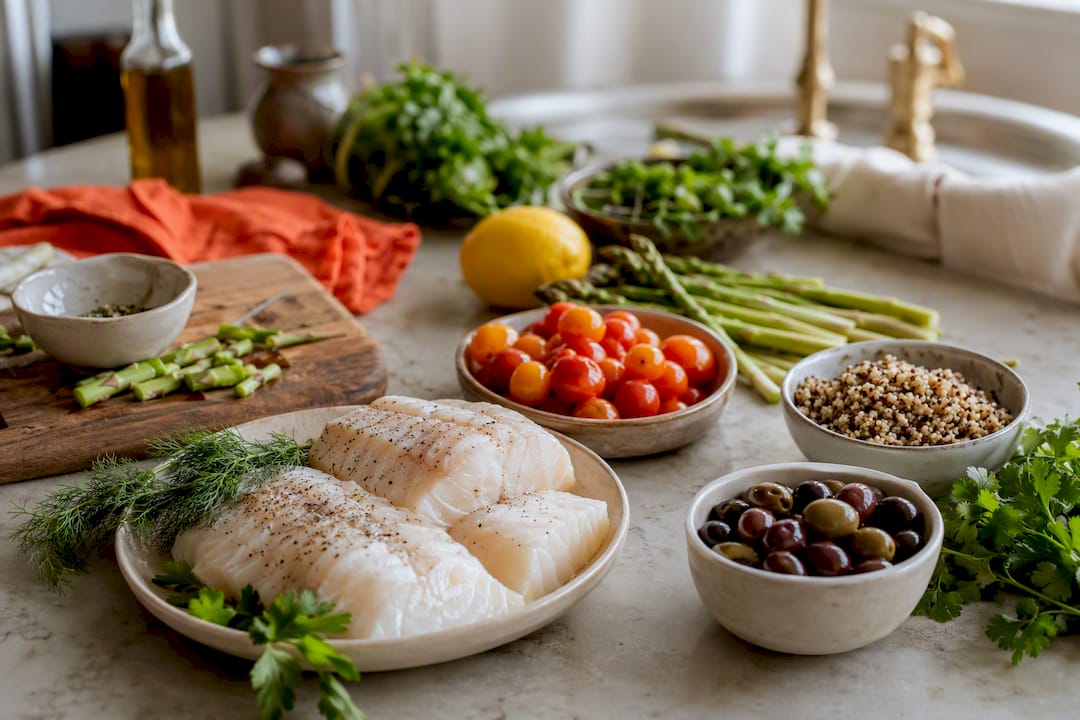
Batch-prep in one session: cook a large batch of grains (farro, rice, quinoa), roast a full tray of vegetables, and pre-cook any protein that reheats well. Batch-cooked staples keep assembly time under five minutes for most lunches and dinners, and grains hold in the fridge for four to five days.
Time-saving moves worth adopting: sheet-pan and one-pot recipes cut cleanup dramatically, frozen seafood is just as nutritious as fresh and often cheaper, and reheating in a skillet with a splash of water beats the microwave for texture.
Pro Tip: Buy frozen shrimp and canned sardines in bulk when they’re on sale. Premium fresh fillets are worth it for one or two showcase meals a week, not every dinner, and stretching your budget this way makes the whole plan easier to sustain.
How Do You Adjust the Plan for Allergies or Picky Eaters?
Shellfish allergies, kids who won’t touch fish, and dairy-free households all need workable substitutes, not a diet overhaul. The trade-off is usually a small nutrient gap you can close with something specific rather than a vague “eat more variety.”
| Original Ingredient | Practical Substitute | Nutrition Note |
|---|---|---|
| Shrimp or shellfish | Extra-firm tofu or white fish (if not allergic to fish generally) | Tofu lacks omega-3s; add ground flaxseed or algae oil |
| Fish (for kids) | Mild tilapia or cod with light seasoning | Milder flavor and texture improve acceptance |
| Dairy (yogurt, cheese) | Coconut or almond-based yogurt, nutritional yeast | Check for added B12 and calcium fortification |
| Any seafood removed entirely | Fortified plant milk, eggs, B12 supplement | Removing seafood raises B12 and iodine risk |
For kids specifically, mild white fish with a simple lemon or butter sauce works better than bold marinades, and cutting portions to roughly half an adult serving keeps things realistic. If you’re regularly adjusting recipes for a picky eater at the table, a meal planner built around dietary restrictions makes those substitutions automatic instead of something you recalculate every night.
How Do You Choose Sustainable, Lower-Mercury Seafood?
Rotation is the entire strategy here. No single fish needs to be avoided forever, but eating the same high-mercury species every night is where problems start.
Everyday lower-mercury choices to build meals around: salmon, sardines, trout, shrimp, and canned light tuna. Species to limit or avoid, especially if you’re eating seafood three or more times weekly: swordfish, king mackerel, shark, and albacore tuna in large quantities.
A sustainability checklist worth following at the store:
- Look for Marine Stewardship Council or similar certification labels on packaging.
- Favor local, in-season seafood when it’s available and reasonably priced.
- Don’t dismiss frozen or canned as lesser options. Both often reduce waste and are caught sustainably.
- Read labels for species name, not just “tuna” or “fish,” since mercury and sustainability vary a lot by species.
If you’re increasing seafood to three or more meals a week, rotating your species choices rather than repeating a favorite fillet keeps mercury exposure well within safe ranges. That’s a meaningfully different approach from just “eating less fish,” and it lets you get the nutrition upside without the tradeoff.
What Evidence Backs This Meal Plan?
This plan draws on a handful of consistent, dietitian-backed rules rather than guesswork. The two-seafood-meals-per-week target, the 50/25/25 plate model, and mercury rotation guidance all show up repeatedly across nutrition sources, not just one outlier study.
Each rule maps to a specific outcome: two seafood meals cover your omega-3 and selenium needs, the plate model keeps calories and protein in check without tracking every gram, and rotating fish species prevents mercury buildup even as intake increases.
If you’re pregnant, breastfeeding, managing a chronic condition, or planning meals for a young child, run any increase in seafood intake past a clinician first. General guidance doesn’t account for individual risk factors the way a doctor can.
A Publisher’s Note on Making This Stick
The plans that survive past week one aren’t the strictest ones. They’re the ones with a backup meal that requires zero decision-making, canned sardines over pasta, a bag of frozen shrimp, something you can make on autopilot when the week goes sideways.
My habit: keep one “emergency” one-pan seafood meal stocked at all times, ingredients pre-measured mentally, so a bad Tuesday never turns into a takeout order.
Put This Plan on Autopilot With Dinner Roulette Pro
Building this plan by hand works, but rebuilding it every single week is where most people quit. Dr-pro turns the plate model and grocery list above into something you spin instead of calculate: pick your dietary preferences, spin the wheel, and get a full pescatarian recipe with ingredients, nutrition breakdown, and a shopping list attached.
A few features map directly onto what this guide just walked through. Allergy checks flag shellfish or dairy automatically, so the substitution table above becomes a setting instead of a manual swap. Smart Scale adjusts the salmon orzo or shrimp sheet-pan recipe for one person or four without you doing the math. And the shopping list feature groups your seafood, produce, and pantry staples exactly the way the grocery section above does, ready for one-tap ordering through Walmart or Instacart.
If you want the nutrition side dialed in for a specific goal, the nutrition guide walks through adjusting macros for weight loss, maintenance, or muscle gain using the same protein-anchor approach covered earlier. Open the app, set your pescatarian preferences once, and let the wheel handle the Tuesday-night decision fatigue from here.
Sources
- Thinking about becoming a pescatarian? What you should know about the pescatarian diet | Harvard Health
- 7-Day Pescatarian Diet Plan, Created by a Dietitian | EatingWell
- 7-Day Pescatarian Meal Plan by a Dietitian | The Nutrition Insider
- Guidelines for Eating Fish that Contain Mercury | U.S. EPA
This article is general information, not a substitute for advice from a qualified doctor. Consult a qualified healthcare professional about your own circumstances before acting on anything here.