No Scale Balanced Dinner Plate for Busy Cooks: Half Veg, 1/4 Protein | Dinner Roulette Pro
September 7, 2026
No Scale Balanced Dinner Plate for Busy Cooks: Half Veg, 1/4 Protein
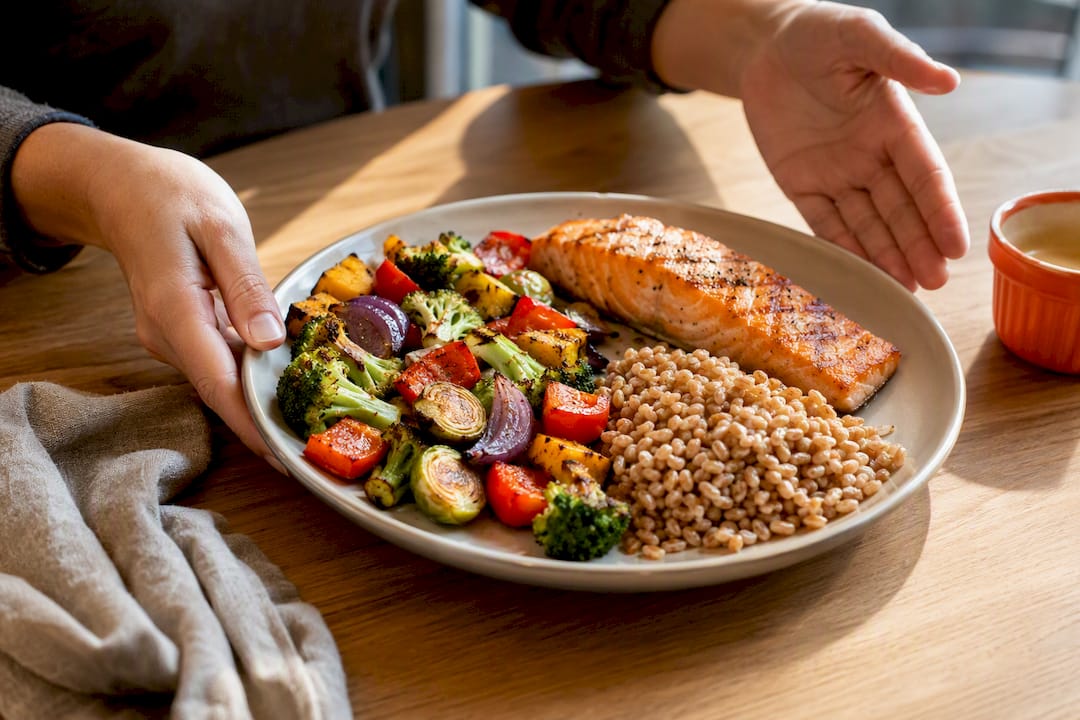
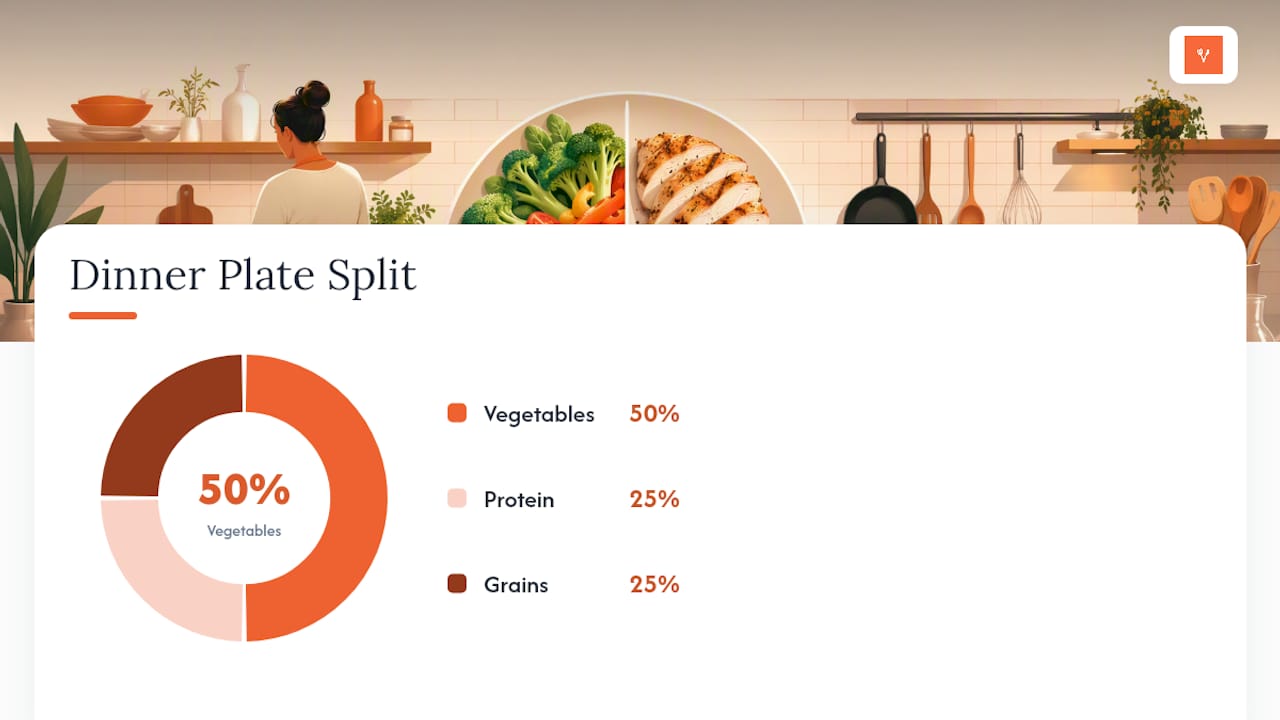
For dinner, aim to fill about half your plate with non-starchy vegetables and fruit, roughly a quarter with lean protein, and the remaining quarter with whole grains or starchy carbs. Add a small amount of healthy fat and pour water or an unsweetened drink instead of soda or juice. One imperfect dinner won’t undo your health. Get the ratio right most nights, and the rest sorts itself out.
TL;DR:
- Most dinners should aim for half the plate to be vegetables or fruit, a quarter to lean protein, and a quarter to whole grains or starchy carbs.
- Hand measurements provide a simple way to portion protein, grains, and vegetables without a scale, adjusting for activity level.
- Canned fish, rotisserie chicken, and frozen or precooked grains make quick, no-prep options for balancing meals.
- Potatoes, white rice, and white bread are starch, not vegetables, and belong in the grain or starchy carb quarter.
- Limiting processed meats and sugary drinks helps maintain balance, while pantry shortcuts can simplify meal planning on busy nights.
Table of Contents
- What Goes on a Balanced Dinner Plate?
- How Do You Eyeball Portions Without a Scale?
- Which Proteins Belong on a Balanced Plate?
- Do Potatoes Count as a Vegetable or a Starch?
- What About Fats, Sauces, and Drinks?
- What Are Some Quick Balanced Dinner Ideas?
- Can a Meal-Planning App Help You Stick to This?
- Realistic Beats Perfect
- A Faster Way to Build the Plate Every Night
- Where This Guidance Comes From
- Sources
What Goes on a Balanced Dinner Plate?
The half-plate rule for vegetables is the easiest one to picture and the easiest one to skip when you’re rushing. Roasted broccoli, sautéed spinach, a big handful of frozen mixed vegetables microwaved for four minutes, a side salad with cucumber and cherry tomatoes. Any of these fill the vegetable half without extra work. Fruit counts here too, so a sliced pear or a bowl of berries after dinner still fits the equation.
The protein quarter is where most home cooks default to the same three options, but the Healthy Eating Plate from Harvard’s Nutrition Source lists a wider range worth rotating through:
- Fish like salmon, cod, or canned sardines
- Poultry such as chicken breast or thighs
- Beans, lentils, and chickpeas
- Eggs, cooked any way
- Tofu or tempeh, cubed and pan-seared
Limit red meat and skip processed meat like bacon or deli slices most nights. They’re not banned, just not the default.
The grain quarter belongs to whole grains and other starchy carbs: brown rice, quinoa, whole wheat pasta, or a baked sweet potato. A pescatarian plate might be grilled salmon, roasted asparagus, and farro. A vegetarian version could swap in a black bean and corn salad over brown rice with sautéed peppers. Same ratio, different ingredients.
How Do You Eyeball Portions Without a Scale?
Your hands are already sized to your body, which makes them a surprisingly accurate measuring tool. No scale, no app, no counting required.
- Palm-sized and about as thick as your hand equals one protein serving.
- One clenched fist equals one serving of grains or starchy carbs.
- Two cupped hands together equal your vegetable and fruit serving, which should fill most of the plate.
- A thumb-sized portion signals a serving of fat, like a pat of butter or a tablespoon of oil.
Standard dinner plates are typically medium-sized, so the vegetable half looks generous but often shrinks once you fill it, so check by picturing the plate cut into quarters before you start piling food on. If yours is bigger, the vegetable half can look generous but often shrinks once you fill it, so check by picturing the plate cut into quarters before you start piling food on.
Activity level changes the math. A heavier training day might call for an extra fist of grains. A low-activity day might mean skipping second helpings of the starch quarter and adding more vegetables instead.
Pro Tip: Keep a mental snapshot of your palm and fist size. It travels with you to restaurants, potlucks, and anywhere else you can’t measure food.
Which Proteins Belong on a Balanced Plate?
Fish, poultry, beans, lentils, eggs, and tofu should make up the bulk of your protein quarter, with red and processed meat kept occasional rather than routine. That’s not a strict ban. It’s a ratio, the same logic that governs the rest of the plate.
Busy nights don’t have to mean skipping the protein quarter. Canned tuna or salmon needs zero prep. A store-bought rotisserie chicken covers three or four dinners if you shred and portion it out. Canned beans, rinsed and warmed, work in minutes. Frozen tempeh thaws fast and takes on marinade well.
Plant proteins pair up when you need a complete amino acid profile: beans with rice, lentils with whole wheat pita, chickpeas with quinoa. A comparison of pea versus soy protein breaks down how different plant sources stack up nutritionally, useful if you’re building more plant-forward dinners and want to know the differences beyond taste.
- Canned tuna or salmon for a five-minute protein
- Rotisserie chicken, shredded and portioned across the week
- Canned beans, rinsed and warmed in a skillet
- Frozen tempeh or tofu, thawed and pan-seared
Do Potatoes Count as a Vegetable or a Starch?
Potatoes, white rice, and white bread belong in the grain and starch quarter, not the vegetable half. This trips up a lot of home cooks who assume any vegetable gets to live in the “half the plate” zone. The Healthy Eating Plate draws a clear line: starchy carbs act more like bread and rice in the body than like broccoli or spinach, so they get grouped with grains.
Whole-grain choices to rotate through the starch quarter:
- Brown rice, a half cup cooked
- Quinoa, a half cup cooked
- Whole wheat pasta, a half cup cooked
- Baked or roasted potato, one medium
Pairing a whole grain with protein and vegetables at the same meal helps keep blood sugar steadier than eating the starch alone, since fiber, fat, and protein all slow digestion down.
What About Fats, Sauces, and Drinks?
A drizzle of olive oil, a handful of nuts, or a few avocado slices covers the fat portion of dinner without tipping the plate out of balance. Skip the ladle of heavy sauce and reach for herbs, citrus, or a yogurt-based dressing instead. They add real flavor without stacking on sodium or saturated fat.
Drinks matter more than most people give them credit for. Water is the default. Unsweetened tea or coffee are fine additions. Sugary sodas and oversized juice pours quietly add hundreds of calories to a dinner that otherwise looks perfectly balanced.
- Fat: a thumb-sized drizzle of olive oil or a small handful of nuts
- Flavor: fresh herbs, a squeeze of lemon, or a spoonful of plain yogurt sauce
- Drink: water first, unsweetened tea or coffee as backup
- Limit: sugary sodas and large juice servings
What Are Some Quick Balanced Dinner Ideas?
Five templates cover almost any night: a grain bowl, a sheet-pan dinner, a stir-fry, a salad topped with protein, and a one-pot stew. Learn these five shapes and you rarely need a new recipe again, just a new set of ingredients dropped into the same structure.
Pantry shortcuts make the templates realistic on a Tuesday night. Frozen vegetables skip the chopping. Canned beans skip the soaking. Precooked grains, the kind sold in shelf-stable pouches, skip the twenty-minute simmer. Rotisserie chicken skips the cooking entirely.
- Fish night: pan-seared salmon, frozen broccoli roasted with olive oil, and a pouch of precooked brown rice.
- Vegetarian night: a grain bowl with quinoa, canned chickpeas, roasted peppers, and a lemon-yogurt drizzle.
- Pantry night: a stir-fry with frozen mixed vegetables, canned tuna or leftover rotisserie chicken, and whole wheat noodles.
Roasting, quick sautéing with garlic and onion, and building a yogurt-based sauce are the same cooking moves that make these dinners taste finished instead of thrown together.
Can a Meal-Planning App Help You Stick to This?
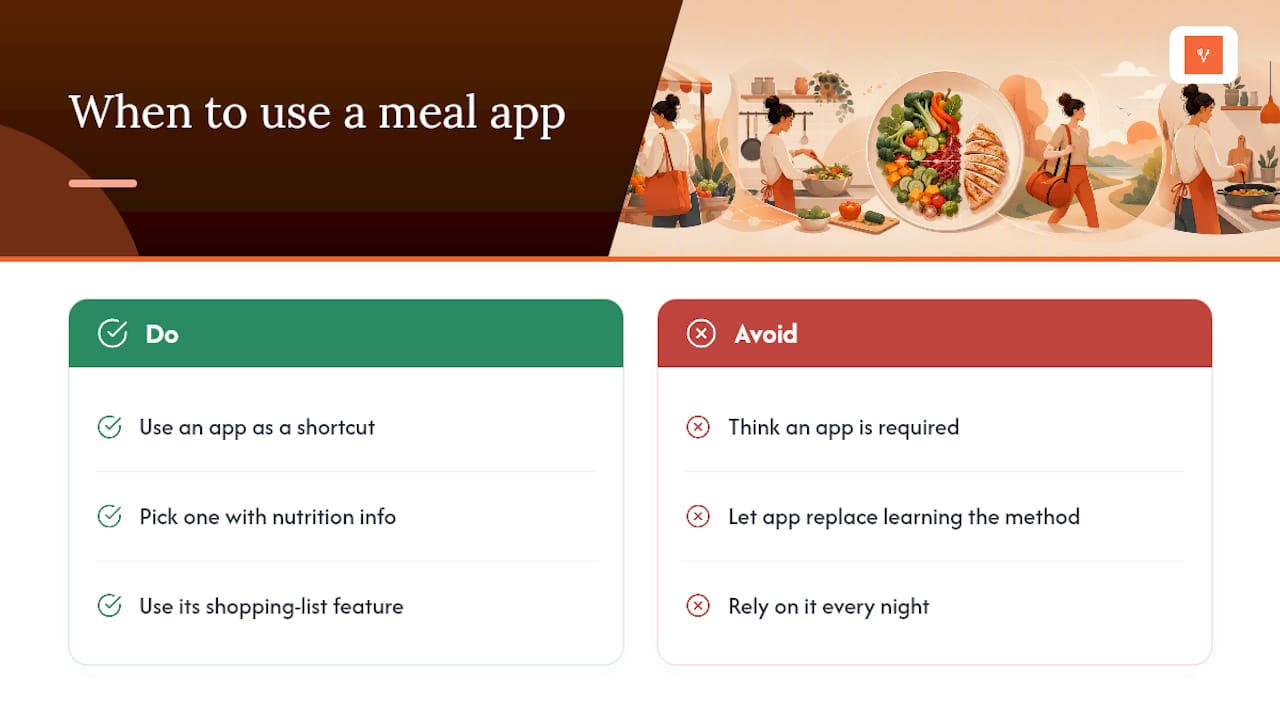
Following the plate method every night gets harder once the week wears you down and the fridge looks emptier than the meal plan in your head. This is where a tool built around the same ratios can take over the thinking. An app that generates recipes with nutrition information and shopping lists attached removes the friction of building a balanced plate from scratch, since the math is already done for you. It’s not a requirement for eating well. It’s a shortcut for the nights when you don’t have the energy to plan one yourself.
Realistic Beats Perfect
Consistency beats a perfect plate you only manage twice a month. Adjust the ratio to your schedule, your budget, and what’s actually in your fridge tonight. Some weeks that means more canned beans than fresh vegetables, and that’s fine. Lean on the pantry shortcuts above instead of aiming for a version of dinner that only exists on a magazine cover.
— Jack
A Faster Way to Build the Plate Every Night
If piecing together the vegetable half, the protein quarter, and the grain quarter from scratch every night sounds like more decision-making than you want after a long day, an app can turn the plate method into something you spin instead of plan. You can pick dietary filters, spin a wheel, and get a recipe with nutrition information and a shopping list attached.
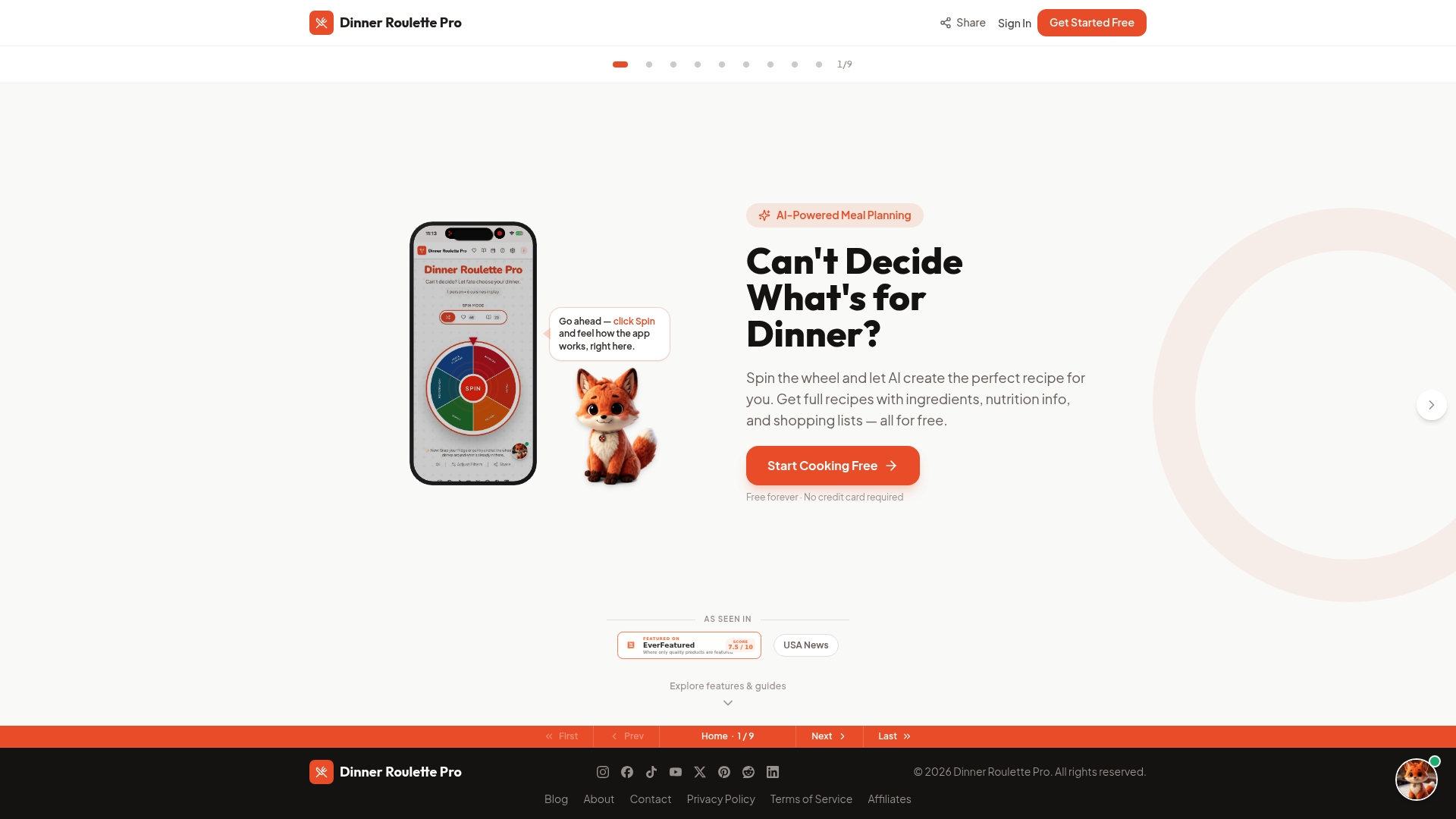
It’s not a replacement for learning the ratios. It’s a way to keep hitting them on the nights you’re too tired to think about ratios at all. Such apps may include recipe generation, calorie and macro breakdowns, and allergy checks to help keep the plate balanced even when you’re not doing the math yourself. If grocery prep is your biggest bottleneck, the shopping list guide walks through turning any generated recipe into a ready-to-shop list in a couple of taps.
Where This Guidance Comes From
Harvard’s Healthy Eating Plate sets the half-vegetable, quarter-protein, quarter-grain ratio used throughout this guide. The American Heart Association’s balanced plate infographic backs the same proportions with added recipe tips. USDA MyPlate resources offer portion tools, and the Healthy Eating Index underpins the federal standard for measuring diet quality.
Sources
- Healthy Eating Plate • The Nutrition Source
- MyPlate resources
- The Deliciously Balanced Plate Infographic | American Heart Association
- Healthy Eating Index (HEI) • Food and Nutrition Service