6g+ High Fiber Weeknight Dinners You Can Make Tonight | Dinner Roulette Pro
September 3, 2026
6g+ High Fiber Weeknight Dinners You Can Make Tonight
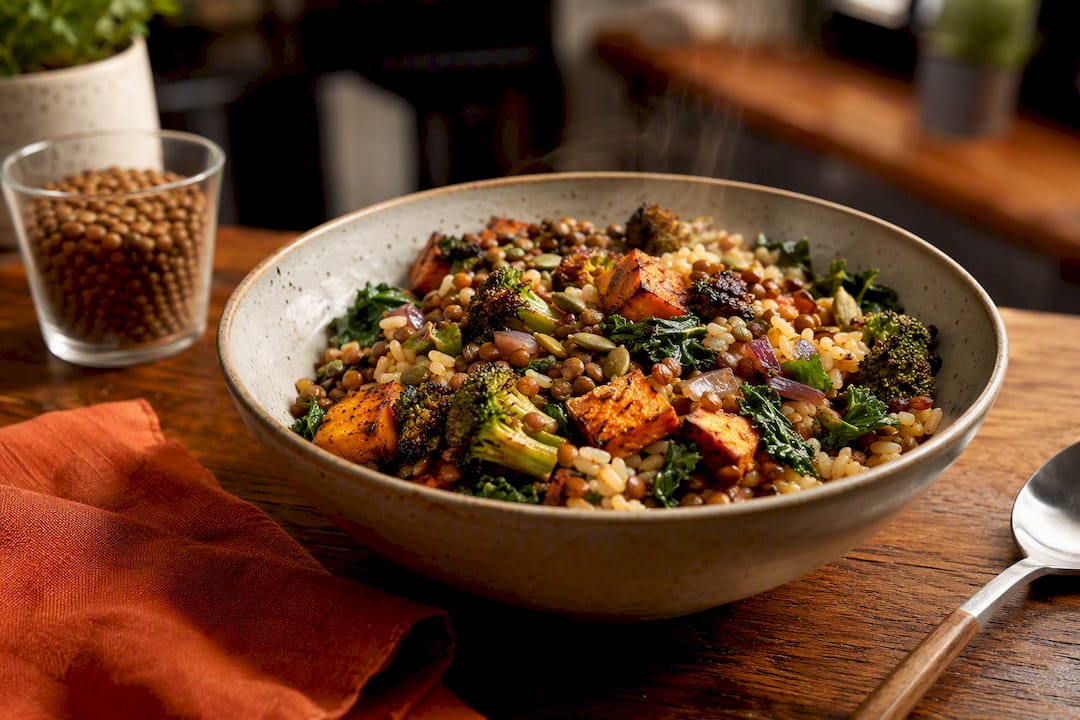
A high-fiber dinner delivers roughly 6 or more grams of fiber per serving, and the fastest route there is centering the plate on legumes, whole grains, or fiber-dense vegetables instead of treating them as a side. One-pot skillets, sheet-pan bakes, and grain bowls hit that number with the least effort. Tonight’s move: grab a can of beans or a cup of cooked whole grain and build the meal around it.
TL;DR:
- Incorporate legumes, whole grains, and fiber-dense vegetables into dinner formats like skillets, sheet-pan dishes, or bowls to easily reach 6 or more grams of fiber per serving.
- Batch-cooking staples such as lentils, rice, or beans at the start of the week simplifies maintaining a high-fiber dinner routine with minimal effort.
- Replacing half the pasta with cooked lentils or choosing brown rice over white rice can add 3 to 6 grams of fiber per meal without changing the core recipe.
- Keep pantry staples like canned beans and frozen edamame on hand to quickly boost fiber content by 6 to 8 grams during any dinner.
- Planning week ahead with two or three core meal formats helps sustain a high-fiber diet without decision fatigue, especially when combined with an AI recipe planner.
Table of Contents
- Fiber-Packed Dinner Ideas by Format
- How to Build Any Dinner to Be Fiber-Rich
- Planning High Fiber Meals Without the Daily Decision Fatigue
- Why Fiber Deserves the Spotlight at Dinner
- Try Dinner Roulette Pro for Fiber-Forward Dinners Without the Planning Work
- Sources
Fiber-Packed Dinner Ideas by Format
The easiest way to raise fiber at dinner isn’t a new diet. It’s picking a format that makes fiber the default instead of an afterthought. Recipe collections from outlets like Half Baked Harvest consistently lean on the same handful of structures: skillets, sheet pans, bowls, soups, and casseroles, each built to fold in beans, lentils, or whole grains without extra dishes.
One-pot and skillet dinners
- Tomato-lentil skillet — Red or brown lentils simmered with crushed tomatoes and garlic deliver about 8–10 g fiber per serving. Shortcut: use a bag of pre-rinsed lentils; they cook in 20 minutes flat, no soaking required.
- White bean and spinach skillet — Canned cannellini beans wilted with spinach and lemon land around 7–9 g fiber. Shortcut: canned beans skip the overnight soak entirely.
- Bean-and-bulgur chili bowl — Combining bulgur with two bean varieties can push a single serving past 20 g fiber, according to one high-fiber chili bowl recipe that reports 23 g fiber and 30 g protein per bowl. This is the ceiling, not the average, but it shows what’s possible when grains and legumes stack together.
Sheet-pan dinners
- Roasted chickpeas and mixed vegetables — Chickpeas roasted alongside broccoli, carrots, and red onion deliver 6–8 g fiber, and the whole tray goes in one oven at once.
- Sheet-pan salmon with edamame and sweet potato — Edamame and sweet potato skin contribute dietary fiber alongside the protein from the salmon. Sheet-pan formats trim cleanup to a single pan, which matters more on a Tuesday than any recipe’s flavor profile.
Bowls and salads
- Quinoa, roasted vegetables, and chickpea bowl — Quinoa alone carries about 5 g fiber per cup cooked; add chickpeas and roasted broccoli and you’re at 9–11 g.
- Teriyaki salmon bowl with edamame — Brown rice plus edamame gets you to roughly 7–8 g fiber, with the salmon covering the protein side.
Soups and stews
- White bean and lemon soup — A simple broth-based soup with cannellini beans and greens runs 8–10 g fiber per bowl.
- Split pea or lentil soup — Split peas are among the densest fiber sources in a standard pantry, providing high fiber per serving.
Casseroles, tacos, and enchiladas
- Black bean and sweet potato enchiladas — Layering black beans with sweet potato inside corn tortillas significantly increases fiber content per serving.
- Bean and vegetable tacos with cabbage slaw — Black or pinto beans plus shredded cabbage add up to roughly 6–8 g fiber, and cabbage holds crunch better than lettuce if you’re prepping ahead.
Recipe developers at EatingWell flag anything over 6 g fiber per serving as worth featuring, and nearly every recipe above clears that bar using canned or precooked staples rather than anything exotic.
How to Build Any Dinner to Be Fiber-Rich
You don’t need new recipes to raise fiber. You need to know which ingredient categories carry the weight, then swap them into what you’re already cooking.
- Legumes (black beans, lentils, chickpeas, split peas): 6–8 g fiber per half-cup cooked, the single densest category on a per-calorie basis.
- Whole grains (quinoa, brown rice, bulgur, whole-wheat pasta): 3–5 g fiber per cup cooked, roughly double what refined grains offer.
- Cruciferous vegetables (broccoli, Brussels sprouts, cabbage): 2–4 g fiber per cup, plus they roast well on a sheet pan.
- Root vegetables (sweet potato, carrots, parsnips): 3–4 g fiber per cup, especially with skins left on.
- Nuts and seeds (chia, ground flax, almonds): 2–4 g fiber per tablespoon or ounce, useful for topping bowls or soups.
The swap rules are simple once you know the categories. Replace half the pasta in a dish with cooked lentils. Stir a can of beans into a skillet that didn’t call for one. Choose brown rice or quinoa over white rice by default, not as a special occasion. Each swap adds 3–6 g fiber without changing the recipe’s basic shape.
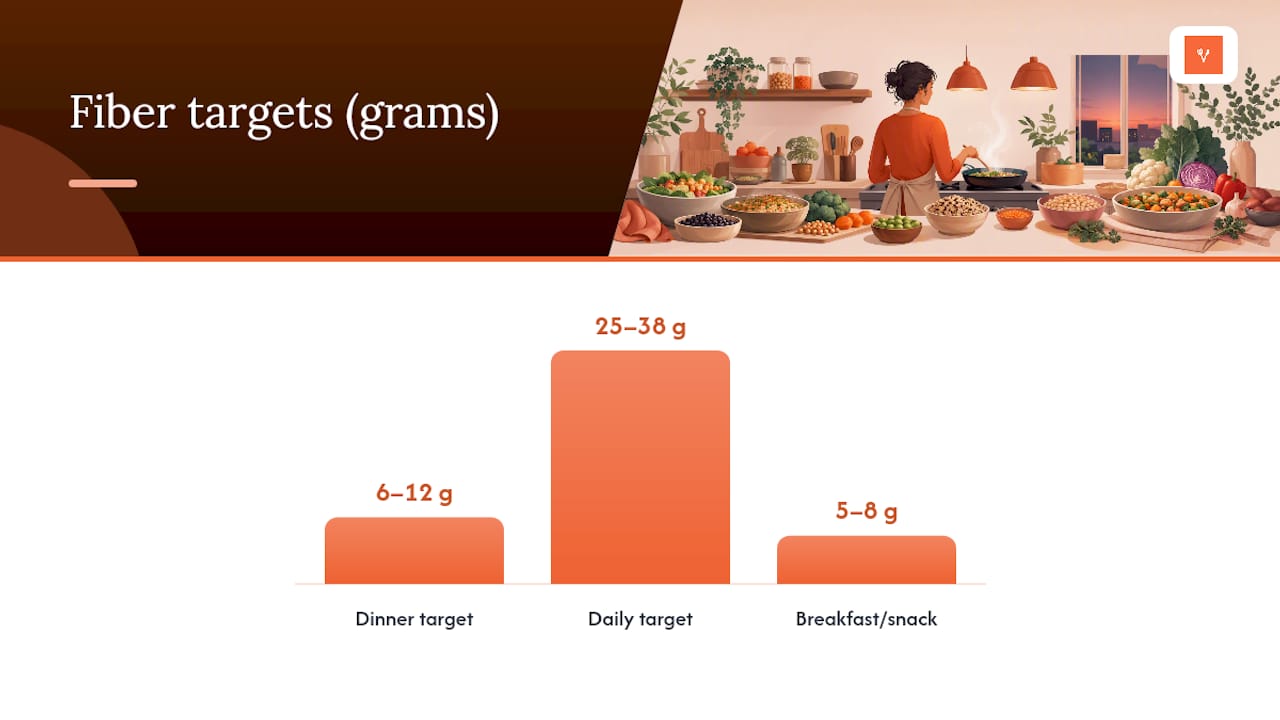
For daily targets, aim for 6–12 g fiber at dinner. That range fits cleanly into a 25–38 gram daily target, especially once breakfast or a snack contributes another 5–8 g. Plate math like this works because dinner tends to be the largest meal, so it’s the easiest place to load fiber without feeling like you’re trying.
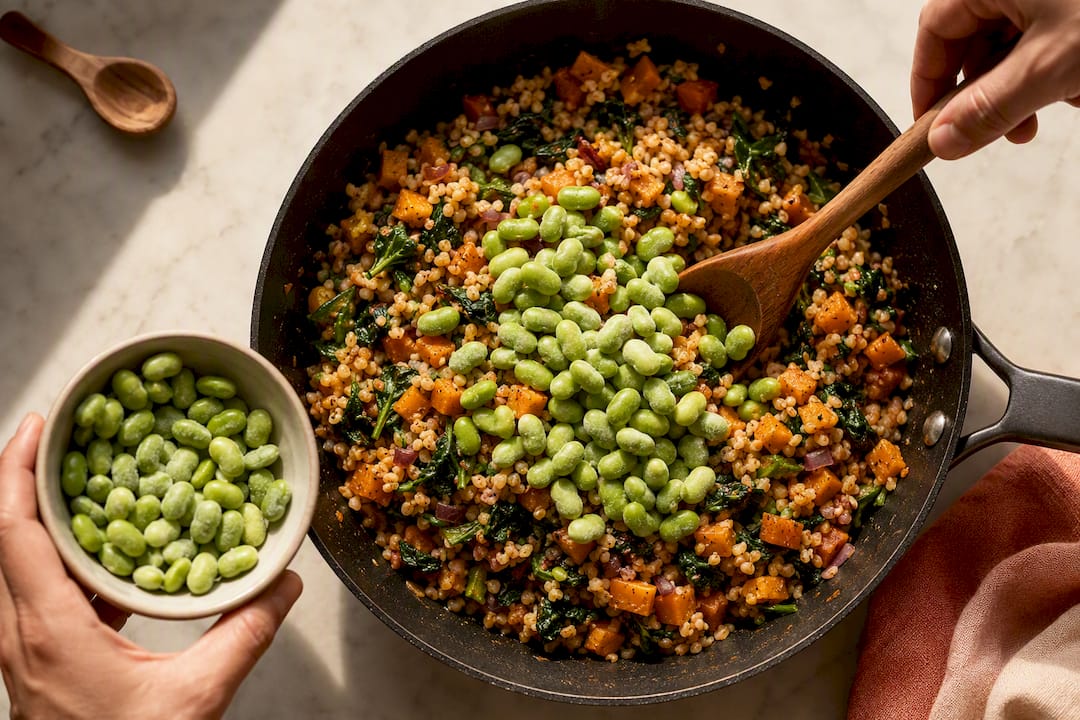
Pro Tip: Keep two cans of beans and a bag of frozen shelled edamame in your pantry at all times. When a weeknight dinner falls short on fiber, stirring in either one adds 6–8 g in under two minutes, no extra cooking required.
Batch-cooking helps more than any single recipe. Cook a big pot of lentils or brown rice on Sunday, portion it into containers, and every dinner that week starts with a fiber base already done.
Planning High Fiber Meals Without the Daily Decision Fatigue
Sticking with high-fiber dinners long term comes down to workflow, not willpower. A three-step weekly approach handles most of it:
- Pick two or three core formats for the week (one skillet, one sheet-pan, one bowl) instead of hunting for a new recipe every night.
- Batch-cook a legume and a whole grain on the weekend so every dinner starts half-built.
- Schedule at least two vegetable-first dinners, where the vegetable and legume anchor the plate instead of playing backup to meat.
Format-driven planning like this lowers the friction that usually derails good intentions, since one-pot and sheet-pan formats let you fold in beans and whole grains with almost no extra cleanup. An AI recipe planner speeds this up further by generating fiber-forward options automatically, building a shopping list from whatever you pick, and adjusting for allergies or dietary needs on the fly. Take a family favorite like beef tacos: swap half the beef for black beans, add shredded cabbage instead of lettuce, and you’ve gone from roughly 2 g fiber per serving to 7–8 g without changing what the dish is.
Why Fiber Deserves the Spotlight at Dinner
Fiber gets treated as a side character in most meal planning, and that’s backwards. Dinner is usually the biggest meal of the day, which makes it the highest-leverage spot to close a fiber gap that breakfast and lunch rarely fill on their own. Trial evidence on viscous fiber points to real gains in satiety, which tracks with something every home cook already knows: a bean-and-grain dinner keeps you full longer than one built around refined carbs alone.
My one tactical takeaway: add a full cup of beans to whatever skillet you’re already making this week. Try one new format from this list and make that single swap. If you want the planning handled for you, that’s exactly where a weekly meal planner earns its place.
— Jack
Try Dinner Roulette Pro for Fiber-Forward Dinners Without the Planning Work
Building a fiber-rich dinner rotation is easy once you know the formats. Keeping it going every week, without repeating the same three meals, is the part that wears people down. Dinner Roulette Pro’s free core features generate full recipes on demand, complete with nutrition breakdowns, allergy checks, and a shopping list built automatically from whatever you pick, so a bean-and-grain dinner isn’t one more thing you have to plan from scratch.
If you’re rotating through the recipes above, the Recipe Organization Guide helps you tag and reuse the ones that stick, and the Shopping List Guide turns any recipe into a grocery run in seconds. Spin the wheel, get a fiber-forward dinner generated for you, and shop for it before you’ve even decided what to call it.
Sources
- 22 High Protein High Fiber Meals — The Real Food Dietitians
- High-fiber and protein recipes — NYT Cooking
- 30 Delicious High-Protein, High-Fiber Dinners — Half Baked Harvest
- 15+ High-Fiber One-Pot Summer Dinner Recipes — EatingWell