90 Minute Sunday Prep: 12 Vegan Family Dinners Kids Will Eat | Dinner Roulette Pro
September 1, 2026
90 Minute Sunday Prep: 12 Vegan Family Dinners Kids Will Eat
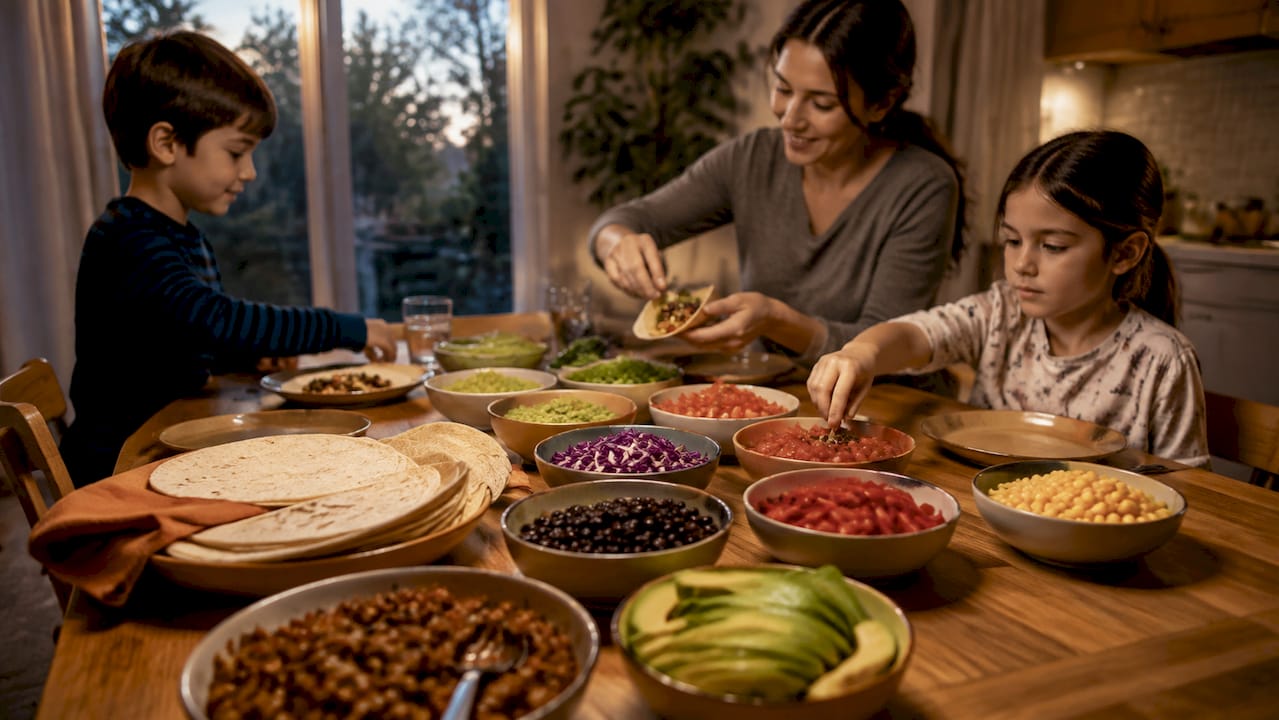
Pick twelve recipes, cook them on rotation, and batch-prep on Sundays. That’s the whole system: a short roster of tested, kid-friendly vegan family dinners plus one 90-minute prep session a week beats scrambling for new ideas every night. Every recipe below adapts for picky eaters, keeps well for leftovers, and covers protein without extra work on your part.
TL;DR:
- Having a fixed rotation of twelve versatile vegan family dinners reduces decision fatigue and builds meal-making muscle memory more effectively than constantly searching for new recipes.
- Batch preparation of grains, beans, vegetables, sauces, and tofu on Sundays simplifies weekly cooking and enables reuse of components for different dishes.
- Incorporating umami flavor enhancers and fixing texture issues with roasting and blending can improve acceptance among picky eaters without sacrificing familiar flavors.
- Key nutrients like protein, iron, B12, and calcium can be reliably obtained through targeted plant-based sources and fortified products, with proper meal pairing and planning.
- Using an app like Dinner Roulette Pro automates recipe selection based on family preferences, minimizes repetition, and reduces decision fatigue, supporting long-term adherence.
Table of Contents
- The Vegan Family Dinners Roster: 12 Recipes Worth Repeating
- How to Adapt Vegan Recipes for Picky Eaters
- A One-Week Batch-Cooking Plan for Vegan Family Meals
- Pantry Staples and a Simple Weekly Shopping List
- Protein, Iron, and B12: What to Prioritize for Kids
- Feeding Toddlers, Tweens, and Teens the Same Vegan Dinner
- Bringing Non-Vegan Family Members Along
- Solving B12, Iron, and Calcium Gaps in a Vegan Family Diet
- Why a Small, Repeatable Roster Beats Endless Recipe Hunting
- Let Dinner Roulette Pro Handle the Weekly Vegan Rotation
- Useful Resources for Vegan Family Meal Planning
- Sources
The Vegan Family Dinners Roster: 12 Recipes Worth Repeating
A giant list of “50 vegan dinners” sounds generous, but it actually makes weeknight decisions harder. A short, repeatable roster is more actionable because you stop relearning a new recipe every single night and start building muscle memory instead. Here are twelve that earn a permanent spot in rotation.
- Creamy cashew pasta primavera. Blend cashews with garlic and lemon for the sauce, toss in whatever vegetables are wilting in your fridge, and add a can of chickpeas. One version of this dish packs about 19 grams of protein and 7 grams of fiber per serving, which quietly solves the “where’s the protein” question without a lecture at the table. Ready in 30 minutes; keeps for four days.
- Spicy peanut noodles. A 15-minute noodle dish built on peanut butter, tamari, and rice noodles. Add cubed tofu or edamame for protein. Kid swap: cut the chili paste in half and serve extra peanut sauce on the side for dipping.
- Sheet-pan fajita bowl. Roast peppers, onions, and marinated tofu on one tray while rice cooks. Zero babysitting required, and everything reheats well for lunch the next day. Check out more sheet-pan dinner formats if this one becomes a favorite.
- Baked ziti with lentil “meat” sauce. Cooked lentils mimic ground meat texture in a marinara base, layered with pasta and a cashew ricotta. Freezes beautifully in individual portions.
- Loaded bean and veggie tacos. Seasoned black beans, roasted sweet potato, and a lime crema made from cashews or a store-bought vegan sour cream. Let kids build their own so nobody complains about what’s touching what.
- Chickpea tikka masala. A one-skillet curry with canned tomatoes, coconut milk, and warming spices. Serve mild versions for young kids and keep hot sauce on the table for adults. Reheats well for three to four days.
- Three-bean chili. A big batch of kidney, black, and pinto beans simmered with tomatoes and smoked paprika. This is the classic “chili Monday, tacos Wednesday” leftover trick in action.
- Vegan mac and cheese. A butternut squash or potato-carrot base blended with nutritional yeast gets you a genuinely creamy sauce, not an orange science experiment. Stir in peas or broccoli for kids who tolerate vegetables “hidden” better than visible.
- Tofu and broccoli stir-fry. Press and pan-fry tofu until the edges crisp, then toss with a simple garlic-ginger-tamari sauce over rice. The crisp edges matter more than the seasoning for winning over skeptical kids.
- Lentil shepherd’s pie. A hearty lentil-mushroom filling under mashed potatoes. Make it Sunday, eat it Monday and Tuesday.
- White bean and kale soup with garlic bread. A 30-minute stovetop soup that’s forgiving on ingredient swaps; frozen kale or spinach works fine.
- Black bean quesadillas. Mashed black beans, vegan cheese, and roasted corn folded into a tortilla and crisped in a pan. Fast enough for the busiest weeknight, and a good gateway recipe for kids new to plant-based meals.
Whole-food anchors like mushrooms, lentils, beans, and tofu do double duty in this list: they add texture and soak up whatever flavor you build around them, so you’re not leaning on processed meat substitutes to make a dinner feel substantial. For more rotation ideas beyond these twelve, browse a longer set of family dinner ideas.
How to Adapt Vegan Recipes for Picky Eaters
Picky eating usually isn’t about the vegetables. It’s about texture, saltiness, and whether the plate looks familiar. Fix those three things and most resistance fades.
Umami is your biggest lever. A spoonful of miso, a splash of tamari, nutritional yeast, roasted garlic, or tomato paste stirred into a sauce adds the savory depth that packaged foods deliver and homemade plant dishes sometimes miss. Pro cooks lean on roasting, caramelizing, and layering acid with crunch to make a plant-based plate register as “complete” to a kid’s palate, the same way a crispy chicken thigh does.
Texture fixes matter just as much. Press and pan-fry tofu until it’s genuinely crisp, grate vegetables into sauces where they disappear, or blend carrots and squash into a mac and cheese base instead of serving them whole.
- Serve dips on the side (hummus, cashew ranch, salsa) so kids control contact with new foods.
- Deconstruct meals into components on a plate rather than a mixed casserole.
- Build-your-own taco or grain bowls give picky eaters a sense of control without extra cooking.
Pro Tip: Reserve a cup of starchy pasta water before draining and stir it into your sauce off-heat. It’s the same trick restaurant cooks use to make a sauce cling and taste richer without adding more fat.
A One-Week Batch-Cooking Plan for Vegan Family Meals
Batch cooking is what turns this roster from “nice idea” into something you actually sustain. Set aside 90 minutes on Sunday and build these components:
- Cook a large pot of grains: rice, quinoa, or farro, enough for four to five meals.
- Cook two kinds of beans or lentils (or open a few cans) and portion into containers.
- Roast a full tray of mixed vegetables with just olive oil and salt, no sauce yet.
- Make one base sauce, a cashew cream or a tomato marinara, that flexes across three dinners.
- Press and pan-fry a batch of tofu to keep in the fridge for stir-fries and tacos.
Cooking in batches that yield four servings at a time means Tuesday’s dinner becomes Wednesday’s lunch without extra effort. Chili turns into taco filling. Leftover roasted vegetables become a grain bowl with a new sauce. Shepherd’s pie filling doubles as a baked potato topping.
- Store components separately, not pre-mixed, so they stay versatile through the week.
- Reheat grains and beans with a splash of water in a covered pan to keep them from drying out.
- Freeze sauces and bean dishes in flat bags; they thaw faster and take less freezer space.
Don’t feel obligated to cook everything from scratch. Grabbing a rotisserie-style vegan protein or a pre-made hummus for busy nights is a reasonable trade-off that keeps the whole system running. For a template you can reuse weekly, a quick weeknight meal planner helps you slot these building blocks into an actual calendar.
Pantry Staples and a Simple Weekly Shopping List
A stocked pantry does more to prevent last-minute takeout than any single recipe. Keep these on hand and you can assemble most of the roster above without a special trip.
- Dry goods: rice, pasta, rolled oats, quinoa, tortillas.
- Canned goods: black beans, chickpeas, diced tomatoes, coconut milk.
- Frozen: mixed vegetables, edamame, corn, pre-cooked grains for emergencies.
- Condiments and spices: tamari, miso, nutritional yeast, peanut butter, smoked paprika, cumin.
Frozen vegetables and canned beans aren’t a downgrade. They’re a budget-friendly way to keep nutrition steady when fresh produce prices spike or you’re short on time. For a single week supporting four or five dinners from this list, aim for: two cans of beans, one can of chickpeas, a bag of tortillas, a block of tofu, one bag of frozen mixed vegetables, cashews, tamari, and whatever fresh vegetables are cheapest that week. A shopping list built around your actual weekly plan keeps this from turning into guesswork at the store.
Protein, Iron, and B12: What to Prioritize for Kids
Vegan kids can absolutely meet their protein, iron, and B12 needs, but it takes a little intention, not supplements for everything.
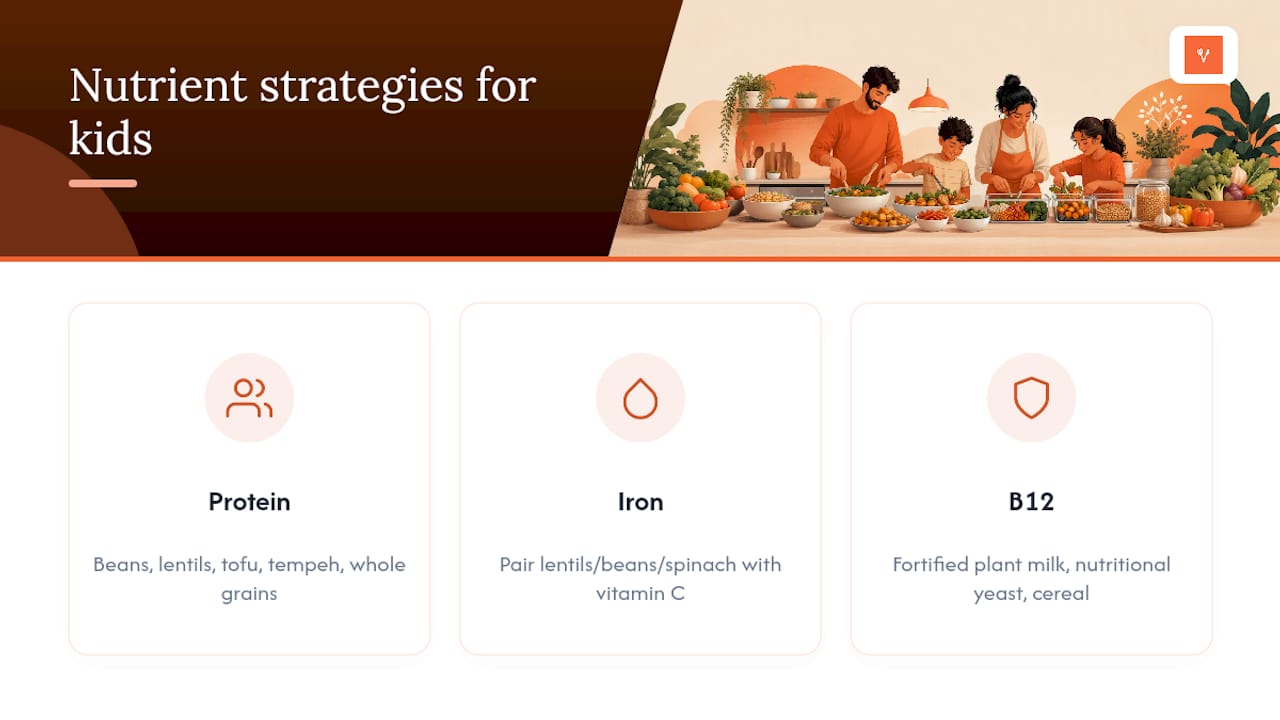
Protein shows up in beans, lentils, tofu, tempeh, and whole grains, and it adds up faster than most parents expect across a full day of meals. That pasta primavera recipe from the roster above delivers close to 19 grams of protein per serving once you add chickpeas and a cashew sauce, roughly a third of a young child’s daily needs in one bowl.
Iron absorption gets a real boost when you pair plant iron (lentils, beans, spinach) with vitamin C at the same meal: a squeeze of lime on tacos, bell peppers in a stir-fry, or orange slices on the side. Fortified cereals also help fill the gap.
Statistic Callout: A recipe combining chickpeas and a cashew-based sauce reaches roughly 19 grams of protein and 7 grams of fiber per serving, enough to make one bowl of pasta a legitimate protein source rather than an afterthought.
B12 doesn’t occur reliably in plant foods, so rely on fortified plant milk, fortified nutritional yeast, or fortified cereals as your everyday source. If your family eats mostly whole, unfortified foods, talk to a pediatrician about whether a supplement makes sense for your kids specifically.
Feeding Toddlers, Tweens, and Teens the Same Vegan Dinner
The same pot of chili can feed a two-year-old and a fifteen-year-old, if you plate it differently. The trick is separating the base recipe from the add-ons.
Toddlers need smaller, softer portions and less spice. Serve the bean chili plain with mashed avocado on top rather than the full seasoning blend, and skip the chili powder until they’ve built up a tolerance. Cut noodles and vegetables into manageable pieces, and offer a fattier addition like tahini or avocado since toddlers need more calorie density relative to their stomach size.
School-age kids generally want the same flavors as the rest of the family but in a form they can identify. This is where build-your-own setups matter most: a taco bar or a stir-fry with sauce on the side lets a seven-year-old opt into vegetables gradually instead of getting everything mixed together.
Teens, especially active ones, need more total food and more protein per meal than younger kids. Add a second scoop of beans, a handful of extra tofu, or a side of hummus and pita to stretch the same base recipe into a bigger, more filling plate. Growth spurts and sports schedules make teens the most calorie-hungry members of the table, so plan for seconds.
The through-line across every age group: cook one base, adjust seasoning and portion size at the table, not in three separate pots. It keeps the nutrition guidance consistent while letting each family member’s plate look different.
Bringing Non-Vegan Family Members Along
If part of your household isn’t vegan, don’t announce a full conversion. Swap one dinner at a time and let the food make the argument instead of a conversation about ethics or health.
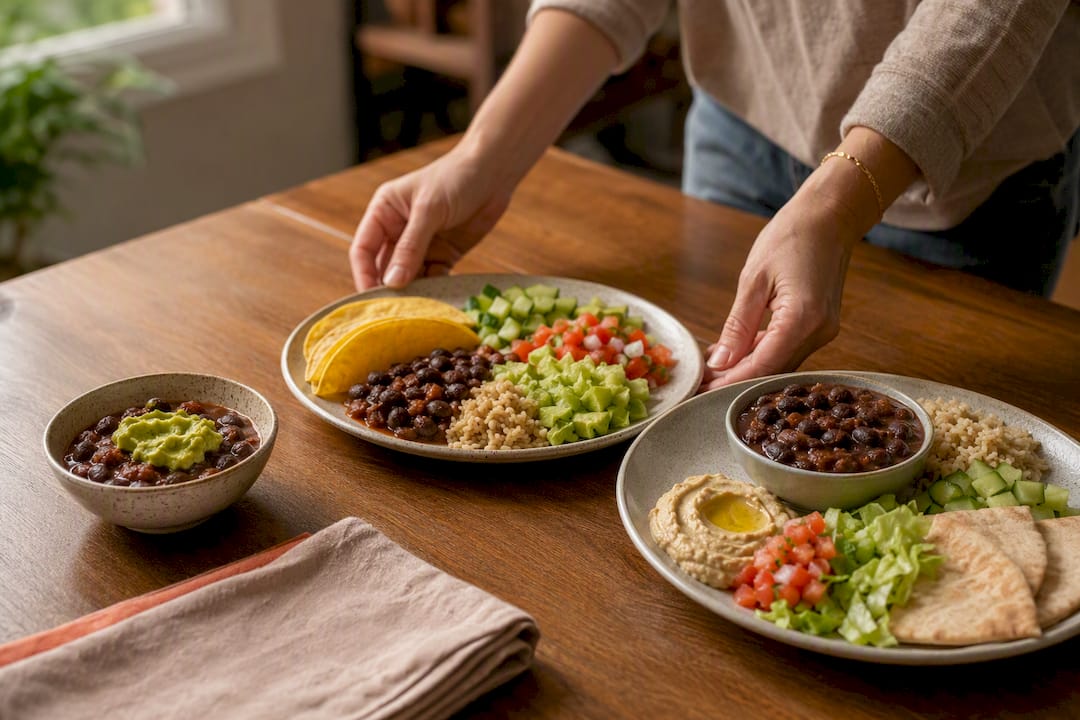
Start with dishes that don’t read as “a vegan meal” at all: tacos, chili, stir-fry, or baked ziti already look and taste like familiar comfort food, so nobody feels like they’re being served a compromise. Skip the recipes that lean hardest on unfamiliar substitutes (tofu scramble, seitan) until the household has more trust in the rotation.
Let a skeptical partner or grandparent add their own protein on the side rather than debating the whole meal. A grilled chicken breast next to the same bean chili everyone else is eating keeps the peace without turning dinner into two separate cooking projects. Over a few weeks, most families find that the “vegan” and “regular” versions converge naturally as the base recipes prove themselves.
Framing helps too. Calling a dish “peanut noodles” instead of “vegan peanut noodles” removes the label that makes some family members dig in their heels before they’ve even tasted it. The food should be doing the convincing, not the pitch.
Solving B12, Iron, and Calcium Gaps in a Vegan Family Diet
These three nutrients get the most attention in vegan family diets for good reason: they’re the ones plant foods handle least automatically.
B12 is the one nutrient with no reliable unfortified plant source, so build in fortified plant milk, fortified cereal, or nutritional yeast as a daily habit rather than an occasional add-on. Iron from plants absorbs less efficiently than iron from meat, but pairing beans, lentils, or tofu with a vitamin C source at the same meal, tomatoes, citrus, peppers, closes most of that gap without any special product.
Calcium is easier to miss than people expect once dairy leaves the table. Fortified plant milks, tofu made with calcium sulfate, tahini, and leafy greens like kale and bok choy all contribute meaningfully across a week of meals. None of these fixes require tracking every gram; they require building two or three habits into your regular rotation, like always squeezing lime on tacos or always buying the fortified version of plant milk.
If your family relies heavily on whole, unfortified foods and skips fortified products altogether, that’s the scenario worth flagging to a pediatrician or registered dietitian, since it’s the combination most likely to leave a real gap rather than a theoretical one.
Why a Small, Repeatable Roster Beats Endless Recipe Hunting
Most vegan meal content oversells novelty. Every list promises “50 new dinners,” and every one of those lists quietly assumes you have unlimited energy to learn 50 new techniques. You don’t, and neither do I. The families who actually stick with plant-based dinners long-term are the ones who pick a dozen solid recipes and stop looking for the next best thing.
What surprises people is how much the sauce determines success, not the protein. A cashew cream or a well-seasoned marinara will sell a vegetable to a skeptical eight-year-old faster than any amount of nutritional lecturing. That’s a texture and flavor problem, not a willpower problem, and it’s solvable in a blender.
Where AI genuinely helps here isn’t inventing new recipes nobody asked for. It’s cutting the friction between “I have chickpeas, tofu, and a picky nine-year-old” and an actual dinner plan for the week, generated on the spot instead of hunted down across a dozen browser tabs. That’s decision fatigue, solved quietly, before it happens.
— Jack
Let Dinner Roulette Pro Handle the Weekly Vegan Rotation
Dinner Roulette Pro takes the twelve-recipe roster idea above and automates it: spin the wheel with your dietary filters set to vegan, plus any allergy or kid-preference flags, and you get a full recipe with ingredients, nutrition breakdown, and a shopping list attached, at no cost for the core features.
Instead of manually tracking which sauce pairs well with which protein or whether you hit enough iron this week, the app builds that into the recipe generation itself. Families juggling picky eaters and busy schedules get personalized recipes without repeating the same three dinners out of decision fatigue. If you’d rather start by organizing the vegan recipes you already love before adding new ones, the Recipe Organization Guide walks through building a system that sticks. Spin the wheel tonight and see what comes up for dinner.
Useful Resources for Vegan Family Meal Planning
- The Whole Foods Market 7-Day Vegan Meal Plan offers a semi-homemade weekly structure that mixes prepared and from-scratch dishes.
- PlanEat AI’s weekly vegan meal plan guide breaks down a repeatable grocery and prep system.
- Forks Over Knives’s budget vegan meal plan shows how to stretch bulk staples across a full week affordably.
- Monday Campaigns’s big-batch plant-based recipes focuses on whole-food ingredients that hold up well in large batches.
- Ambitious Kitchen’s pasta primavera recipe is a solid model for a protein-rich, kid-friendly pasta night.
- The Kitchn’s guide to vegan cream sauces covers the cashew-cream and pasta-water techniques referenced throughout this guide.
- Melobites’s 15-minute spicy peanut noodles is worth bookmarking for the busiest weeknights.
- Delish’s roundup of vegan dinner ideas explains the texture and umami principles that make plant-based meals satisfying to kids.
Sources
- 7-Day Vegan Meal Plan | Whole Foods Market
- Vegan Weekly Meal Plan: 7-Day Grocery and Prep Guide | PlanEat AI
- Vegan Pasta Primavera with Garlic Cashew Sauce (Ambitious Kitchen)
- The Kitchn — vegan sauce techniques