Busy Weeknights: DASH Dinners Ready in 30 Minutes With a 7 Day Plan | Dinner Roulette Pro
September 12, 2026
Busy Weeknights: DASH Dinners Ready in 30 Minutes With a 7 Day Plan
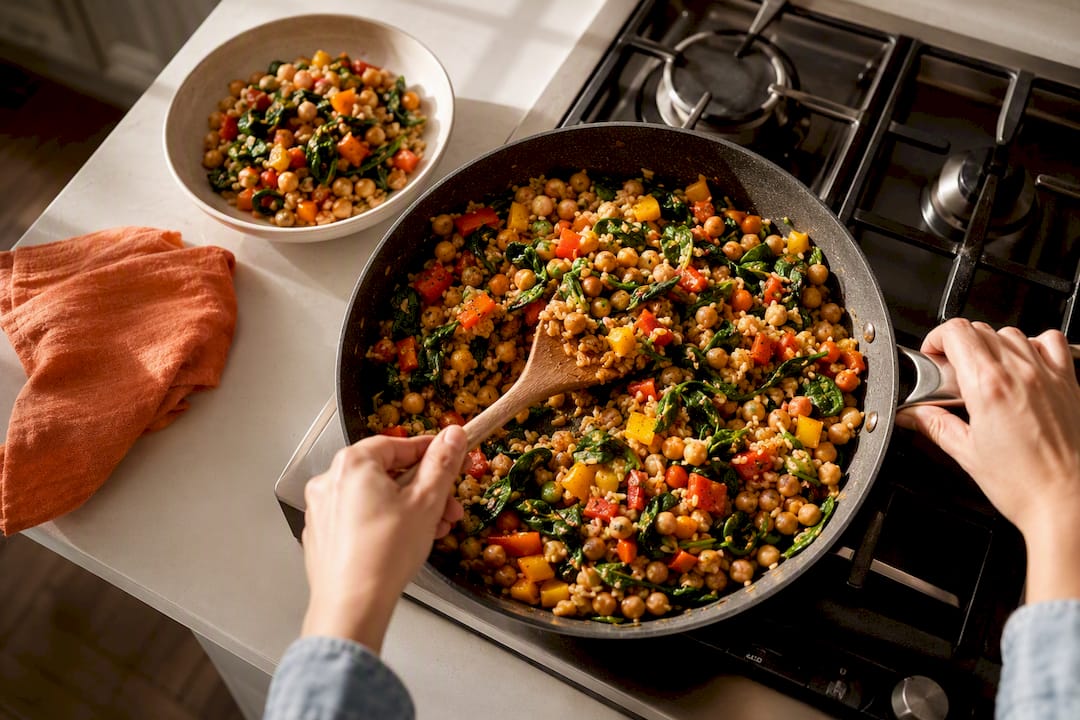
You can eat DASH-compliant dinners every night of the week without cooking two different meals or living on grilled chicken and steamed broccoli. This article gives you a categorized recipe shortlist, a full 7-day dinner plan built around DASH diet sodium targets consistent with recommended levels, plus the shopping and prep habits that make it stick.
TL;DR:
- Most DASH dinners can be prepared quickly using easy-to-make sheet-pan, stir-fry, or one-pan formulas that focus on minimally salted ingredients.
- Swapping common ingredients like regular pasta, canned broths, or pre-seasoned sauces with low-sodium or homemade alternatives is essential for staying within sodium targets.
- Batch-cooking grains, vegetables, and proteins on weekends helps maintain a consistent DASH dinner routine and reduces preparation time during busy weekdays.
- Reading labels carefully and keeping a list of low-sodium products helps prevent accidental excess sodium intake from processed foods.
- An app-based meal generator and organized shopping lists simplify sticking to DASH plans, especially for reducing decision fatigue and meal planning stress.
Table of Contents
- Quick DASH Diet Dinner Recipes You Can Actually Cook Tonight
- A 7-Day DASH Dinner Plan You Can Follow Starting Tonight
- Building a DASH Shopping List and Prep Routine That Sticks
- Repeatable Formulas for One-Pan and 30-Minute DASH Dinners
- How to Turn Spaghetti, Tacos, and Stir-Fries Into DASH-Friendly Meals
- What Dr-pro Adds to Your DASH Dinner Routine
- Why Consistency Beats Perfect Sodium Counting
- Let Dr-pro Handle the Decision Fatigue Part
- Where This Article’s DASH Guidance Comes From
- Sources
- FAQ
Quick DASH Diet Dinner Recipes You Can Actually Cook Tonight
The DASH pattern isn’t a strict rulebook. It’s a framework built on fruits, vegetables, whole grains, lean protein, and low-fat dairy, with sodium, saturated fat, and added sugar kept in check, according to the NHLBI’s DASH eating plan. That framework is flexible enough to cover seafood, poultry, plant-based bowls, and even pasta night. Dietitians specifically point to sheet-pan salmon with vegetables, chickpea pasta, and chili-shrimp quinoa bowls as go-to weeknight options because they hit protein and fiber targets without a long ingredient list, according to Harvard Health’s DASH guide. Below is a working shortlist organized by category, with the reason each dish fits DASH and one sodium-saving move for each.
Seafood dinners
- Sheet-pan salmon with asparagus and lemon — Salmon delivers potassium and healthy fats; skip the marinade salt and use lemon zest plus black pepper instead.
- Chili-lime shrimp with quinoa — Quinoa adds magnesium and fiber; buy raw shrimp and season yourself rather than using pre-seasoned bags, which often carry hidden sodium.
- Baked cod with roasted cherry tomatoes — Tomatoes bring potassium and vitamin C; use fresh garlic instead of garlic salt.
- Tuna and white bean skillet — Rinse canned tuna and beans under water for 30 seconds to cut sodium significantly before cooking.
- Foil-packet trout with dill and zucchini — Herbs replace the need for a salt-heavy rub entirely.
Poultry dinners
- Sheet-pan chicken thighs with sweet potato and green beans — One-pan, 30 minutes, and sweet potato supplies potassium that helps offset sodium’s effect on blood pressure.
- Herb-roasted chicken breast with roasted carrots — Use dried rosemary and thyme instead of a store-bought poultry seasoning blend, which usually leads with salt.
- Turkey and vegetable stir-fry — Ground turkey plus a low-sodium tamari keeps this under 400 mg of sodium per serving when portioned right.
- Lemon-garlic chicken skillet with spinach — Spinach is one of the better dinner sources of magnesium and potassium in a single serving.
- Chicken fajita bowls with brown rice — Skip the packet seasoning; cumin, chili powder, and lime do the same job without the sodium spike.
Plant-based dinners
- Chickpea and spinach curry over brown rice — Chickpeas bring fiber and potassium; use low-sodium vegetable broth as the curry base.
- Black bean and sweet potato tacos — Corn tortillas plus avocado add potassium without needing salty toppings.
- Lentil and vegetable soup — Lentils are a strong plant protein and mineral source; build the broth from scratch or choose a “no salt added” carton.
- Stuffed bell peppers with quinoa and black beans — A full DASH plate in one vessel, with peppers adding vitamin C and potassium.
- Tofu and broccoli stir-fry with ginger — Fresh ginger and rice vinegar replace the sodium punch of a bottled stir-fry sauce.
Pasta and grain-forward dinners
- Chickpea pasta with roasted vegetables — Legume-based pasta boosts protein and fiber compared to standard wheat pasta.
- Whole-grain spaghetti with turkey meat sauce — Whole grains slow digestion and add magnesium that refined pasta lacks.
- Farro bowl with roasted mushrooms and kale — Farro is a chewy, mineral-rich stand-in for rice on nights you want texture.
- Whole-wheat penne with white beans and spinach — A near one-pot meal that skips the need for a heavy cheese-based sauce.
One-pan and sheet-pan formulas
- Sheet-pan pork tenderloin with Brussels sprouts and apples — A slightly sweet, low-effort dinner where fruit does the flavor work salt usually would.
- One-pan Cajun shrimp and rice — Build the Cajun spice blend yourself from paprika, garlic powder, and cayenne instead of a packaged mix.
- Sheet-pan fajita vegetables and chicken — Everything roasts on one tray in under 30 minutes, which cuts both prep and cleanup time.
Time-efficient dinners like these aren’t a workaround for DASH. Recipe collections built specifically around 30-minute formulas show that quick meals can meet the plan’s nutrient goals just as well as anything simmered for hours, according to EatingWell’s roundup of 30-minute DASH dinners. If you want more low-sodium weeknight ideas beyond this list, Dr-pro’s guide to heart healthy dinners covers additional recipes built on the same principles, and the Mediterranean diet dinners collection overlaps heavily with DASH since both patterns lean on vegetables, olive oil, and lean protein.
A 7-Day DASH Dinner Plan You Can Follow Starting Tonight
This plan assumes a roughly 2,000-calorie day, which is the baseline the NHLBI uses in its own week-long DASH sample menu. If your calorie needs run higher or lower, scale the grain and protein portions up or down; the vegetable servings can generally stay generous no matter your target.
- Monday: Sheet-pan salmon, asparagus, and brown rice. Portion the salmon to 4 ounces cooked; season with lemon and dill instead of a salt rub to stay near 350 mg sodium for the plate.
- Tuesday: Turkey and vegetable stir-fry over quinoa. Use 1 tablespoon of low-sodium tamari, not regular soy sauce; regular soy sauce alone can carry close to 900 mg per tablespoon.
- Wednesday: Chickpea pasta with roasted vegetables. Skip parmesan or use a light sprinkle; a heavy hand with hard cheese is one of the easiest ways to push a “healthy” pasta dinner over budget.
- Thursday: Black bean and sweet potato tacos. Use corn tortillas and fresh salsa rather than jarred salsa, which often runs high in sodium per serving.
- Friday: Herb-roasted chicken breast with roasted carrots and farro. Batch-roast extra chicken here for Saturday’s leftovers.
- Saturday: Leftover chicken grain bowl with spinach and avocado. This is your built-in break night. Reusing Friday’s chicken cuts cooking time to about 10 minutes.
- Sunday: Lentil and vegetable soup with a side salad. Build the broth from scratch or use a “no salt added” carton to keep the whole pot under 1,500 mg total sodium.
If you’re working toward the stricter 1,500 mg daily target rather than the standard 2,300 mg, the easiest lever is swapping one processed ingredient per dinner: bottled sauce for a spice blend, canned broth for low-sodium broth, or pre-seasoned protein for plain protein you season yourself. Batch-cooking grains and proteins on Sunday for Monday and Tuesday is what actually makes a 7-night plan survive a real week, rather than collapsing by Wednesday when you’re tired and the takeout menu is sitting in a drawer.
Building a DASH Shopping List and Prep Routine That Sticks
A DASH-friendly kitchen starts with what’s already in your fridge and pantry before dinner planning even begins. Stock produce (leafy greens, bell peppers, berries, bananas), whole grains (brown rice, quinoa, farro, whole-wheat pasta), lean proteins (chicken breast, salmon, tofu, dried or low-sodium canned beans), low-fat dairy (plain yogurt, low-fat milk, reduced-fat cheese), and a shelf of low-sodium canned goods (tomatoes, broth, beans).
A simple three-step batch-prep routine on a weekend afternoon covers most of the week:
- Batch a grain. Cook a large pot of brown rice, quinoa, or farro; it holds in the fridge for four to five days.
- Prep vegetables. Wash and chop a mix of roasting vegetables (carrots, Brussels sprouts, zucchini) so they’re ready to hit a sheet pan in under a minute.
- Roast a protein. Cook a tray of chicken thighs or a pan of tofu that becomes the base for two or three different dinners.
Reading labels matters more than most people expect. Registered dietitians point to hidden sodium in canned broths, packaged sauces, and cured meats as one of the most common ways a seemingly healthy dinner blows past its sodium budget, according to Cleveland Clinic’s DASH guidance. Check the sodium-per-serving line, not just the front-of-package claims. “No salt added” means nothing was added during processing, while “low-sodium” is a regulated term meaning 140 mg or less per serving. And always rinse canned beans and vegetables under running water for 30 seconds. It’s one of the fastest sodium cuts you can make.
Pro Tip: Keep a running list on your phone of the three or four sauces and seasoning blends that are actually low-sodium at your grocery store. Reading every label every week gets old fast; knowing your safe picks in advance turns a 10-minute label-reading chore into a 30-second grab.
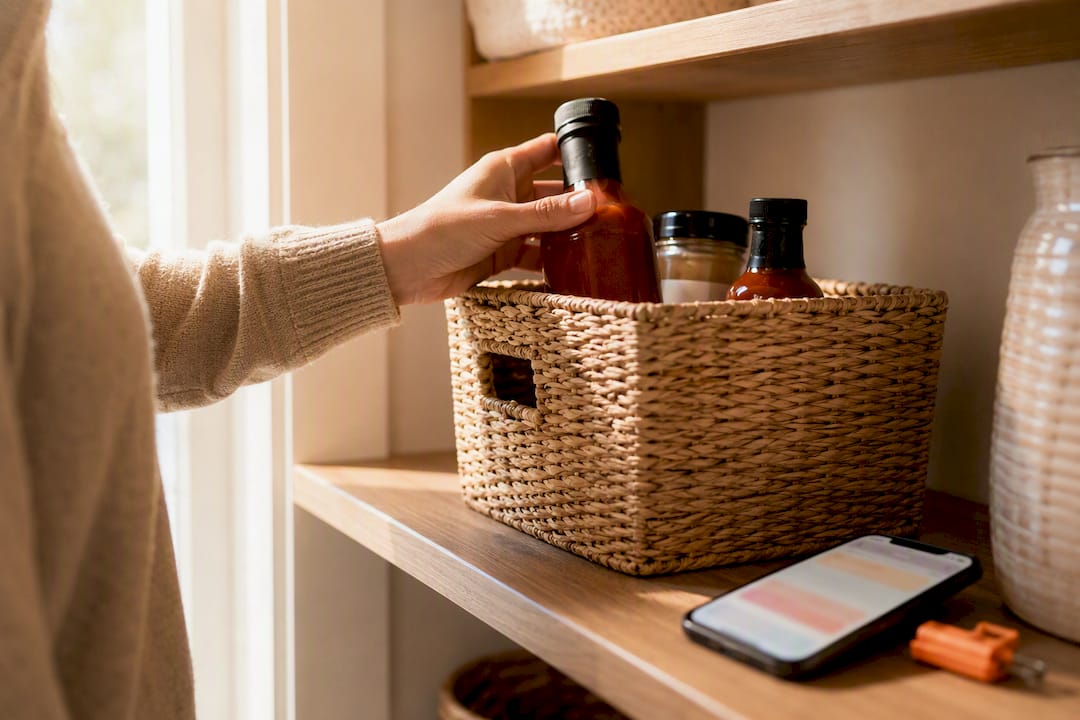
For a deeper look at cutting hidden sodium across an entire week of meals, Dr-pro’s guide to low sodium dinners walks through specific product swaps by category.
Repeatable Formulas for One-Pan and 30-Minute DASH Dinners
Instead of hunting for a new recipe every night, three formulas can carry you through most of the week.
- Sheet-pan formula. Pick one protein (chicken thighs, salmon, tofu), two vegetables with different roast times (carrots and green beans, or sweet potato and Brussels sprouts), and a whole-grain side cooked separately or added to the pan in the last 10 minutes. Season with a dry herb blend, citrus zest, or a no-salt seasoning mix instead of table salt.
- Skillet stir-fry formula. Sauté a lean protein, add a mix of quick-cooking vegetables (bell peppers, snap peas, broccoli), and finish with a low-sodium soy or tamari sauce brightened with lime juice, fresh ginger, or rice vinegar. This keeps the sodium load to roughly one tablespoon of sauce per serving instead of a full cup of pre-made stir-fry sauce.
- The 30-minute checklist. Keep frozen vegetables on hand for nights you skip the chopping board, use quick-cooking grains like couscous or instant brown rice, and stock pre-cooked or canned (rinsed) pulses like lentils and chickpeas. Doing your mise en place first, meaning all ingredients chopped and measured before the pan heats up, is what actually turns a 45-minute recipe into a 30-minute one.
One-pan methods that pair a lean protein with potassium-rich vegetables and a modest whole-grain side reliably hit DASH’s nutrient balance while cutting cleanup time to almost nothing, which is exactly the kind of friction reduction that keeps people from ordering takeout on a Tuesday, according to Business Insider’s roundup of dietitian-approved one-pan dinners. If you want more sheet-pan specific formulas, Dr-pro’s sheet-pan dinners guide breaks down timing for different protein and vegetable combinations.
How to Turn Spaghetti, Tacos, and Stir-Fries Into DASH-Friendly Meals
You don’t need to abandon the meals your family already likes. Adapting a favorite recipe rather than replacing it entirely is what actually keeps people on track, since small swaps preserve the flavor and routine people are attached to while quietly improving the nutrition profile, according to Cleveland Clinic.
- Spaghetti night: Swap regular pasta for whole-grain or legume-based pasta, double the vegetables in the sauce (zucchini, mushrooms, spinach), use a low-sodium or no-salt-added marinara, and lean on fresh basil and oregano for flavor instead of extra salt.
- Taco night: Use lean ground turkey or black beans as the base, season with cumin and chili powder you mix yourself, and top with fresh salsa and avocado instead of shredded cheese and salty taco sauce.
- Stir-fry night: Replace regular soy sauce with a low-sodium soy or tamari, add extra leafy greens like bok choy or spinach for potassium, and finish with sesame seeds and lime rather than a bottled sauce packet.
None of these swaps require a special trip to a health food store. They’re mostly about choosing the unsalted version of something you’re already buying.
What Dr-pro Adds to Your DASH Dinner Routine
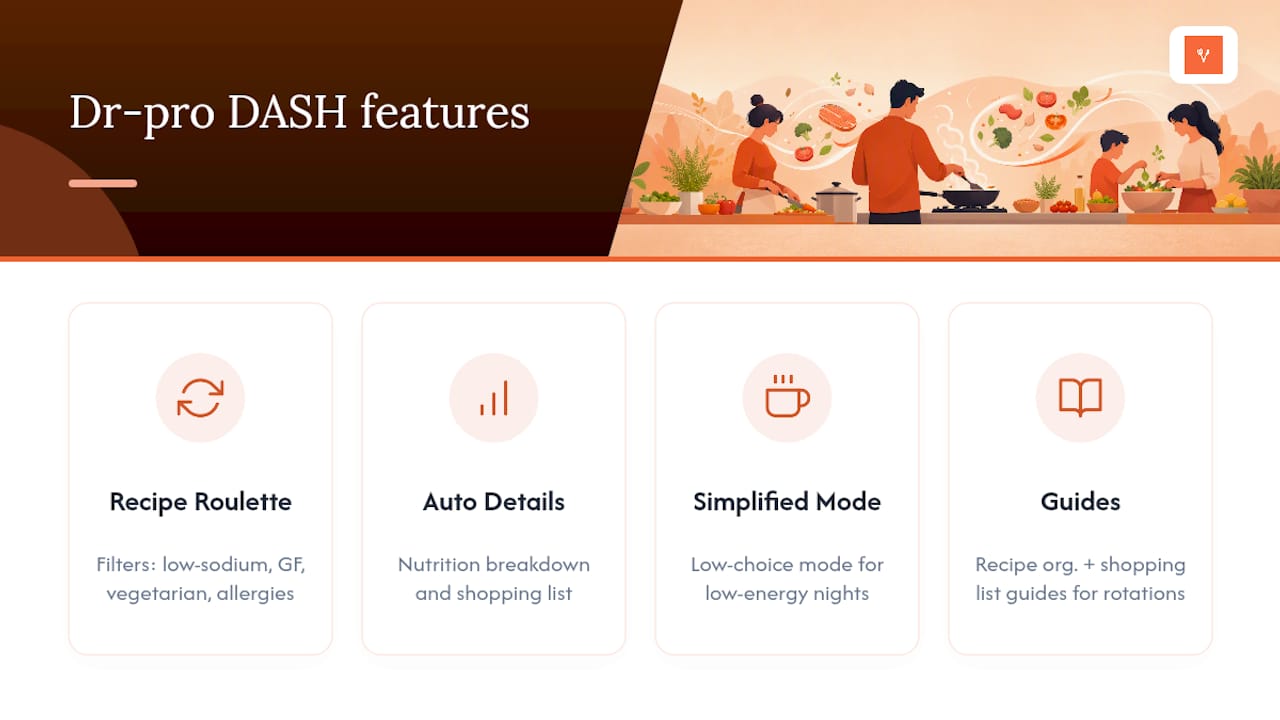
Planning DASH dinners night after night is where most people fall off, not because the recipes are hard, but because deciding what to cook, checking it against sodium goals, and building a shopping list takes real mental energy on a Tuesday at 6 p.m. A roulette-style recipe generator lets you spin for a DASH-friendly dinner filtered by your dietary needs, whether that’s low-sodium, gluten-free, vegetarian, or a specific allergy. Each generated recipe comes with a nutrition breakdown and a shopping list, so you’re not manually tallying sodium or rewriting a grocery list from multiple recipes. On nights when even that feels like too much, a simplified mode can ease choices for low-energy evenings. For structured next steps, the Recipe Organization Guide and Shopping List Guide walk through building a rotating DASH dinner rotation without starting from scratch every week.
Why Consistency Beats Perfect Sodium Counting
Most people who try DASH fail not because they cook the wrong recipe once, but because they treat one salty restaurant meal as a reason to quit entirely. That’s backwards. Dietitians generally recommend aiming for more DASH-style dinners per week rather than obsessing over hitting the sodium target on every single plate, according to a dietitian-sourced guide on practical DASH implementation. A 7-day plan is a template, not a contract. Swap Tuesday’s stir-fry for Thursday’s tacos if that’s the week you’re having. Track two numbers if you track anything at all: how many DASH-pattern dinners you ate this week, and a rough sense of your daily sodium. Precision matters less than showing up at the stove most nights instead of some nights.
— Jack
Let Dr-pro Handle the Decision Fatigue Part
Building a DASH dinner rotation from scratch every week is the part that wears people down, not the cooking itself. This service removes that friction by generating customized recipes on a spin, complete with nutrition data and a shopping list you can export.
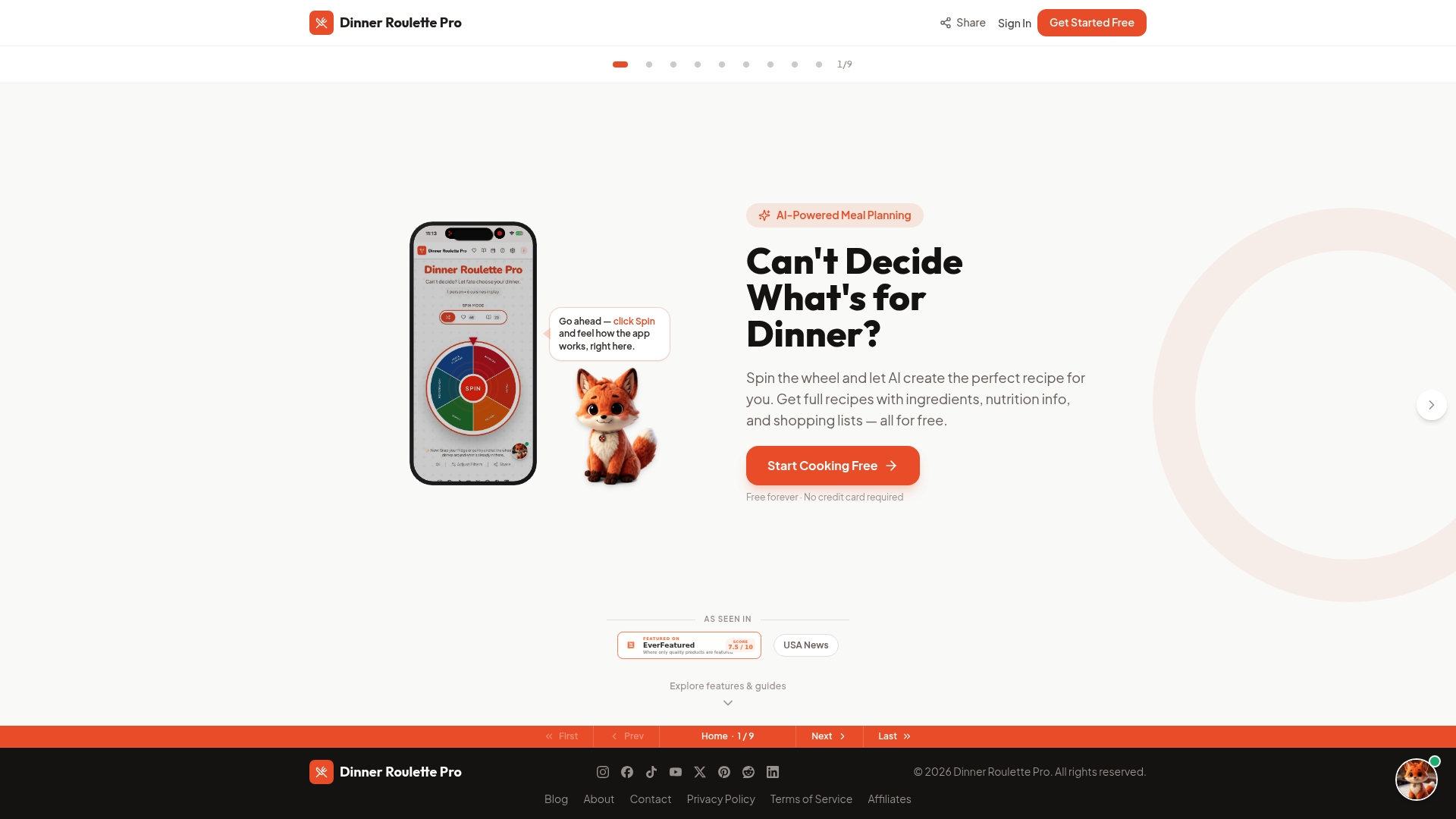
Recipes can be filtered for low-sodium needs, allergies, or dietary patterns like vegetarian or gluten-free, avoiding the need to cross-check ingredients after a long day. If you’re building out a full week of DASH dinners, the Recipe Organization Guide shows you how to save and rotate favorites so you’re never starting from zero, and the Shopping List Guide covers exporting your list straight to Walmart or Instacart for one-tap ordering. If you also want a nutrition-focused approach to hitting your DASH targets consistently, a resource like nutritional therapy guidance can complement the meal-planning side. Open the app, set your dietary filters once, and spin the wheel for tonight’s dinner.
Where This Article’s DASH Guidance Comes From
- The NHLBI’s DASH eating plan and its 7-day sample menu PDF supplied the sodium targets and weekly structure used throughout this plan.
- Mayo Clinic’s DASH recipe collection informed the range of recipe categories featured.
- Cleveland Clinic’s DASH guidance shaped the label-reading and hidden-sodium sections.
- EatingWell’s 30-minute DASH dinner collection backed the emphasis on quick weeknight formulas.
- A peer-reviewed review on PMC confirms DASH’s effect on blood pressure and cardiometabolic markers.
This article is general information, not a substitute for advice from a qualified doctor. Consult a qualified healthcare professional about your own circumstances before acting on anything here.
Sources
- DASH Eating Plan — NHLBI
- DASH diet: What it is, meal plans and recipes — Cleveland Clinic
- Peer-reviewed review article on DASH — PMC
FAQ
What’s a good dinner for someone with high blood pressure?
A dinner built around a lean protein, two vegetable servings, a whole grain, and a low-sodium seasoning approach, like sheet-pan salmon with asparagus and brown rice, fits the DASH pattern dietitians recommend for managing blood pressure.
Can you eat spaghetti on a DASH diet?
Yes. Swap regular pasta for whole-grain or legume-based pasta, load the sauce with extra vegetables, and use a low-sodium or no-salt-added marinara instead of a jarred one.
What is a good 7-day meal plan for people with high blood pressure?
A practical week rotates seafood, poultry, plant-based, and pasta dinners while batch-cooking grains and proteins on the weekend; the NHLBI’s own sample week uses this structure around a 2,000-calorie, 2,300 mg sodium baseline.
What are some good snacks for the DASH diet?
Unsalted nuts, plain low-fat yogurt with berries, sliced vegetables with hummus, and a banana are all DASH-friendly snacks that add potassium, magnesium, or calcium without pushing sodium intake up.